
No Date, No Buy: Why Freshness Transparency Matters in Craft Beer
By Brian Winckel · Founder, Brewlytics.ai
Short Answer
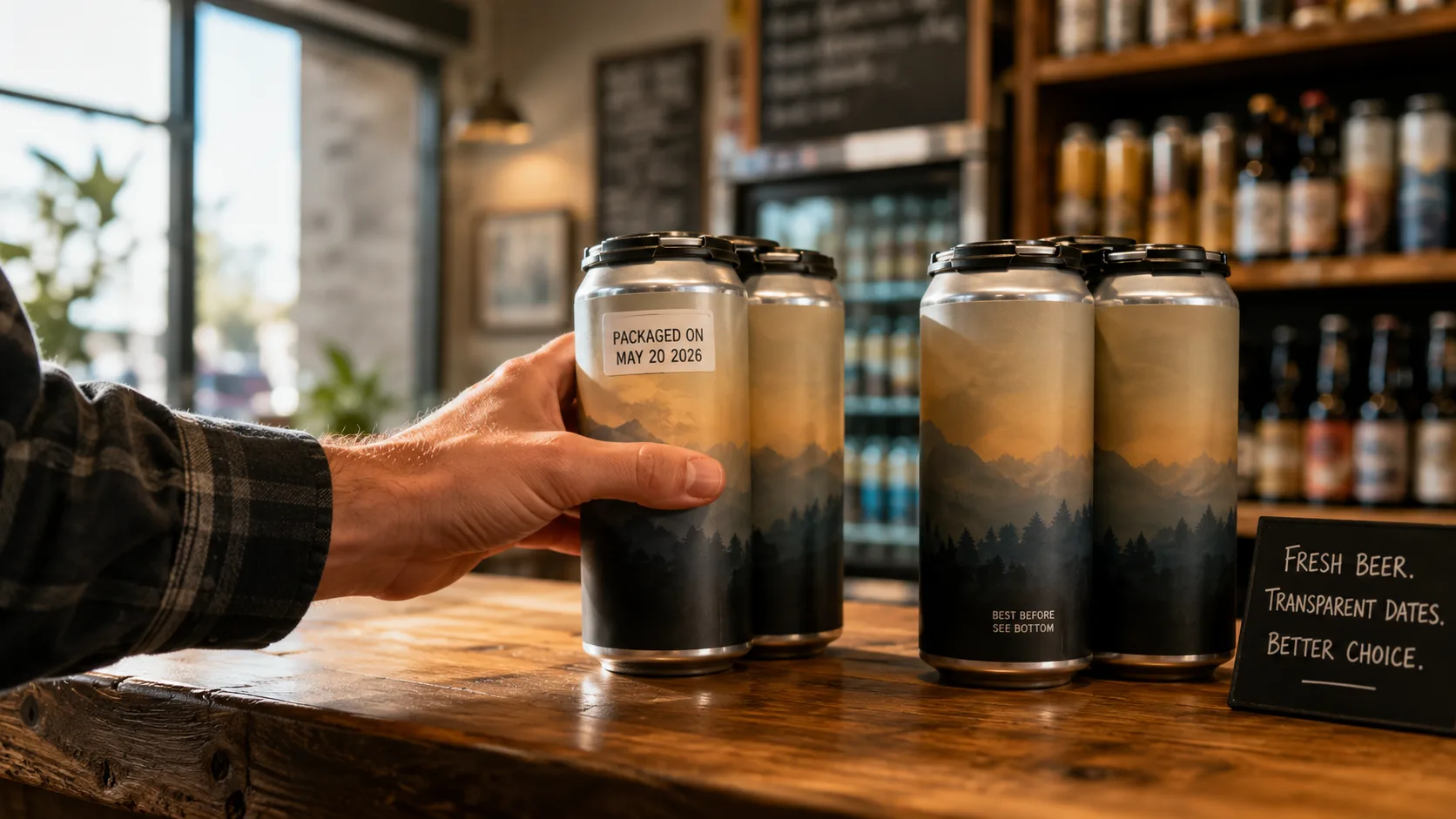
A package date is the day a beer was canned, bottled, or kegged — an objective production date, not a vague 'best by' guess. Hop-forward styles like IPAs lose their character within weeks, so an undated can is a gamble for the customer. 'No Date, No Buy' is the principle that you shouldn't buy beer you can't date. For breweries, printing a clear package date and actively messaging peak-freshness windows builds trust and repeat purchases — freshness is a marketing advantage, not a liability to hide.
Barley's Take
An undated can asks the customer to trust you blind. A dated can earns the trust instead. One of those builds regulars.
Why This Matters for Breweries
There's a quiet moment that happens in every bottle shop and grocery cooler: a customer picks up a four-pack of IPA, turns it over looking for a date, finds nothing legible, and puts it back. They don't complain. They don't ask staff. They just choose the can next to it that does have a date — or they leave with nothing. The brewery never sees the lost sale, because lost sales don't show up in a sales report.
Freshness transparency is the cheapest trust signal a brewery can print, and one of the most undervalued. A package date costs nothing — the inkjet is already on the line. What it buys is a customer who doesn't have to gamble on whether the hops in your flagship IPA are still alive.
"No Date, No Buy" is the consumer-side version of this idea: don't buy beer you can't date. As a brewery, you have two choices about that principle. You can treat it as a threat — a reason customers might reject your stock — or you can get ahead of it and make your dating the most legible on the shelf. The breweries winning the freshness conversation are doing the second thing, loudly.
How It Works: The Vocabulary of Fresh Beer
Three terms do most of the work. Getting them straight is the whole game.
Package date vs. "best by"
A package date is the day the beer was canned, bottled, or kegged. It's an objective fact — a production record. A "best by" (or "enjoy by") date is the brewery's estimate of how long the beer stays good, usually printed as a date some months out.
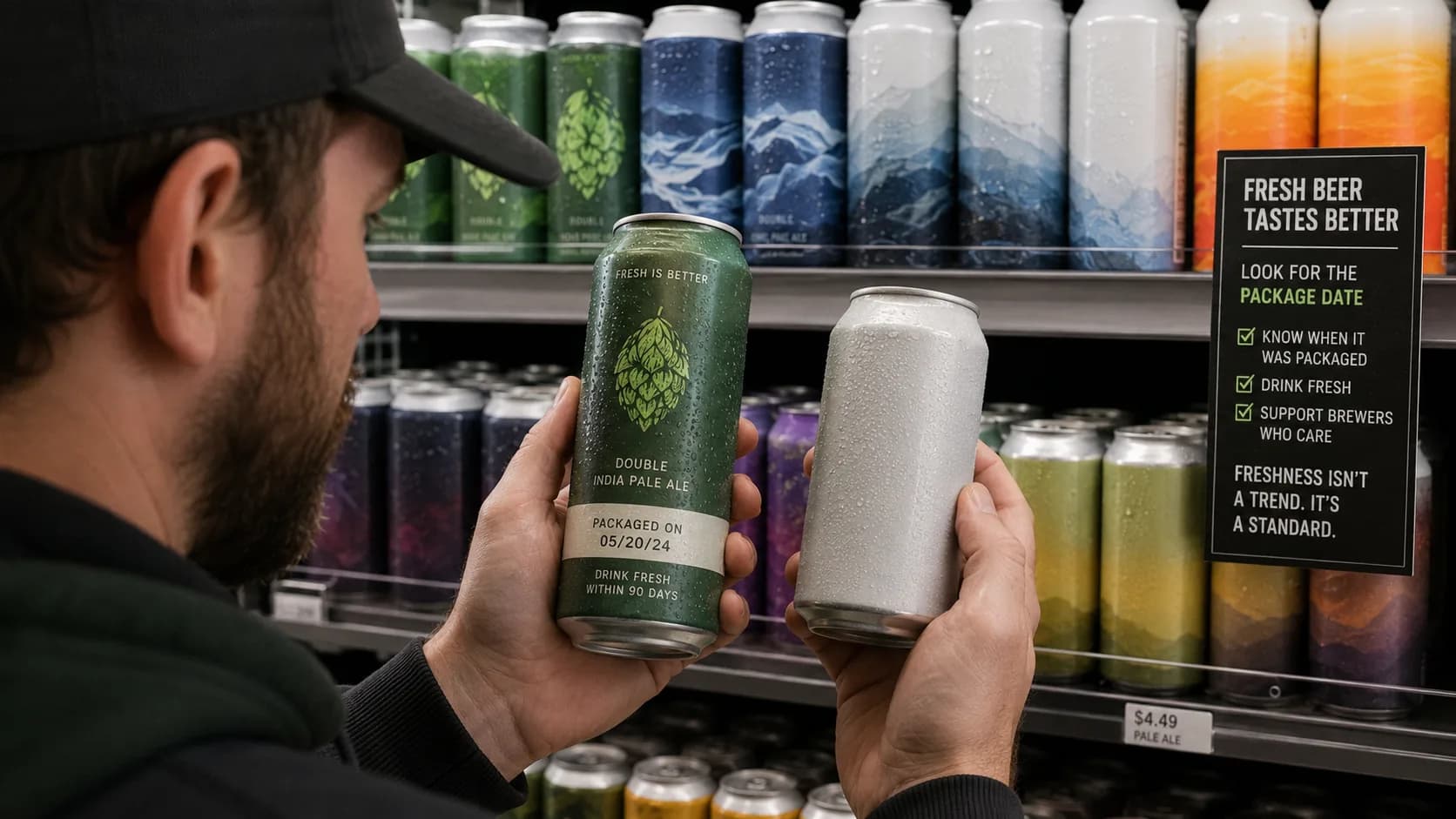
These are not the same kind of information. The package date lets the customer do their own math: a Hazy IPA canned 12 days ago is a very different product than the same beer canned 5 months ago, regardless of what the "best by" stamp says. A "best by" date asks the customer to trust the brewery's judgment; a package date gives them the raw fact and lets them judge.
Both can coexist. The strongest labels show the package date prominently and treat "best by" as secondary, because the package date is the number a knowledgeable craft drinker actually wants.
How to read the date code on the can
Even when a brewery dates its beer, the date often isn't in plain English. Four formats you'll run into, from most to least customer-friendly:
-
Plain calendar date — "PACKAGED ON 05/20/26" or "CANNED 5.20.26." The gold standard. No decoding required, and the format this whole article is arguing for.
-
Julian (ordinal) date — the day's number within the year, 1 through 365 (366 in a leap year). You'll see a code like
6142or142 6: one digit is the year (here6= 2026) and the three-digit chunk is the day of the year (142). The catch is converting that day number back to a calendar date. Find the month whose range contains the number, then count from its start day:Month Day-of-year range Month Day-of-year range Jan 1–31 Jul 182–212 Feb 32–59 Aug 213–243 Mar 60–90 Sep 244–273 Apr 91–120 Oct 274–304 May 121–151 Nov 305–334 Jun 152–181 Dec 335–365 So
142falls in the May row (121–151): 142 − 120 = day 22 → May 22. Day143would be May 23, and so on. In a leap year, add one day to anything from March onward. -
Batch / lot code — an internal string like
L6142ABthat bundles the date with line, shift, and batch identifiers. The date is usually embedded (often as a Julian date), but you may need the brewery's own decoder to be sure which digits mean what. If a customer can't read it without calling the brewery, it isn't really transparency. -
Notch or grid code — a small printed grid of months and years with a notch, punch, or ink mark on the production month. Common on some labels and case boxes. Squint-and-decode: better than nothing, worse than a printed date.
The takeaway for breweries: every layer of decoding you ask a customer to do is friction. A bare Julian code says "we recorded it, but we'd rather you didn't read it." A plain PACKAGED 05/20/26 says "here — judge for yourself." If you change only one thing about your labels, make the date human-readable.
Tapped date
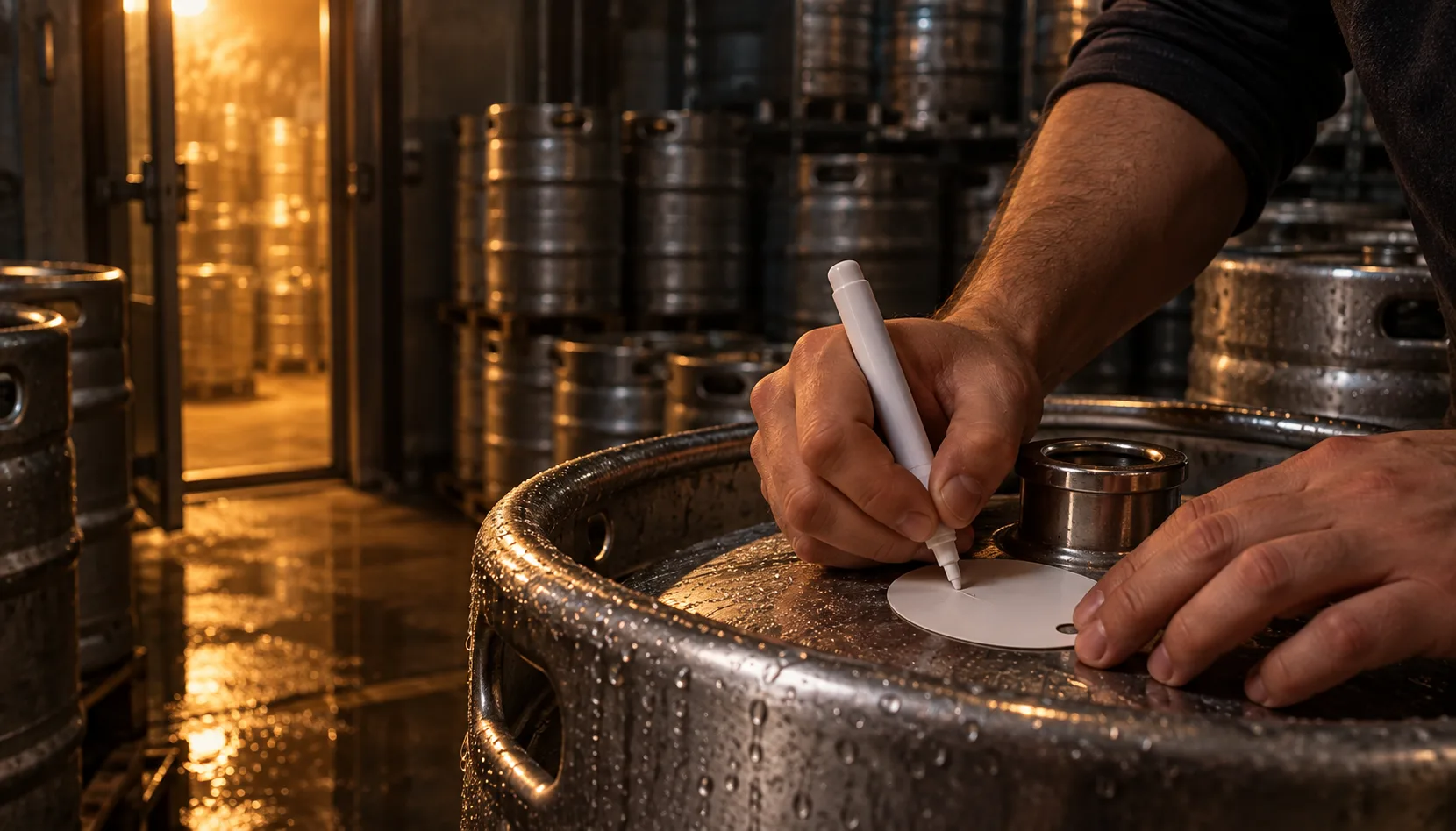
For draft, the equivalent is the tapped date — when the keg was opened and put on a line. A beer can be freshly packaged but sit tapped on a slow line for two weeks, slowly oxidizing and losing carbonation. Or it can be freshly tapped from a keg that was itself packaged months ago. Tracking both package and tapped dates is the only way to know what's actually in the glass.
Freshness windows by style
Not all beer ages the same way. The rough hierarchy:
| Style group | Peak window after packaging | Why |
|---|---|---|
| Hazy IPA / NEIPA | ~2–6 weeks | Volatile hop oils + low bitterness to mask fade; the canary in the coal mine |
| West Coast IPA / Pale | ~30–60 days | Hop aroma fades; bitterness lingers but loses brightness |
| Lager / Pilsner | ~60–120 days | Delicate, but no fragile hop aromatics to lose |
| Stout / Porter | Months | Roast and body hold; hop character isn't the point |
| Barrel-aged / Sour | Months to years | Often designed to evolve and improve |
The package date plus the style tells a customer almost everything they need. A Hazy IPA with no date is the riskiest purchase in craft beer; a barrel-aged stout with no date barely matters.
The science, briefly
Three things degrade beer: time (hop oils oxidize and volatilize), oxygen (creates papery, wet-cardboard off-flavors), and light (UV reacts with hop compounds to create the "skunky" thiol, which is why brown glass and cans beat clear glass). A package date is a proxy for the first one — the one the customer can't otherwise see.
Example Brewery Scenario
Pretend you run Headwater Brewing, a production-forward brewery distributing four-packs into 40 accounts across two counties. Your Hazy IPA is your volume leader. Today your cans carry only a small "best by" date six months out, laser-etched on the bottom rim where nobody looks.
You make one change: a bold, human-readable PACKAGED ON date on the side panel, plus a one-line "Best within 60 days — this is a fresh-hop beer" note.
What happens over the next two quarters:
- Bottle-shop buyers trust you more. A beer buyer deciding which Hazy to feature picks the one they can date — yours. You get more shelf facings, not fewer.
- Your reps stop fighting old stock. With dates visible, slow accounts rotate faster because everyone — distributor, retailer, customer — can see what's aging. The 5-month-old four-pack that used to sit and embarrass you gets pulled and replaced on schedule.
- Your taproom regulars start asking for "the fresh one." Once customers learn your Hazy has a tight freshness window, "is this batch fresh?" becomes a reason to visit when a new batch drops — not a reason to hesitate.
You didn't change the beer. You changed what the customer knows about the beer. The date did the work.
The flip side is the brewery down the road that hides its dates to protect old stock. Their most knowledgeable customers — the exact people who drive word of mouth — learn to assume the worst and buy elsewhere. Hiding the date doesn't sell the old beer; it just costs you the customers who care most.
Practical Checklist
If you want freshness to work for you:
- Print a legible, human-readable package date. Not laser-etched in 4pt font on the can bottom — a real date a customer can read in cooler light.
- Pick the side that matters for your styles. If you're hop-forward, lead with PACKAGED ON, not "best by."
- Add a one-line freshness note for fragile styles. "Best within 60 days — brewed to be drunk fresh" sets the expectation and creates urgency.
- Track tapped dates in the taproom, not just package dates. Pull tired lines before a customer finds them.
- Train staff to talk about freshness as a positive. "This just dropped Tuesday" is a sell, not a disclaimer.
- Message peak-freshness moments to customers, not just print the date. A date is passive; an alert that a customer's favorite is at peak is active demand generation.
- Rotate by date at every account. Transparency only builds trust if the dated stock is actually fresh.
How Brewlytics Helps
Dating the can is step one. Turning freshness into recurring demand is where Brewlytics comes in:
- Beer Intelligence stores each beer's package date, tapped date, and a style-aware freshness window — so the system knows when a given beer is at peak, not just when it was made.
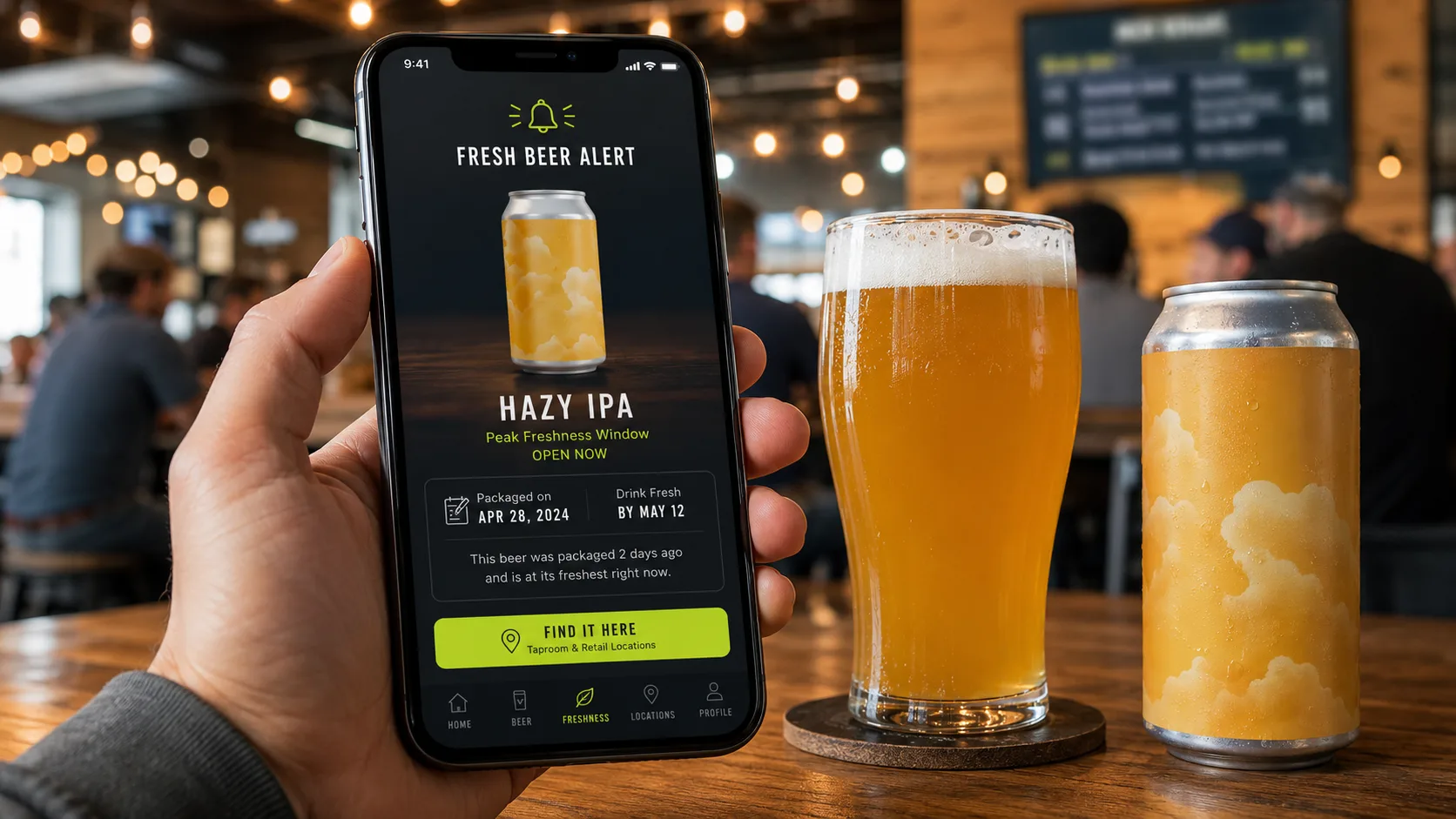
- Fresh Beer Alerts match a customer's taste profile against the beers currently in their peak-freshness window and message them at the right moment: "the Hazy you love just dropped, and it's freshest right now." That's the difference between printing a date and using it.
- Barley, the AI bartender, can answer "what's freshest right now?" from your live tap and package list — turning a freshness question into a recommendation.
- Barley Lens is the customer-facing expression of the "No Date, No Buy" idea — read more on the Lens page.
Freshness transparency builds trust passively. Freshness messaging turns that trust into a reason to visit this week. For the longer argument on why timely, taste-matched outreach beats the Tuesday newsletter, see why traditional brewery loyalty programs don't create regulars.
FAQ
(See the schema-ready FAQ block at the end of the page for the full set — covers what a package date is, the "No Date, No Buy" principle, how long beer stays fresh, package vs. tapped date, how to read a Julian date, why some breweries hide dates, and whether dating drives sales.)
Ready to turn freshness into repeat visits?
Most breweries already print a date somewhere on the can. The opportunity is using it — matching fresh batches to the customers most likely to love them, at the moment they're at peak.
→ Book a demo to see Fresh Beer Alerts on your own tap list. → Explore Barley Lens — the customer-facing side of No Date, No Buy.
Frequently asked questions
Related Brewlytics Feature
Fresh Beer Alerts
Notify customers when a beer matches their taste and is still fresh.
See how it works →Keep reading
Why Fresh Beer Alerts Could Be the Next Big Brewery Marketing Tool
Subscriber count is a vanity metric. A fresh beer alert ties a specific guest to a specific keg on a specific week — that ratio is what breweries should track.
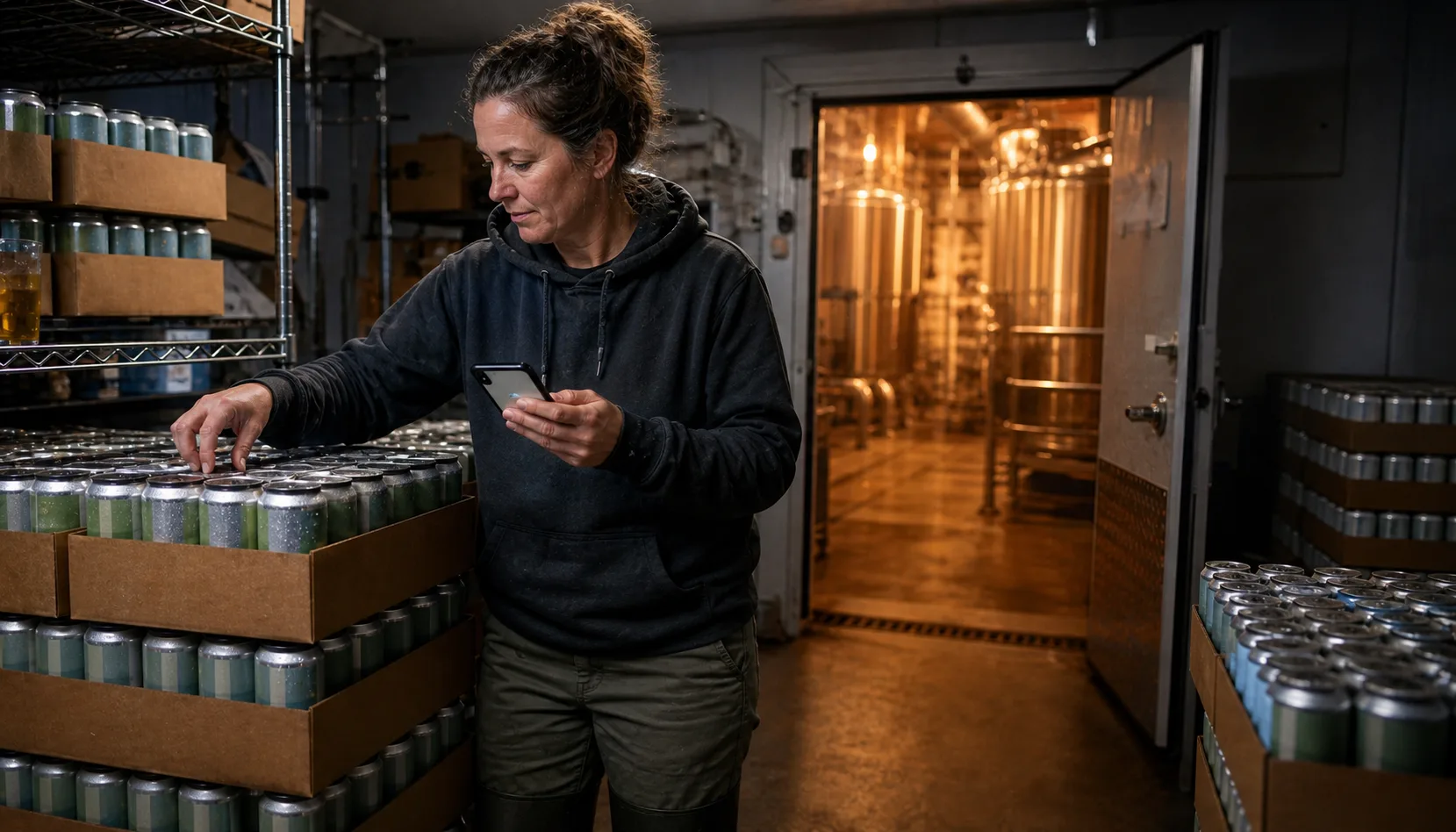
Brewery SMS & Text-Message Marketing: A Playbook
SMS is the only brewery channel read in minutes instead of days. Here's the consent floor, the five plays that actually work, and how to segment texts by taste.
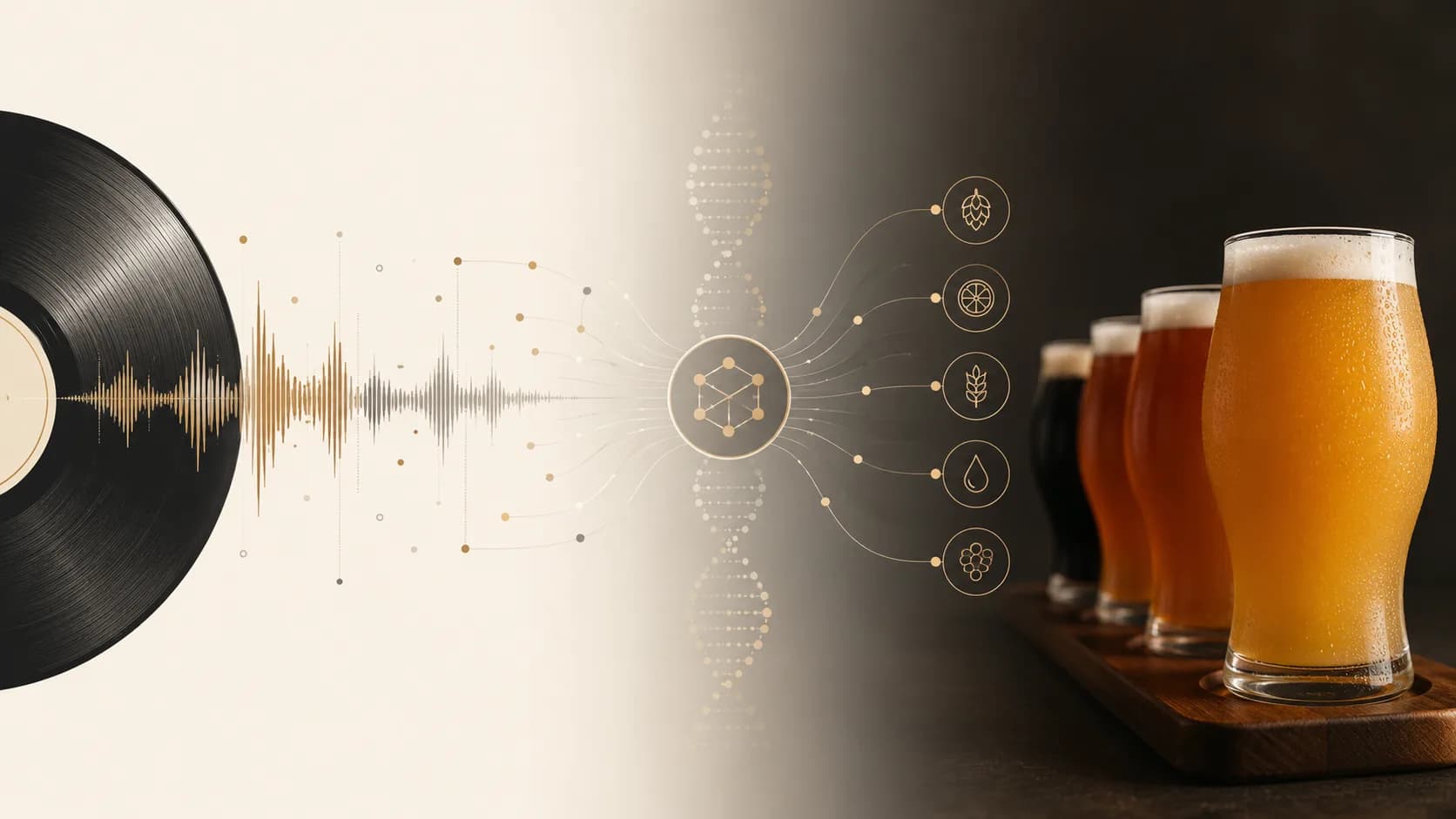
What the Music Genome Project Can Teach Craft Breweries
Pandora's Music Genome split every song into ~450 attributes and built a recommendation engine on it. Craft beer has the same raw material — and barely uses it.
Want to see this working in your brewery?
Go Pro to see your customers and act on the data — taste profiles, segmented iMessage, SMS + email campaigns, the AI bartender, and the full dashboard. Or book a walkthrough with the brewer who built it. Not ready? Start free, no card.
Just here for the beer? Get the free Barley app