
Why Traditional Brewery Loyalty Programs Don't Create True Regulars
By Brian Winckel · Founder, Brewlytics.ai
Short Answer
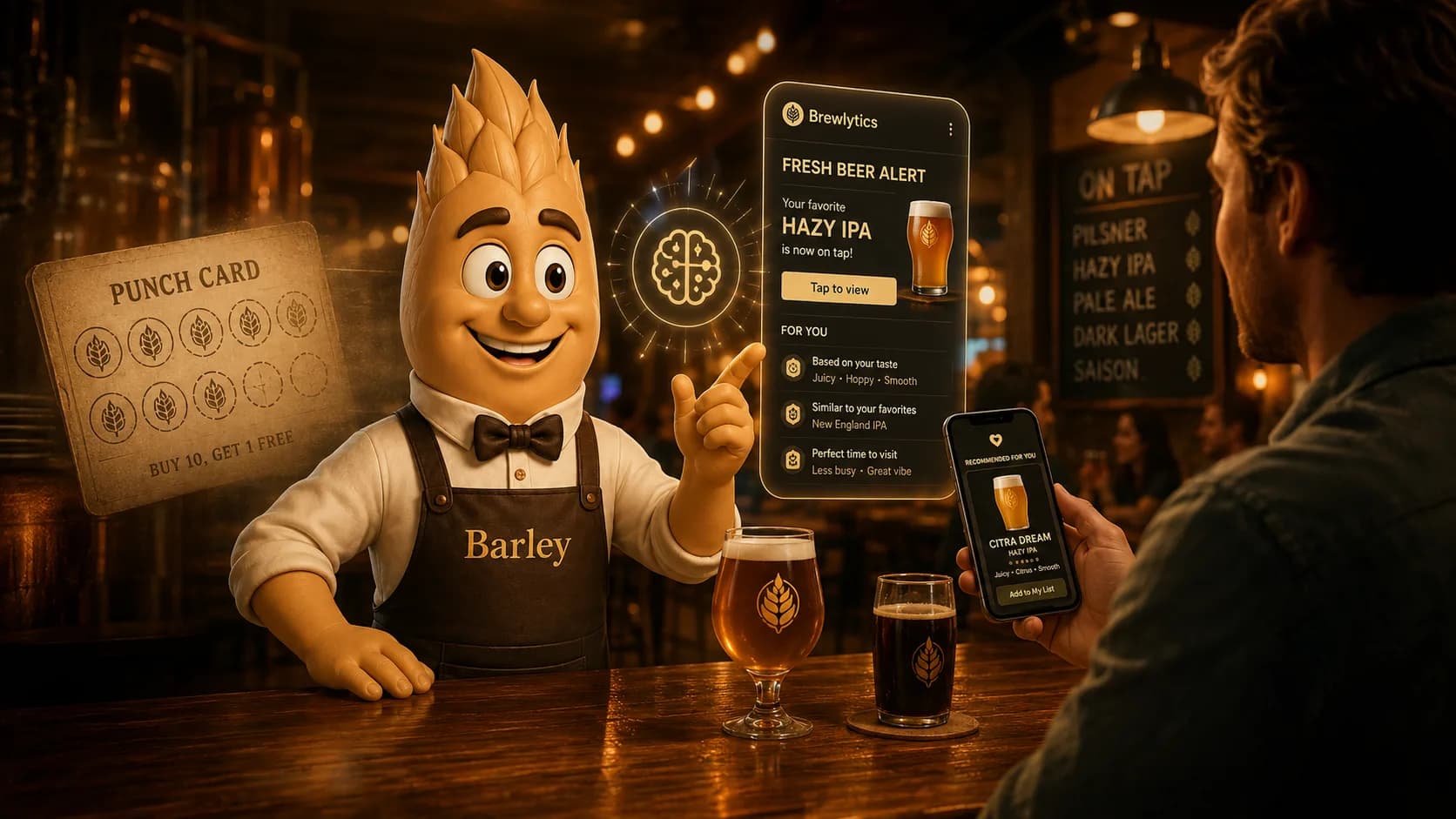
Traditional brewery loyalty programs reward customers for behavior that would have happened anyway — the regular who was going to visit Friday gets a punch, the mug club member who pre-paid for status gets their discount. They optimize for visit count and miss the three ingredients that actually create regulars: memory of what each customer likes, a reason to return this week (not someday), and a sense of identity inside the taproom. A loyalty program without those three things is bookkeeping, not loyalty.
Barley's Take
Most loyalty programs measure what already happened. The interesting question is what would have happened if your loyalty program had a memory.
Why This Matters for Breweries
Repeat customers are roughly five times more profitable than first-timers — every brewery owner has heard this stat. What the stat doesn't say is which repeat customers you're getting back. A loyalty program that produces ten visits a year from people who would have come eight times anyway is a discount, not a retention engine. A loyalty program that converts a one-time visitor into a weekly regular over six months is something else entirely. That gap — discount versus retention engine — is the real test of any brewery loyalty program software, and it's where most tools quietly fail.
The four loyalty patterns most breweries run today all leak in the same place:
- Punch cards reward visit count without distinguishing between customers. The person who orders a flight and a snack gets the same punch as the person who orders a single pour and leaves.
- Points-per-dollar marginally improves on that by weighting spend, but still treats every customer as a single anonymized purchase stream.
- Mug clubs create status (good) and recurring revenue (good), but they self-select for people who were already going to come back. The mug club tells you nothing about the 200 first-timers from last month.
- POS-native loyalty (Square Loyalty, Toast Loyalty, Arryved Loyalty) handles the transaction plumbing well — sign-ups, points, redemptions — but it has no concept of taste, freshness, or the catalog beyond a SKU. It records loyalty; it doesn't generate it.
None of those four are wrong. They're just incomplete.
How It Works: The Three Ingredients of a Real Brewery Loyalty Program
A loyalty program that produces regulars has three components a punch card can't fake.
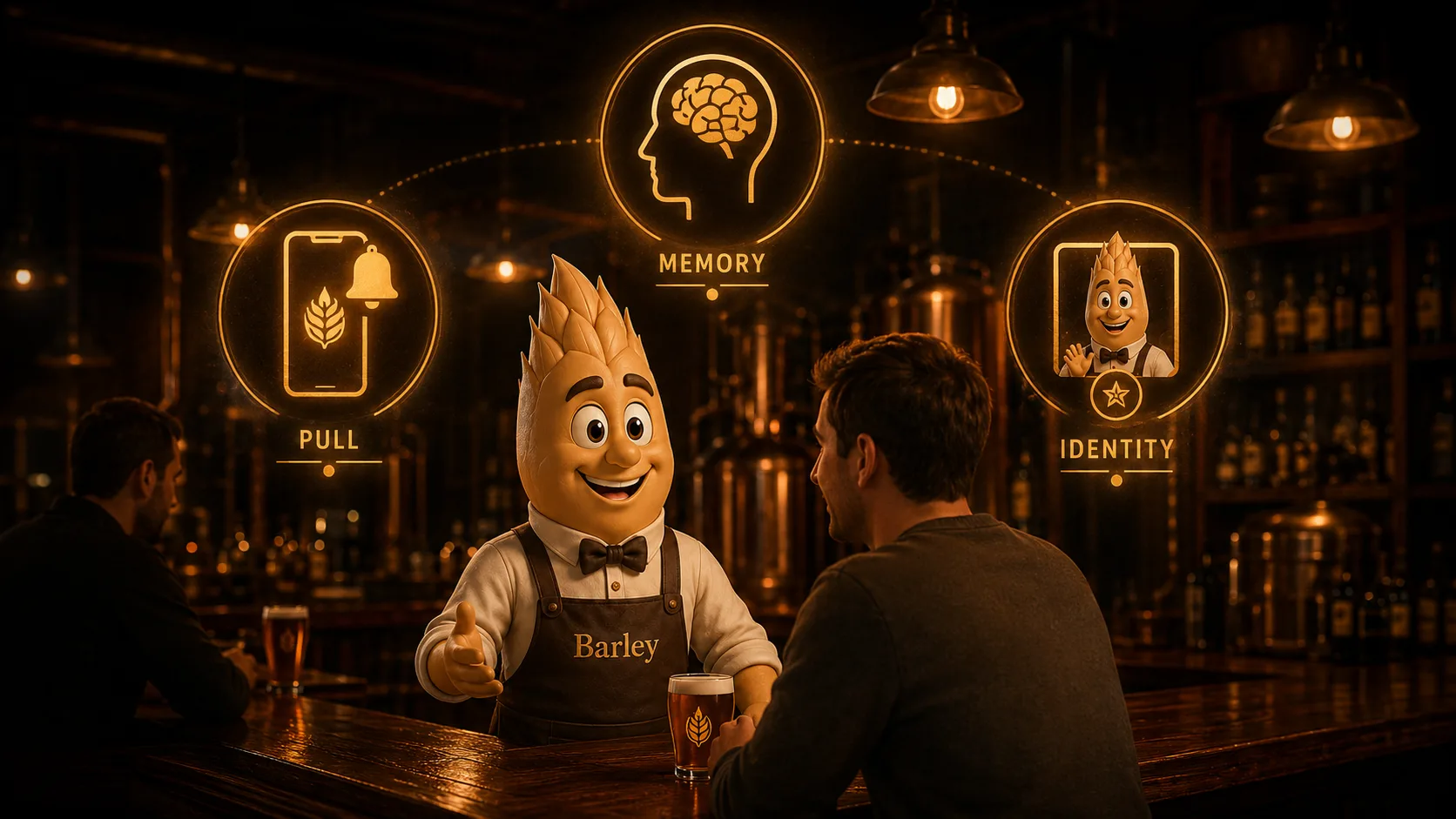
1. Memory
The program knows what each customer actually drinks. Not "this person has been here four times" — this person ordered the Hazy IPA twice, the West Coast IPA once, skipped the dark beer, and rated the lemon-lime sour 5 stars. That's a taste profile, and it's the raw material for everything else.
Memory is what lets you stop sending the same email to everyone. The customer who loves dank IPAs gets a different message than the customer who's working their way through your sour program. Both feel like the brewery noticed them, because the brewery did.
2. Pull
A real regular has a reason to come back this week, not someday. The reason needs to be specific and time-bound:
- "The Hazy IPA you rated 5 stars last month — we just tapped the next batch."
- "Tomorrow is the last night before the Citra Pale runs out."
- "A new lemon-lime sour just packaged — based on what you usually drink, you'd probably love this."
Pull is what turns a loyalty program from "we'll remember you when you visit" into "you should visit tomorrow."
3. Identity
Being a regular means something visible. When a regular walks in, the staff knows their name and what they usually order. When the regular opens the brewery's app or chat, it greets them by preference, not by points balance. When the regular tells a friend about the brewery, the brewery can recognize that friend at the door because the friend opted in too.
Identity doesn't come from a mug on the wall (though that helps). It comes from being known.
Example Brewery Scenario
Pretend you run a 5-barrel taproom that pours about 30,000 pints a year. You've had a punch-card loyalty program for two years. You have 800 sign-ups and your monthly active count is about 140 — roughly what it was a year ago.
Two of your sign-ups are Maya and Jordan.
- Maya signed up six months ago at the bar. She's been in four times, always orders a Hazy IPA, and rated your last seasonal a 5. Your punch card has her at "4 of 10 — keep coming back!"
- Jordan signed up four months ago. He's been in twice and always orders a sour. The punch card has him at "2 of 10 — almost there!"
Last week you packaged two new beers: a Hazy IPA refresh and a lemon-lime sour collab. Under the punch-card system, you sent the same Tuesday newsletter to everyone, with a picture of the new releases at the top. Maya didn't open it. Jordan didn't open it.
Under a memory + pull + identity loyalty program:
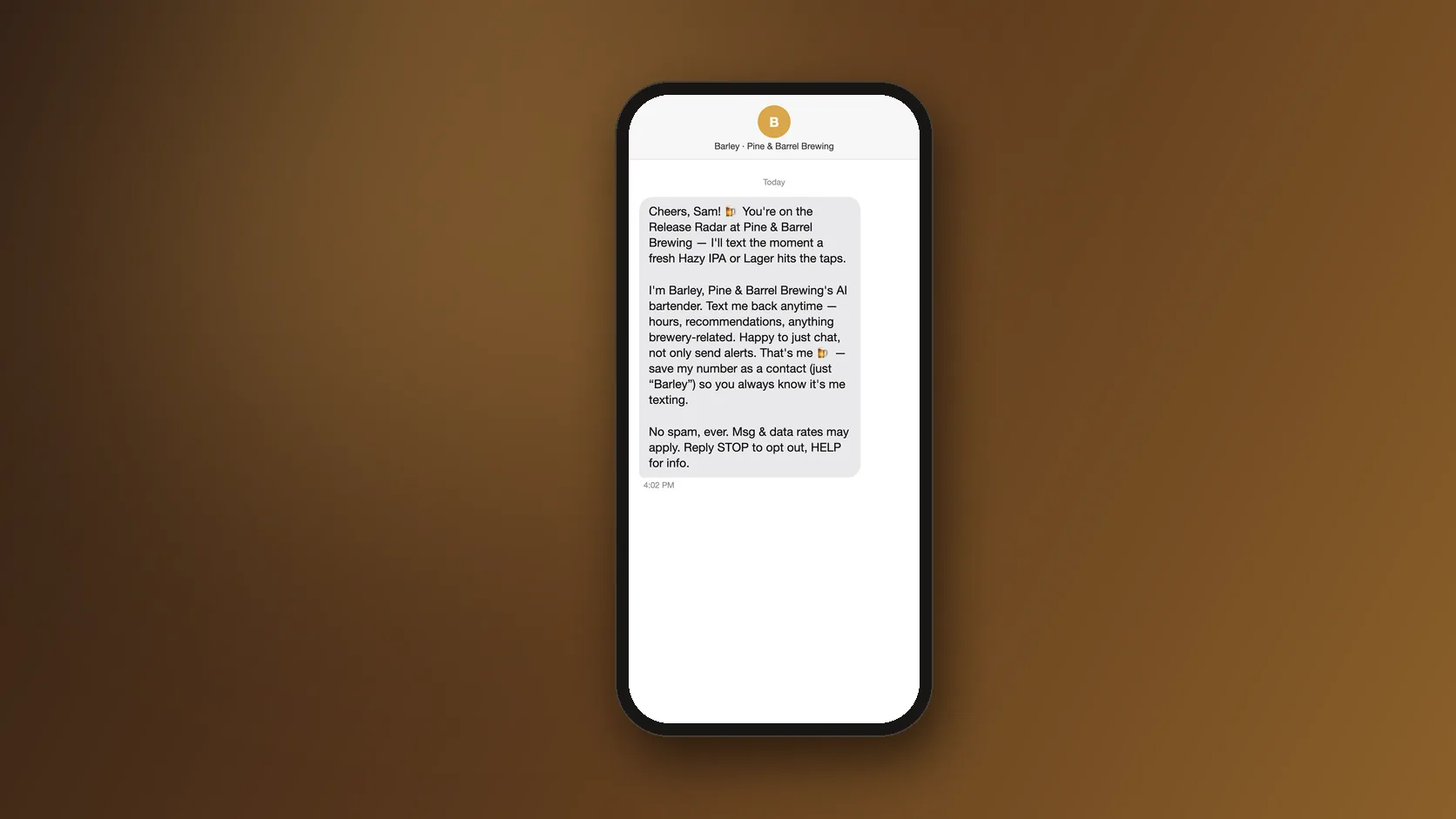
- Maya gets a 9am text on Wednesday: "The new Hazy IPA just hit the tap list — peak freshness right now. You're in for the year so far. Saving you a seat?"
- Jordan gets a 9am text on Wednesday: "New lemon-lime sour just packaged — three weeks from now will not taste like today. Worth a visit?"
Same brewery. Same beer. Same Wednesday. Two messages instead of one mass email, written from the customer's known preferences.
The punch card is still there — Maya and Jordan still get their punches. But the punch card stopped being the loyalty program. The loyalty program is the memory underneath it.
Practical Checklist
If you're auditing your existing program, work through these:
- Can you list, by name, the top ten customers who order Hazy IPAs? If no, you don't have memory.
- Did anyone visit this week because of a message you sent? If you can't answer, you don't have pull.
- When a regular walks in, does at least one staff member know their usual? If no, you don't have identity.
- Are your campaigns segmented by taste, not by zip code or sign-up date? Zip-code segmentation is a heuristic for the absence of taste data.
- What happens when you tap a beer for the first time? If the answer is "we post on Instagram and email the list," you're treating every customer the same.
- What's your second-visit rate? First-visit-to-second-visit conversion is the most honest loyalty metric most breweries don't track.
If three or more of those answers are missing, your current loyalty program is the punch card, not the relationship.
How Brewlytics Helps
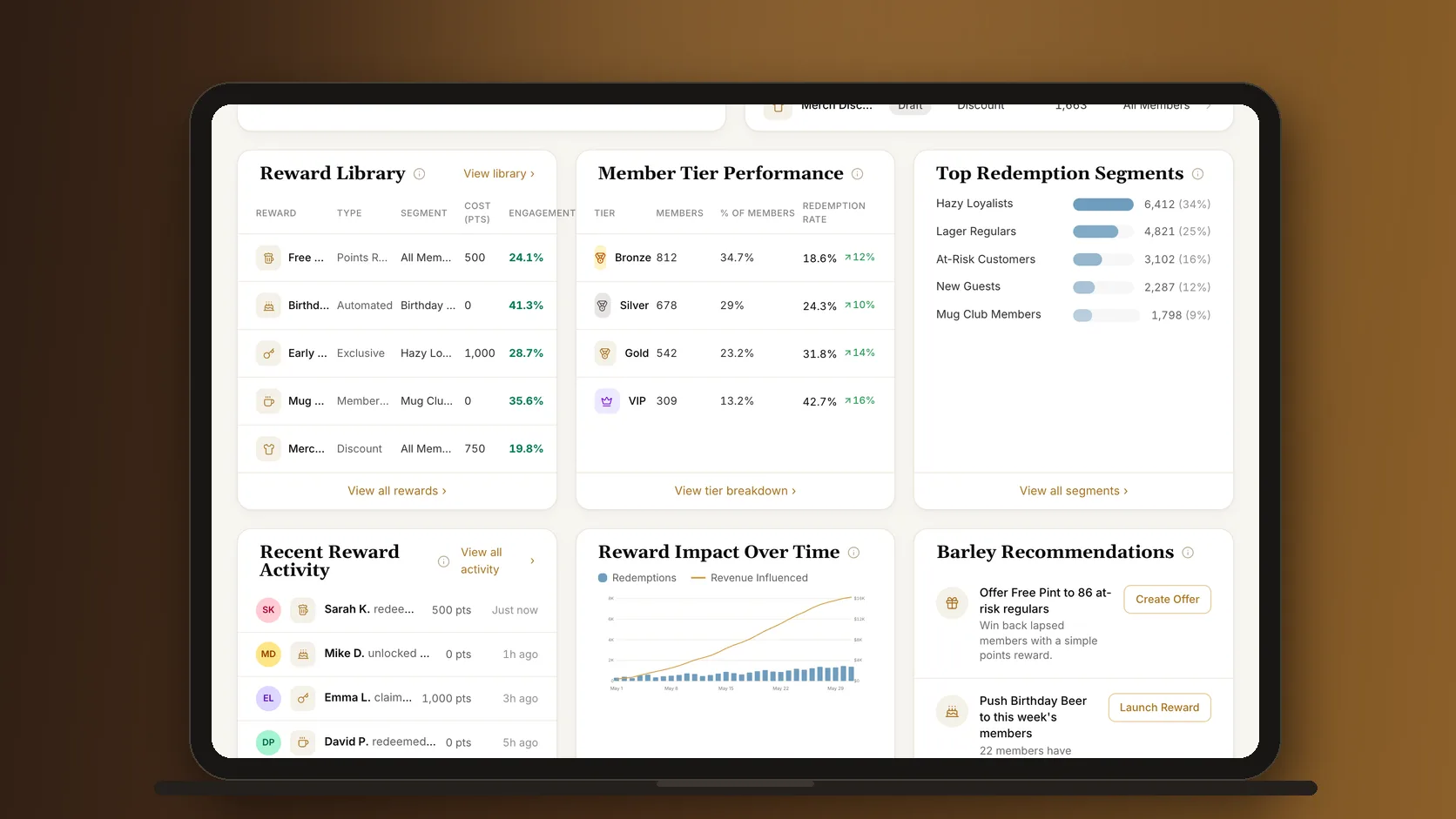
Brewlytics builds the memory, pull, and identity layer on top of your existing POS — Square today, with Toast next on the roadmap and Arryved third. Specifically:
- Customer Taste Profiles accrue automatically as customers engage with Barley — every rating, claimed order, chat, and quiz answer sharpens the profile. No survey, no tablet at the bar.
- Fresh Beer Alerts match a customer's taste profile against the beers currently pouring and message them when something they'll love is in its peak freshness window.
- Barley, our AI bartender, recognizes returning customers by phone number across SMS and the in-taproom chat — answering "what should I order?" with a real recommendation, not a generic top-seller.
- Rewards still live alongside the new layer — points, redemptions, and mug clubs all keep working, because the issue was never that punch cards exist. The issue was that punch cards were the only thing.
You don't replace the punch card. You make it the smallest part of the program.
FAQ
(See the schema-ready FAQ block at the end of the page for the full set — covers mug clubs, points-per-dollar, POS-native loyalty, discount-free regulars, ramp-up time, and minimum data requirements.)
Ready to see what your customer taste data already says?
Most breweries already have a menu worth more than they realize. We can read your Square catalog today, map your menu's flavor DNA through the Beer Taste Genome for free, and show you how taste profiles accrue as your customers start engaging with Barley.
→ Book a demo and bring your POS account. → See how Brewlytics works before you talk to us.
Frequently asked questions
Related Brewlytics Feature
Rewards
Brewery loyalty mechanics that don't require discounting beer.
See how it works →Keep reading
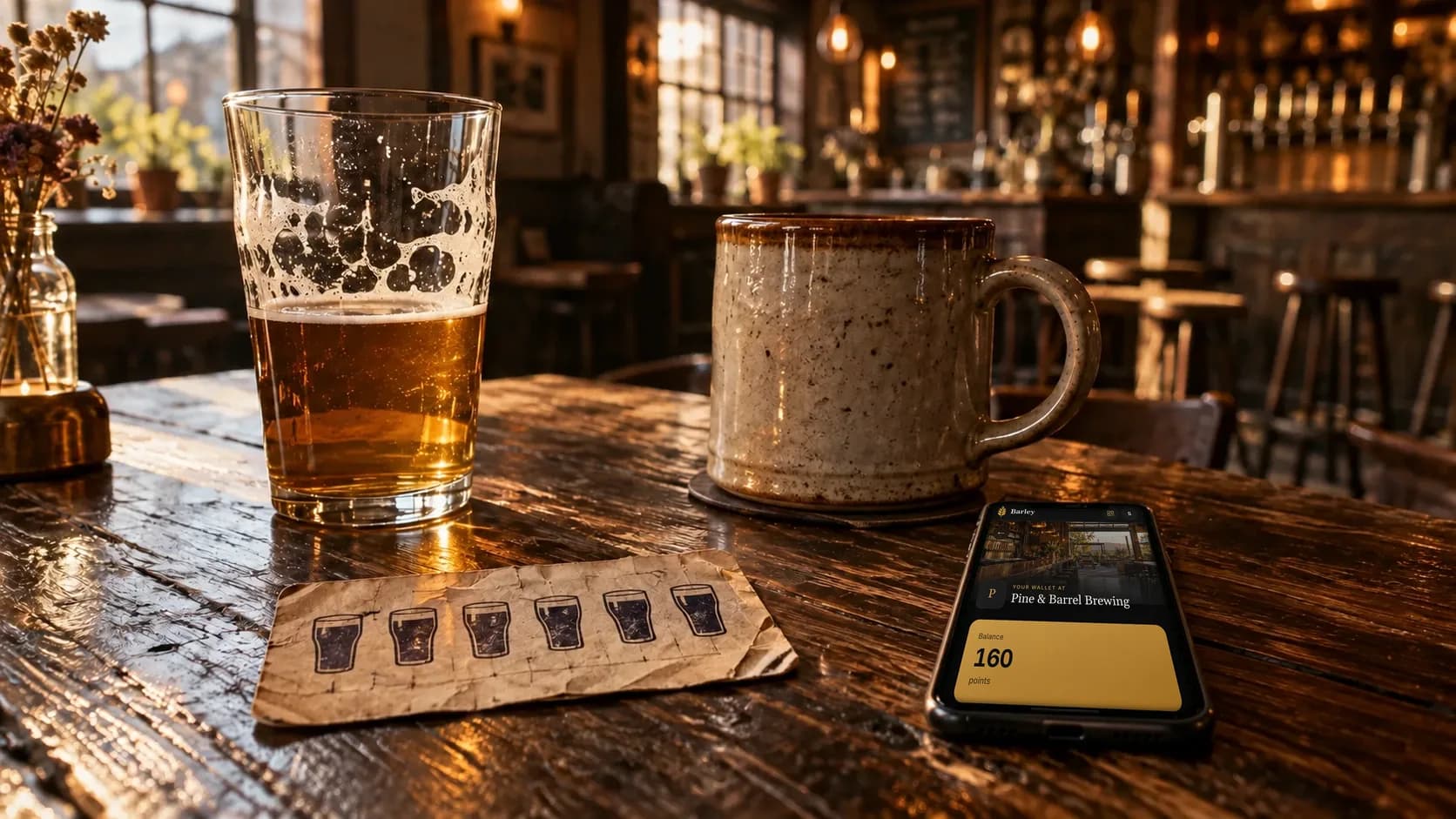
Best Brewery Loyalty Software for Taprooms (2026)
Eight brewery loyalty tools compared for 2026: Square, Toast, Arryved, MugClub.beer, TapWyse, LoyalBrew, Untappd and Brewlytics, with a best-for pick for each.
Brewery Loyalty Program Ideas That Actually Drive Repeat Visits
Twelve brewery loyalty mechanics that move repeat visits — what each one does, why it works, and when to skip it. Frequency, status, discovery, community.
How Personalized Beer Recommendations Can Increase Taproom Loyalty
Punch cards reward visits you already made. Personalized beer recommendations earn the next one. How taste-matched picks turn first-timers into regulars.
Want to see this working in your brewery?
Go Pro to see your customers and act on the data — taste profiles, segmented iMessage, SMS + email campaigns, the AI bartender, and the full dashboard. Or book a walkthrough with the brewer who built it. Not ready? Start free, no card.
Just here for the beer? Get the free Barley app