
How Personalized Beer Recommendations Can Increase Taproom Loyalty
By Brian Winckel · Founder, Brewlytics.ai
Short Answer
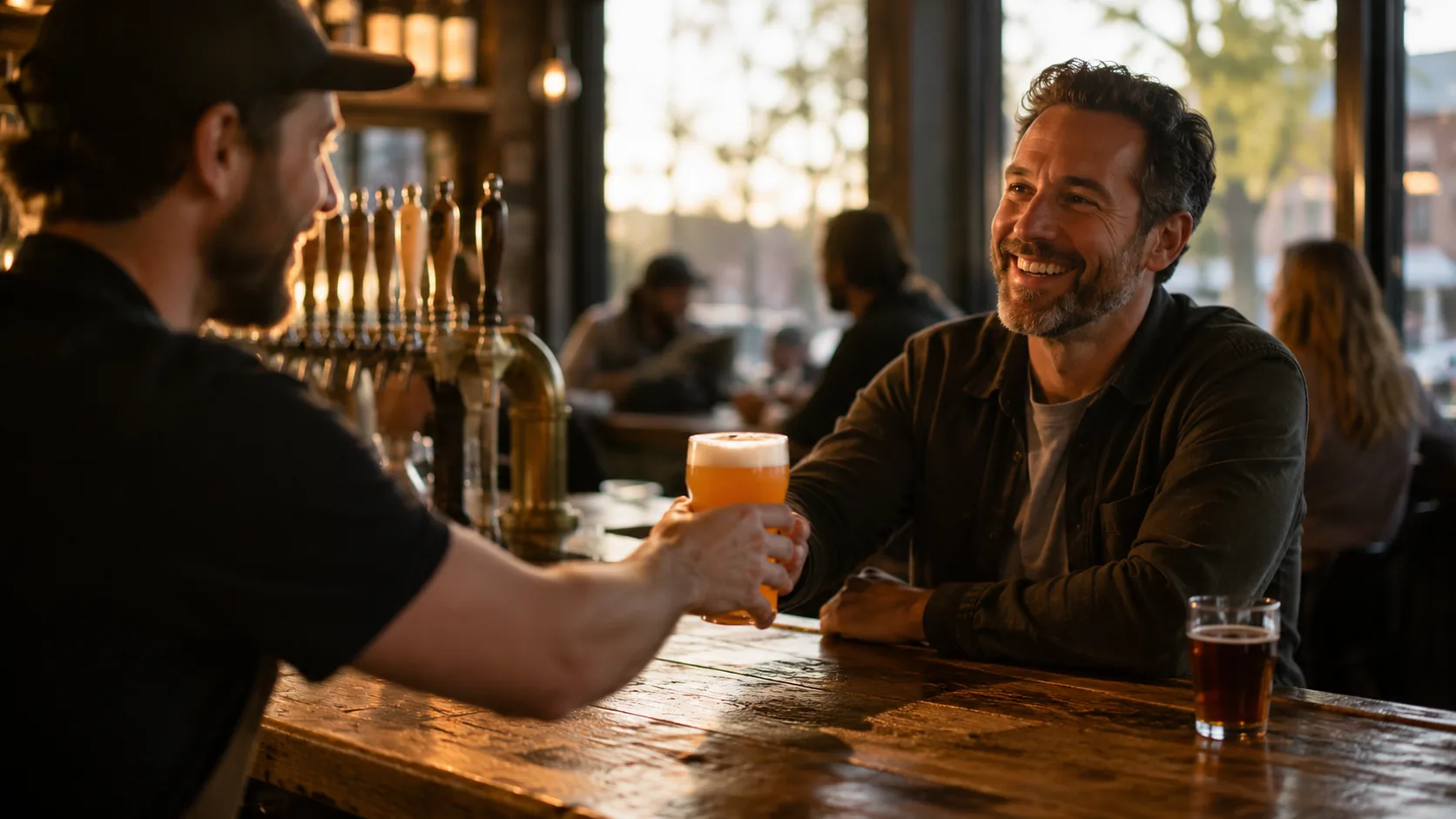
Personalized beer recommendations turn a taproom from a place that sells beer into a place that knows your taste. When a regular who loves hazy IPAs gets a timely heads-up that you just tapped a juicy Galaxy single-hop, they come back for it — usually sooner and more often than a punch card would bring them. Loyalty stops being about accumulating points and starts being about relevance: the beers a customer is steered toward actually match what they like, so every visit feels personal.
Barley's Take
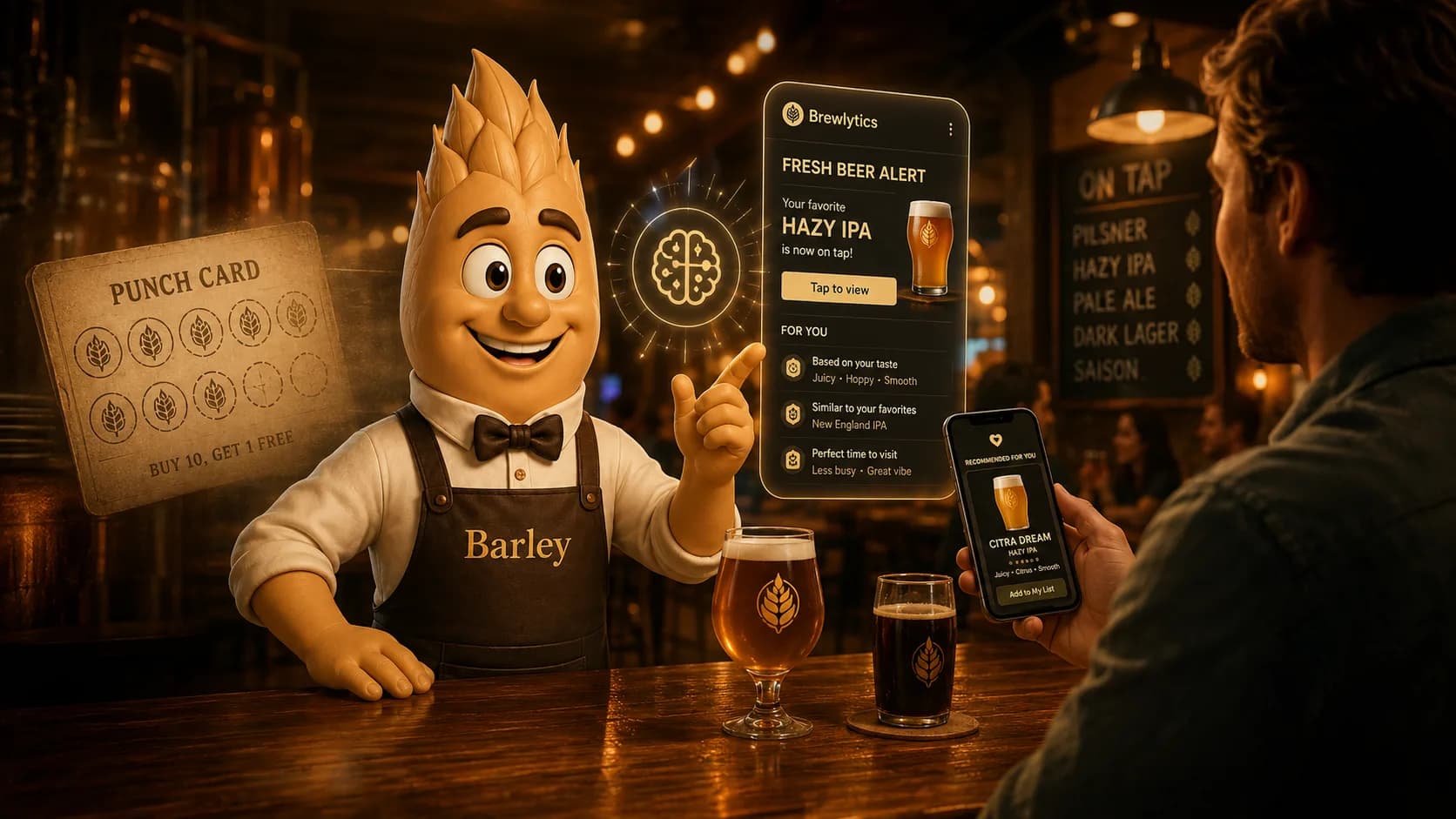
A punch card rewards the tenth visit. A good recommendation earns the next one. The breweries that win aren't the ones with the most rewards — they're the ones whose regulars feel known.
Why This Matters for Breweries
Most brewery loyalty programs reward the wrong thing. A punch card or a points balance pays customers for visits they were already going to make, and asks nothing about what they like. Buy nine, get the tenth free. It treats a hazy-IPA devotee and a crisp-lager loyalist exactly the same — which is to say, it treats neither of them like a person.
The problem is that frequency isn't the same as loyalty. A customer who comes in because they have two punches left isn't loyal; they're price-sensitive. Real loyalty is what happens when a taproom consistently gives someone a reason to choose you — and the most reliable reason is relevance. People come back to the place that seems to understand their taste.
That's what a personalized recommendation does. A personalized beer recommendation is a suggestion matched to one drinker's actual preferences — the styles and flavors they've shown they enjoy — and delivered at the moment it matters, usually when a beer they'll love is fresh on tap. It's the digital version of the bartender who says, "You liked the Galaxy pale last month? We just tapped a single-hop Nelson — you're going to want this one."
Scaled across every customer, that small moment is a loyalty engine.
How It Works
Personalization runs on three steps: knowing the customer, matching beers to them, and delivering the nudge at the right time.
Building the taste profile
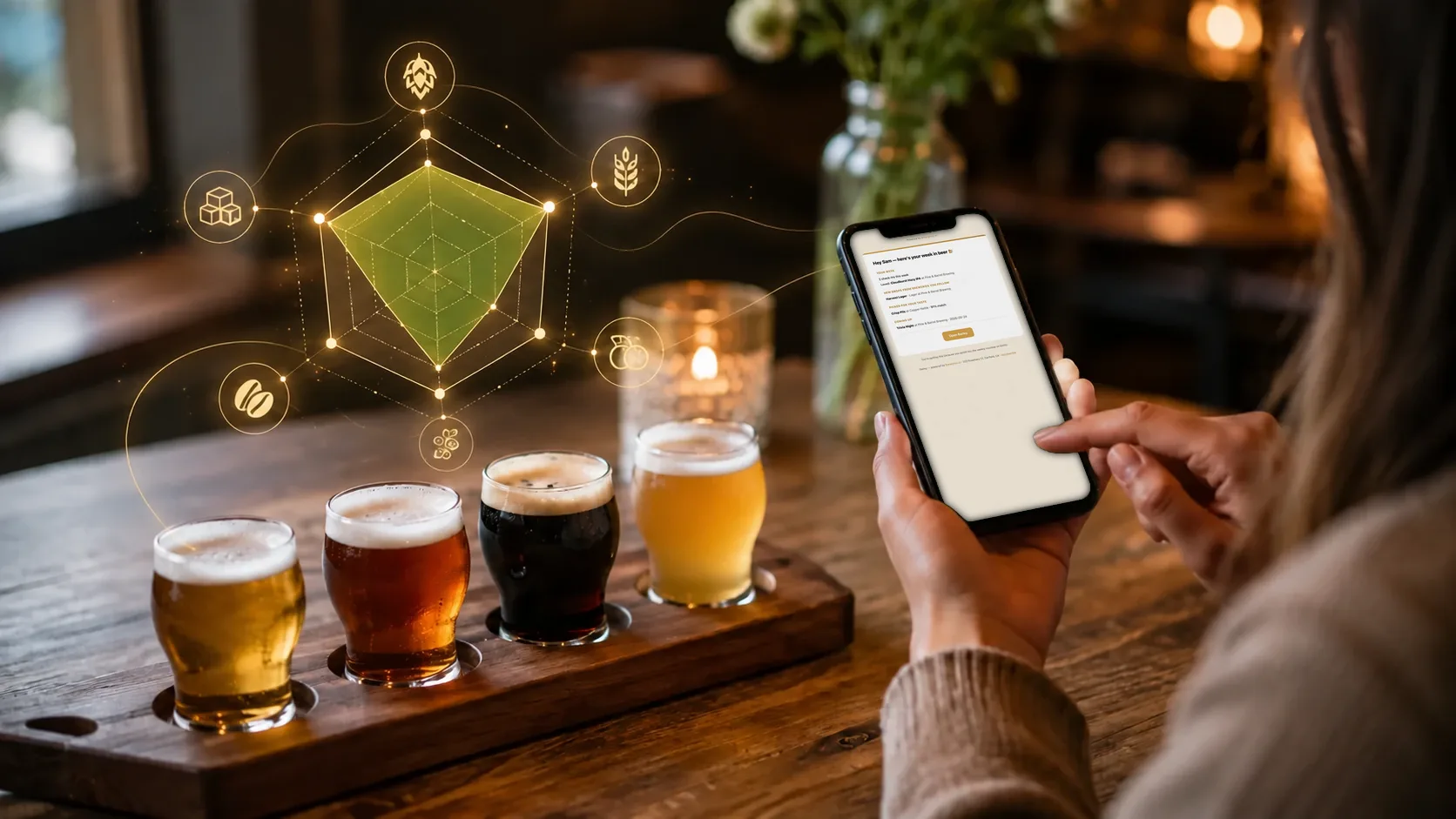
A taste profile is a structured picture of what a drinker likes. It's assembled from signals the customer gives you:
- Ratings — the beers they score highly (and poorly) in an app like Barley.
- Check-ins — what they're drinking, and where.
- Purchase history — what they actually buy, pulled from your POS.
The important honesty here: the sharpest profiles come from engagement, not from sales data alone. POS history tells you someone bought three IPAs, but a rating tells you they loved the juicy one and shrugged at the bitter one. The profile deepens every time the customer interacts — so the system gets more useful the more a regular uses it, which is exactly the flywheel you want.
Matching beers to people
Once you can describe a drinker's taste, you can describe your beers the same way — by style, flavor, and intensity — and match the two. A customer whose profile leans tropical and soft maps cleanly onto a hazy IPA or a fruited sour; a malt-forward drinker maps onto your amber, porter, or Vienna lager. This is a recommendation engine: it ranks what's on tap by how well each beer fits each person, instead of treating the tap list as one undifferentiated menu.
Delivering the nudge
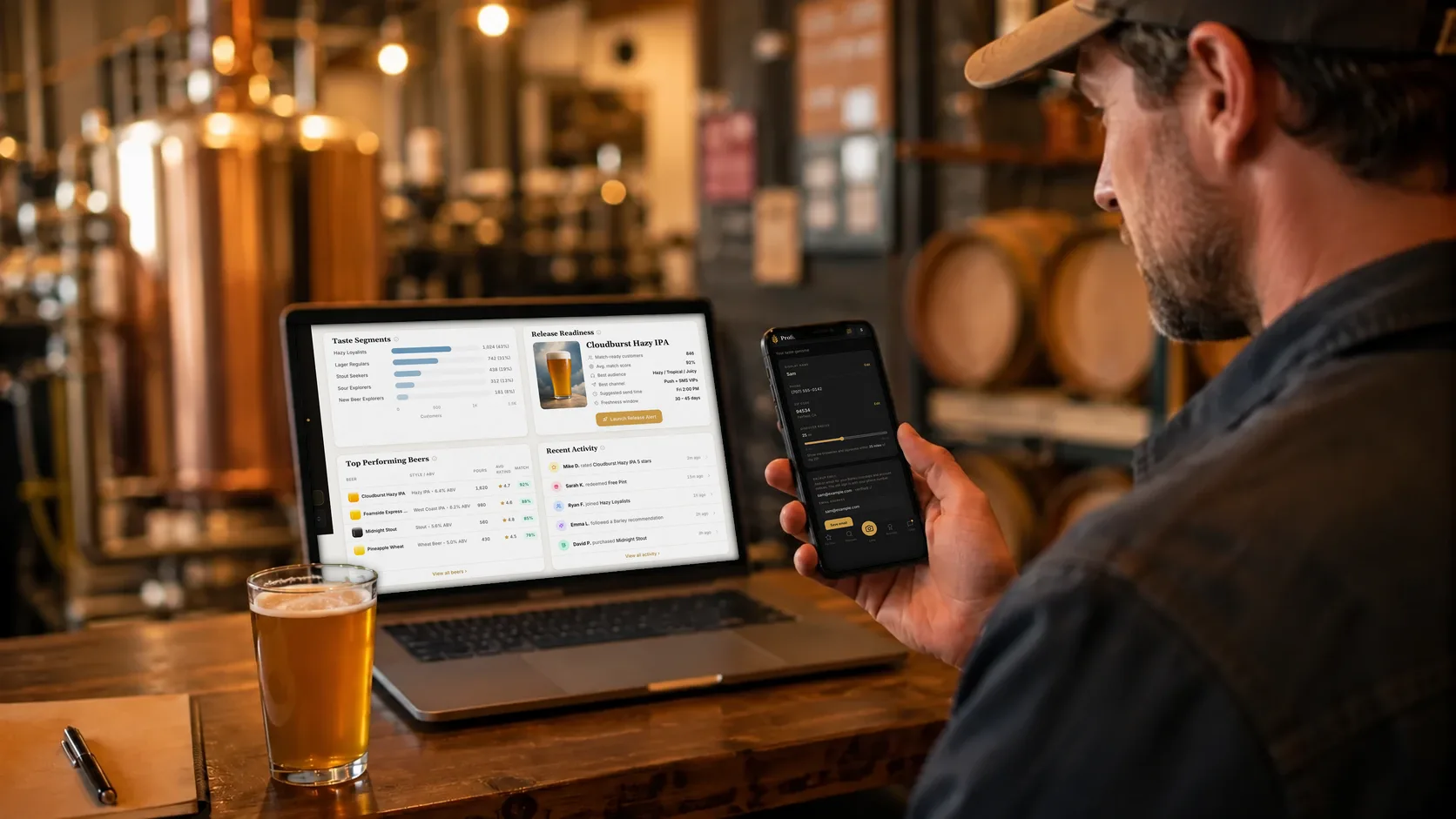
A match no one hears about does nothing. The final step is reaching the right customers — and only the right customers — when a beer they'll love is fresh. Instead of blasting your whole list every time you tap something, you tell the 40 hazy-IPA fans about the new hazy and leave the lager crowd alone. Fewer messages, far more relevant, and nobody learns to tune you out.
Example Brewery Scenario
Ridgeline Brewing is a 7-barrel taproom running on Square. Marcus is an occasional customer — comes in maybe once a month, always orders something hoppy. In the past, Ridgeline had no way to know that; he was just another card swipe.
This spring, Marcus starts using Barley and rates Ridgeline's flagship Hazy IPA five stars. That single rating, plus his Square purchase history, sketches a clear taste profile: tropical, juicy, low-bitterness, hop-forward.
Two weeks later, Ridgeline taps a small batch — a Galaxy single-hop pale, bright and fruity, the kind of release that used to sell slowly because the people who'd love it never heard about it in time. This time, Barley flags it to the 40-odd regulars whose profiles match, Marcus included: "Ridgeline just tapped a Galaxy single-hop — juicy and fresh, right up your alley."
Marcus comes in that Thursday. He likes it enough that he brings a friend back the next week. Two visits that month instead of one, plus a new face — off one well-timed, relevant message. Multiply that across a tap list and a customer base, and the recommendation engine is quietly doing the work a punch card never could.
Practical Checklist
Things you can start on this week:
- Capture taste signals, not just transactions. Give customers a low-friction way to rate what they drink — a QR code on the table tent, a one-tap prompt in an app. Purchases tell you what sold; ratings tell you what landed.
- Tag your beers by flavor, not just style. "Hazy IPA" is a start; "juicy, tropical, soft, low-bitterness" is what actually matches a person.
- Segment your announcements. Before your next release blast, ask: who specifically will love this? Send it to them, not everyone.
- Time it to freshness. A hoppy beer is at its best in its first weeks. Recommend it while it's fresh, not after it's faded.
- Close the loop. Track whether recommended customers actually come in. Relevance you can measure is relevance you can improve.
How Brewlytics Helps
Brewlytics is built around exactly this loop, so you don't have to wire it together yourself:
- Customer Taste Profiles turn ratings, check-ins, and POS history into a per-drinker picture of what each customer likes — the foundation everything else runs on. (See how →)
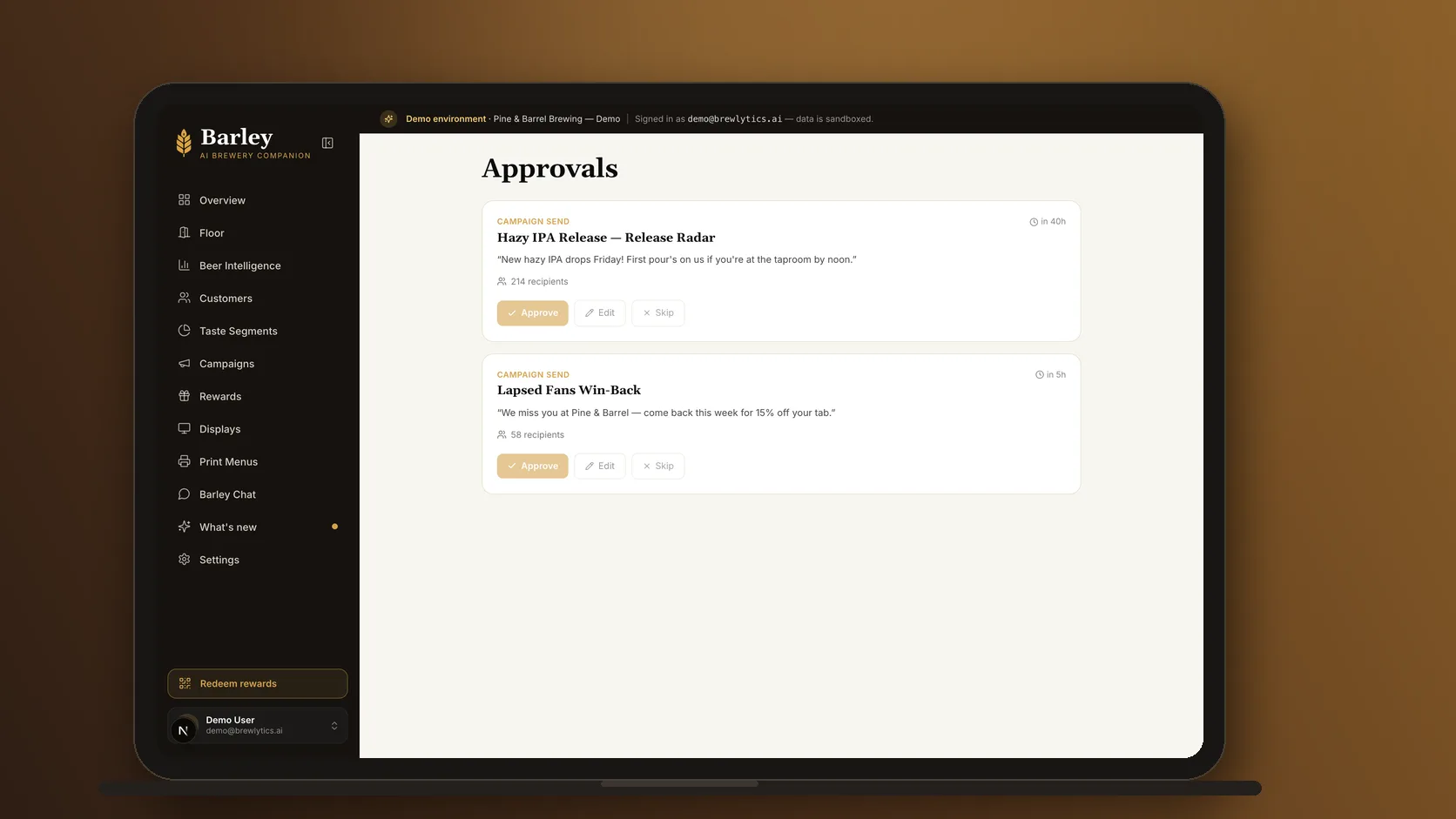
- Barley, the AI bartender, makes the recommendations and delivers them in the customer's own words, over chat or SMS, so a match becomes an actual nudge. (What is an AI bartender? →)
- POS sync (Square and others) pulls purchase history in automatically, so profiles start with real buying signal instead of a blank slate.
- Loyalty & Rewards ties it together — so the customers you're recommending to are the same ones earning recognition for coming back. (See loyalty →)
The point isn't to replace your bartenders. It's to give every regular the "we just tapped the thing you'll love" moment, even the ones your staff has never met. For the bigger argument on why points-based programs fall short, see why traditional brewery loyalty programs don't create true regulars.
FAQ
(See the schema-ready FAQ block at the end of the page — it covers what a taste profile is, how recommendations differ from punch cards, how much data you need, the "creepy" question, POS compatibility, and the loyalty payoff.)
Ready to turn regulars into people you actually know?
The breweries that win the next decade won't be the ones with the cleverest punch card. They'll be the ones whose customers feel recognized — steered toward beers they love, the moment those beers are fresh. That's loyalty you can't discount your way into.
See what taste-matched recommendations would look like on your own tap list: book a demo, or read how an AI bartender helps breweries sell more beer.
Frequently asked questions
Related Brewlytics Feature
Customer Taste Profiles
Taste profiles that build as customers engage — quiz, ratings, and chat.
See how it works →Keep reading
Why Traditional Brewery Loyalty Programs Don't Create True Regulars
Punch cards, points, and mug clubs reward visits that would have happened anyway. Real brewery loyalty comes from memory, pull, and identity. Here's how.
How Sensory Feedback Can Improve Brewery Recommendations
Five stars tells you a guest liked the beer, not why. Here's how to collect sensory feedback one tap at a time and recommend the next pour accurately.
Why Brewery Email Blasts Don't Work Like They Used To
Email open rates collapsed, Instagram reach is a rounding error, and the Tuesday newsletter doesn't move pints. Here's what's replacing broadcast blasts.
Want to see this working in your brewery?
Go Pro to see your customers and act on the data — taste profiles, segmented iMessage, SMS + email campaigns, the AI bartender, and the full dashboard. Or book a walkthrough with the brewer who built it. Not ready? Start free, no card.
Just here for the beer? Get the free Barley app