
How an AI Bartender Can Help Breweries Sell More Beer
By Brian Winckel · Founder, Brewlytics.ai
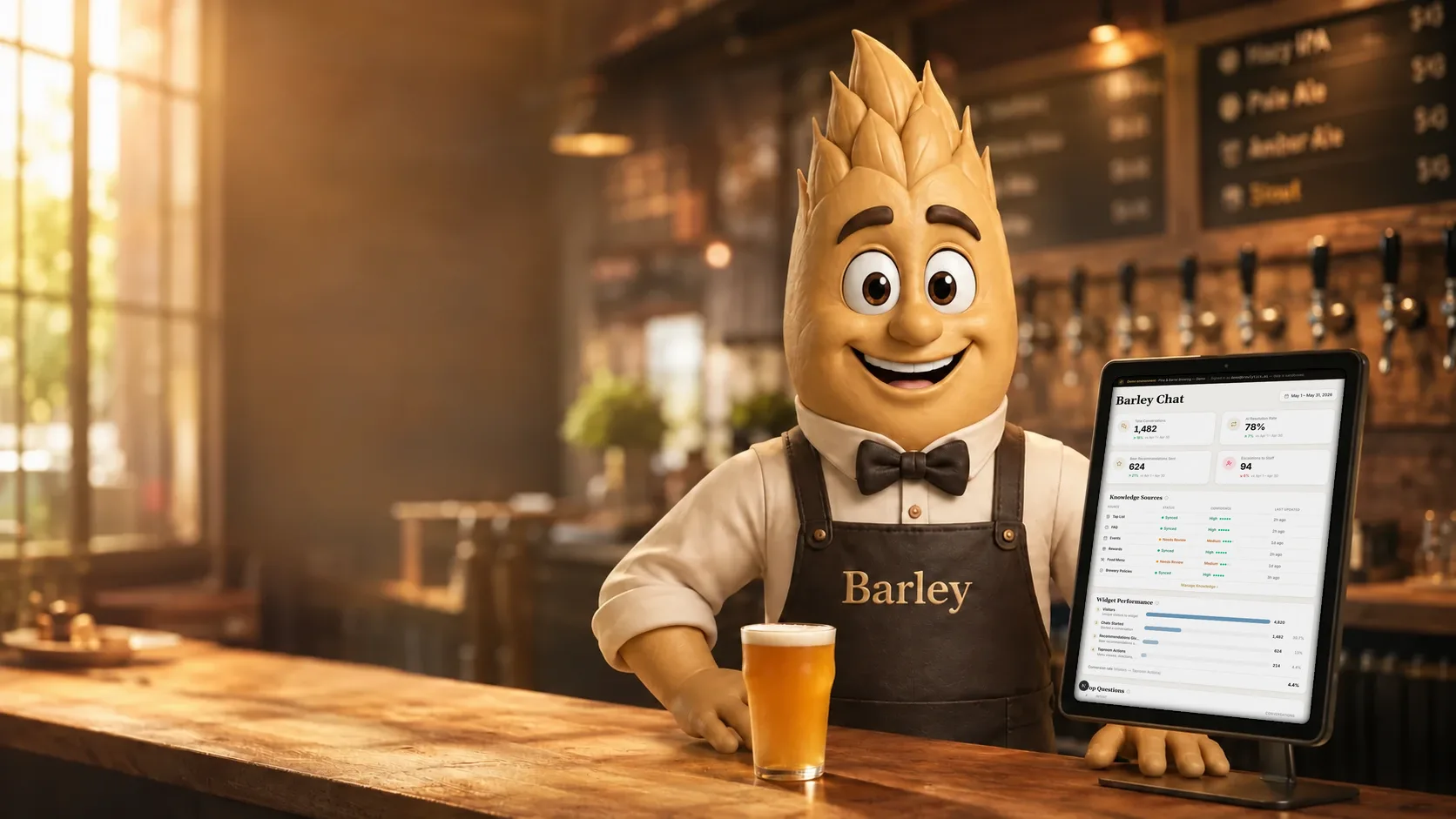
Short Answer
An AI bartender is a recommendation surface — chat widget, SMS, in-taproom QR chat — that knows your current tap list and the individual customer's taste profile, and turns 'what should I try?' into a specific next order. It is not a generic chatbot. It does not replace your human bartender. It works on top of your existing POS, scales personalized recommendations across every customer and every visit, and is the layer most breweries are missing between their POS data and their actual customers.
Barley's Take
A chatbot pretends to know your beer. An AI bartender actually does. The difference shows up in the second pour.
Why This Matters for Breweries
The most common question asked at a brewery bar — by a comfortable margin — is some version of "what should I try?" Usually it's posed to whoever's pouring, who reads the customer (new? a regular? clearly into hops? trying to be polite?) and steers them toward a beer they'll probably like. The recommendation is the moment that turns a curious visitor into a sale, and a sale into the start of a relationship.
That moment scales terribly. A great bartender can do it well for the 30 people who came in tonight. They cannot do it on Instagram, on your website at 11pm, over SMS three weeks later when a new beer drops, or for the 800 customers who've passed through this quarter and won't see your staff again before they decide where to drink next Friday.
This is the gap an AI bartender fills. Not a chatbot. Not a knowledge-base widget. A recommendation surface that knows what's pouring right now, knows the individual customer's taste, and answers the "what should I try?" question with the same confidence — and at any hour, in any channel, for every customer.
The term matters because the alternatives don't. Generic chatbots in the brewery context tend to fail in the same way: they know beer in the abstract, but not your beer, not this customer, and not today's tap list. A real AI bartender is the opposite — narrow, specific, grounded.
How It Works
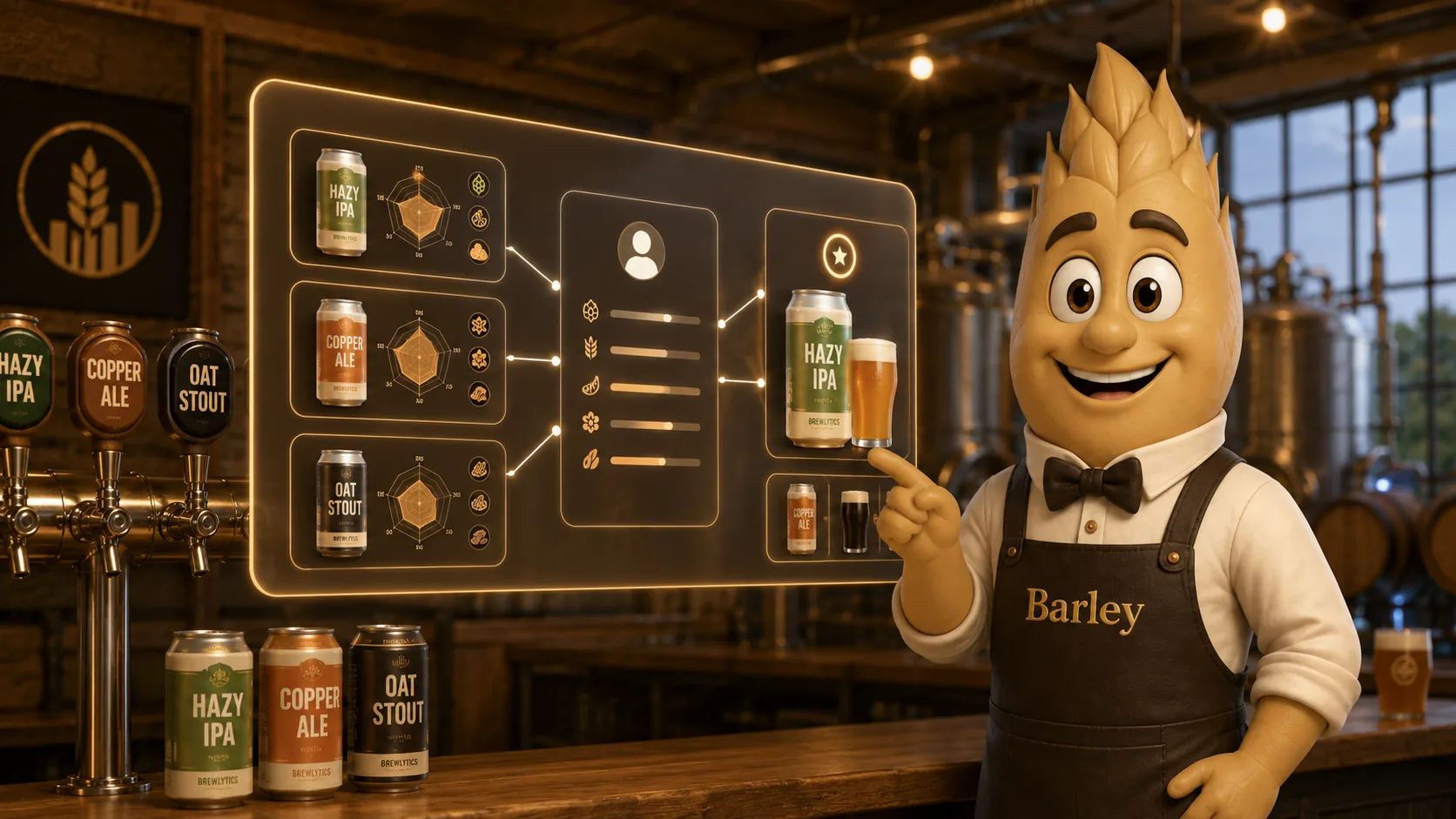
Three layers, none of them exotic on their own:
1. The catalog layer
The AI bartender reads from your POS catalog. Every beer currently on tap, every package in inventory, every relevant attribute attached to each one — style, sub-style, ABV, hop bill, malt bill, perceived sensory axes, package date, freshness window. This isn't optional; without a structured catalog the bartender is guessing.
A well-built system enriches your existing POS data automatically: pull SKUs from Square or Toast, classify each beer along ~20–40 attributes, store the result in a queryable shape. Brewers can override anything (you know your beer better than the model does).
2. The customer layer
Built as the customer engages — every claimed order, every reorder, every rating, every question to the chat contributes to a taste vector for that customer. The customer doesn't fill out a survey. They drink, they rate, they ask Barley what's next, and the model learns. After a few engaged visits, the system knows roughly what a customer likes; after a season, it knows better than the customer's own friends do.
Identity is keyed on phone number, the universal ID across SMS, POS loyalty, and any web chat the brewery puts a phone-verification step in front of. Email is helpful but optional.
3. The recommendation layer
This is what the customer actually touches. A question — "what should I try?" or "got anything like a Hazy IPA?" or "I want something dark but not heavy" — comes in. The bartender takes the question, the customer's taste vector, and the current catalog with freshness windows, and returns a specific answer: "Try the Galaxy Pale on tap — it's tropical and low-bitterness, exactly the lane you've liked on three previous visits, and it's three days off the brew. The taproom is also pouring a Mexican Lager if you want something lighter; that one's a slight stretch from your usual."
The output is grounded — you can only recommend beers that exist on your tap list right now — and personalized, in a way a printed tap list can't be.
Where the AI bartender actually appears
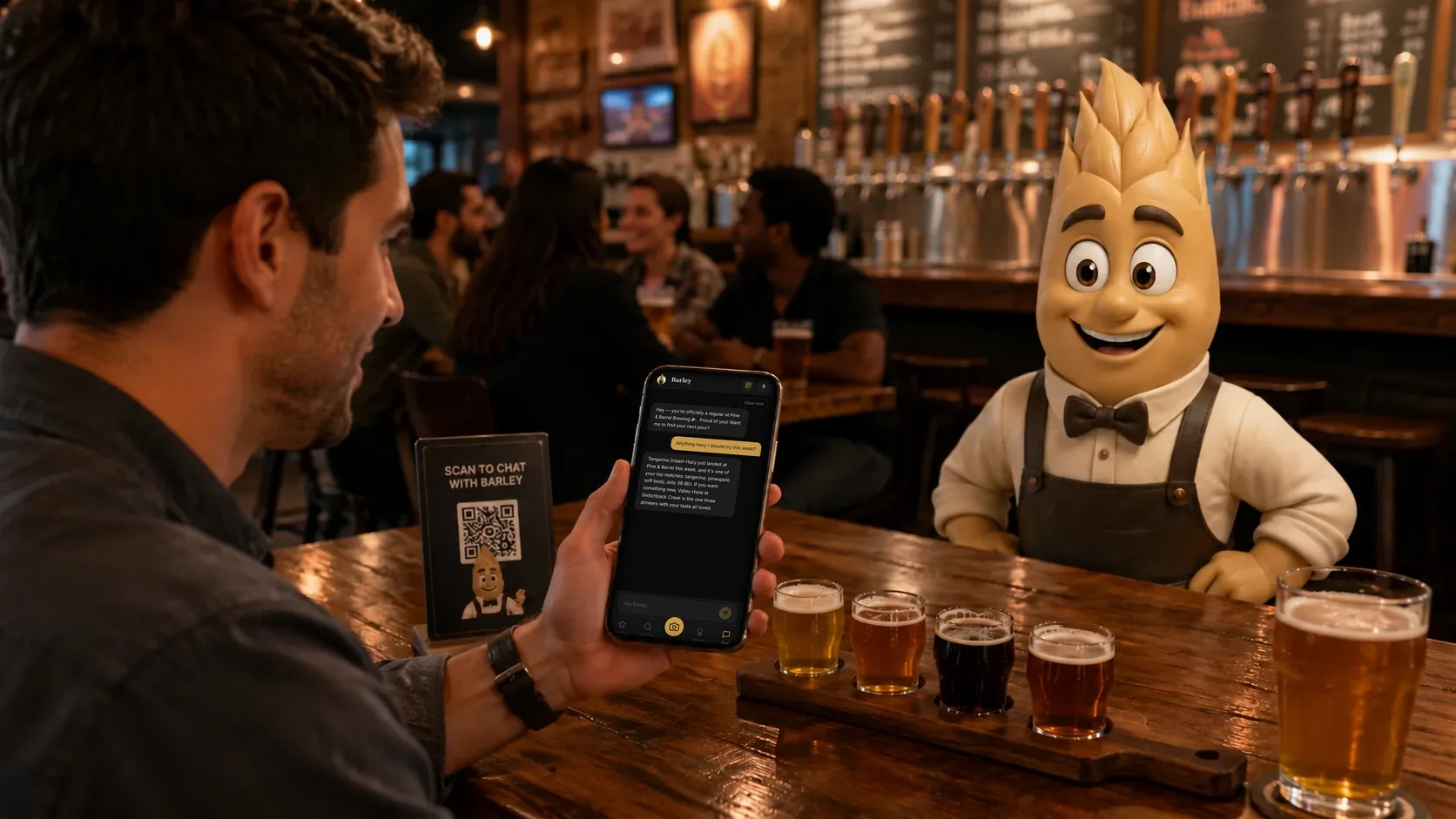
Same engine, three surfaces:
- A chat widget on the brewery website. Open at 11pm when no human is at the bar. Answers questions, recommends from current tap, can also handle "where are you located," "do you have food trucks tonight," etc.
- An in-taproom chat reachable by QR. Coaster, table tent, beer menu. A regular asks "what's new for me?"; a first-timer asks "I usually drink white wine — what's the safest pour here?"
- SMS release alerts. When a new beer drops, the bartender knows which customers in the database will love it based on taste profile, and messages just those people. Open rates blow past email because the message is specific and personal.
One brain, one taste model, three customer-facing places it shows up.
What an AI bartender deliberately doesn't do
A well-designed AI bartender is honest about its limits:
- It doesn't replace the human bartender. Reading the room, hospitality, judgment calls, the regular who needs a quiet table — those stay human.
- It doesn't invent beers. Recommendations are constrained to your actual current tap list; the AI can't make up products. This is an implementation choice, not a model property, and a serious one.
- It doesn't override your brewer. Sensory notes on a beer come from the brewery's own structured attributes, not from the model guessing what "Galaxy Pale Ale" tastes like in the abstract.
- It doesn't replace POS loyalty. Points, redemptions, mug clubs all keep working in your POS; the AI bartender adds a recommendation + customer-intelligence layer on top, not a replacement for the transaction plumbing.
Example Brewery Scenario
Pretend you run Pacific Crest Brewing, a 10-tap taproom with a small package side. You install an AI bartender at the start of Q3. Three months in, you look at the impact across three customer archetypes you didn't have a way to talk to before.
Maya — has visited twice, ordered a Hazy IPA both times, gave both 5 stars. Used to disappear after the second visit. The AI bartender notices when your new Galaxy single-hop Pale drops, sends her one SMS — "the new Galaxy Pale is in your lane, peak freshness right now" — and she's back the next Friday. She rates the Galaxy 5 stars too. The taste vector sharpens. Next month a Citra DIPA drops; she gets a different message, comes in again.
Tomás — has had six visits, every single time ordered the same Pilsner. The AI bartender doesn't push him away from the Pilsner (the model is humble about ruts that work). But when a Mexican Lager drops, it sends a single low-pressure suggestion: "close to your usual, slightly lighter, fresh this week." He tries it. Now he alternates.
A first-timer at the website at 10:48pm Tuesday — asks the chat "I'm coming Saturday — I usually drink rosé wines, what would you suggest?" The bartender reads the cue (fruity, dry, light body) and suggests starting with your sour or your hef, with a fallback to the Pilsner. They show up Saturday. They get added to the database, opt into SMS, and start their own taste vector from order one.
None of those three customers got a tableside conversation with your staff. The AI bartender ran the equivalent at scale, in three different channels, while you were brewing.
Practical Checklist
If you're considering whether an AI bartender belongs in your brewery:
- Do you already know which 30% of customers drive 70% of revenue? If no, the AI bartender's taste-profile layer pays off before the recommendation layer does.
- What's your second-visit rate? This is the conversion the AI bartender lifts most directly — the new customer who would have drifted but instead got a specific reason to return.
- How many beers do you tap per year? The more variety, the more value an AI bartender adds — customers can't keep up with your release pace, the bartender can.
- What's your POS? Square integrations are live today; Toast and Arryved are next.
- Do you message customers now? If yes, is the message taste-segmented or one-size-fits-all? An AI bartender turns blast emails into per-customer messages.
- Are you comfortable with an AI surface representing your brand? This is the most underweighted question. The voice of the bartender is the voice of your brewery to anyone who isn't standing at your bar. Pick a product that lets you tune it.
If three or more of those answers point toward "we'd benefit," it's worth a closer look.
How Brewlytics Helps
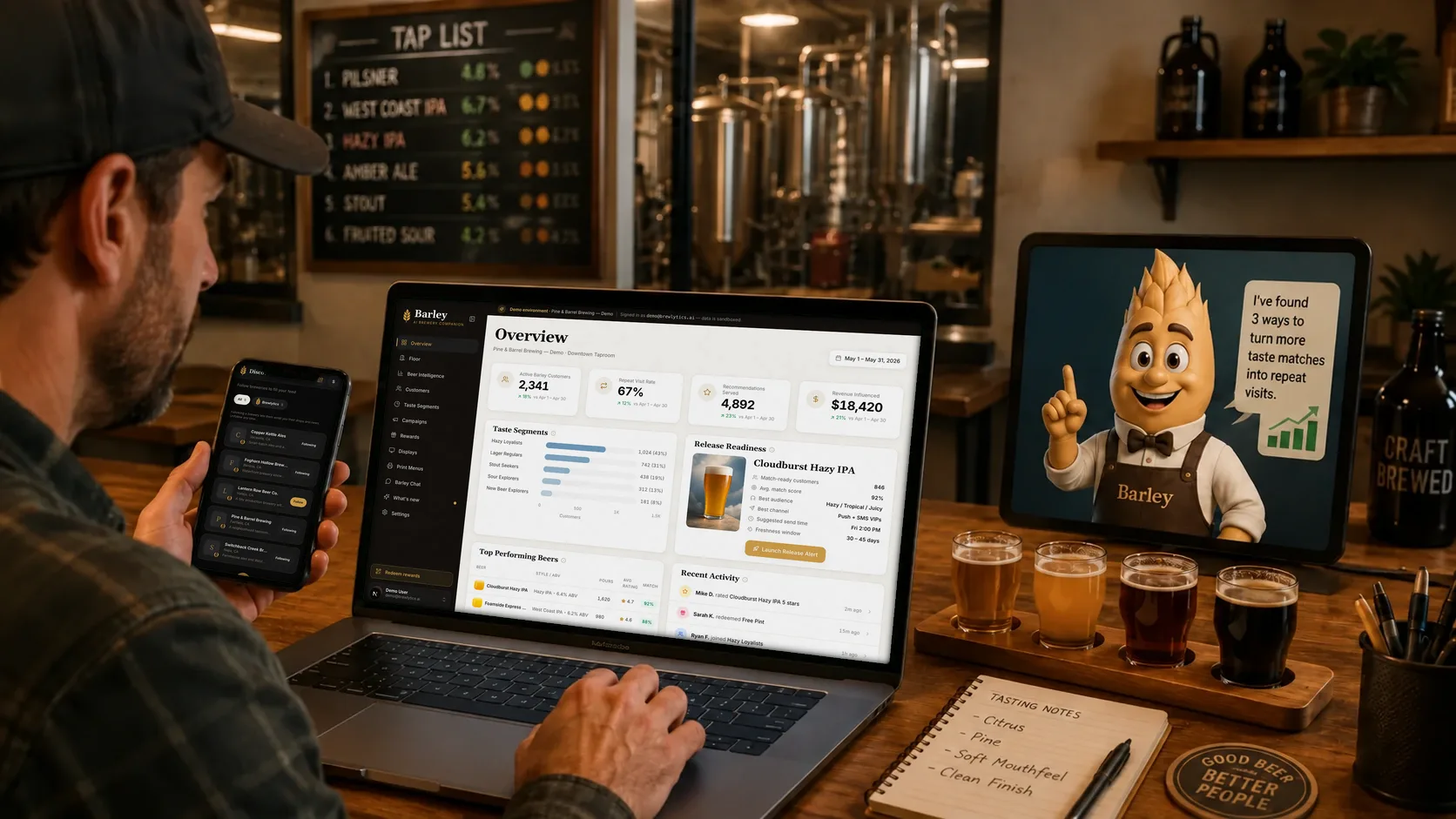
Brewlytics' AI bartender is called Barley, and it's the customer-facing surface for everything else the platform does:
- Barley Chat runs on your website, your in-taproom QR landing page, and SMS — same brain across all three. Read more on the AI Bartender feature page.
- Customer Taste Profiles feed the recommendation layer; they accrue as customers engage — ratings, claimed orders, chat — no survey required.
- Beer Intelligence structures each beer in your catalog along the attributes the recommendation engine needs. Brewers can edit anything they want.
- Fresh Beer Alerts combine the recommendation logic with peak-freshness windows so the message goes out at the moment the beer is at its best.
- POS Sync runs continuously against Square (and Toast / Arryved next), so the catalog the AI bartender sees is always the catalog you're actually pouring.
The whole point is: an AI bartender shouldn't be a separate product you bolt on. It should be the customer-facing expression of the data you already have — and the layer between your POS and your repeat customers that most breweries are missing today.
For the longer argument on why generic loyalty programs don't fill this gap, see why traditional brewery loyalty programs don't create regulars. For the structured-taste model that powers the recommendations, see what the Music Genome Project can teach craft breweries.
FAQ
(See the schema-ready FAQ block at the end of the page for the full set — covers what an AI bartender is, whether it replaces the human bartender, how it differs from Untappd, where it shows up, hallucination risk, and POS requirements.)
Ready to see what your brewery's AI bartender would actually recommend?
The fastest way to understand what an AI bartender does is to point one at your real tap list and watch what it says.
→ Book a demo and bring your POS account. → See the AI Bartender feature for the full technical picture.
Frequently asked questions
Related Brewlytics Feature
Barley Chat
The AI bartender — embed in your site or scan in the taproom.
See how it works →Keep reading
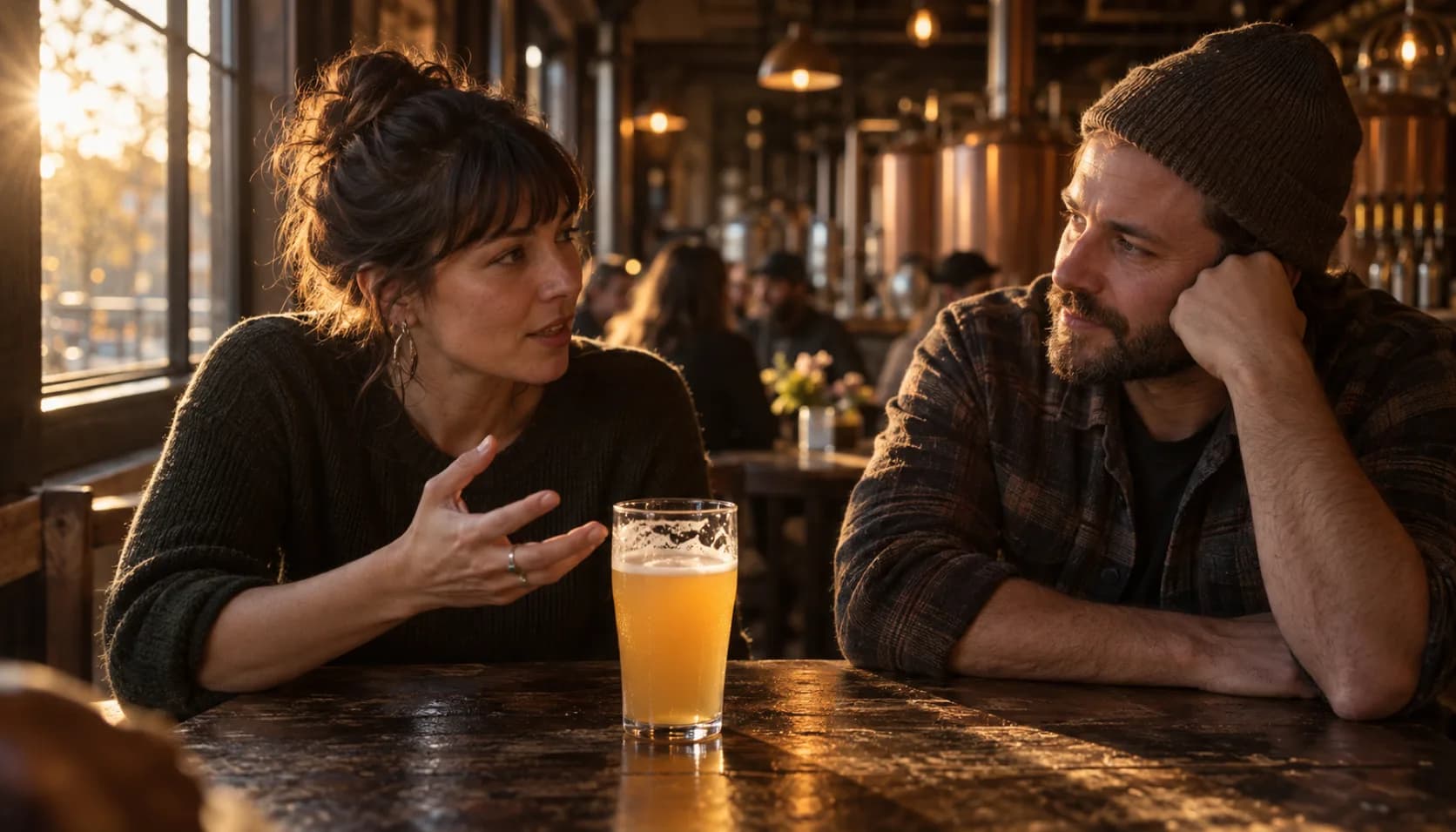
How Sensory Feedback Can Improve Brewery Recommendations
Five stars tells you a guest liked the beer, not why. Here's how to collect sensory feedback one tap at a time and recommend the next pour accurately.
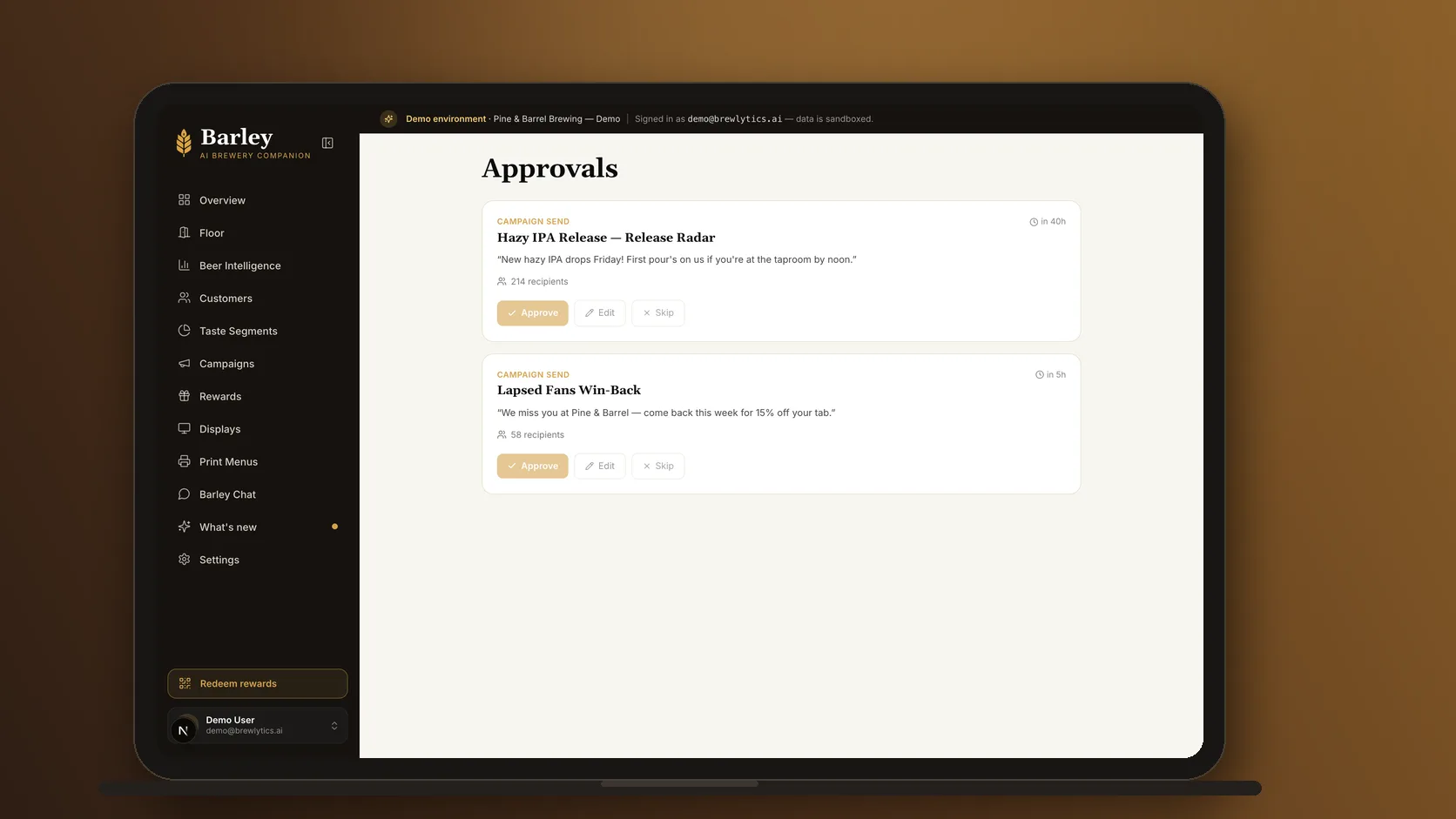
Why Brewery Email Blasts Don't Work Like They Used To
Email open rates collapsed, Instagram reach is a rounding error, and the Tuesday newsletter doesn't move pints. Here's what's replacing broadcast blasts.
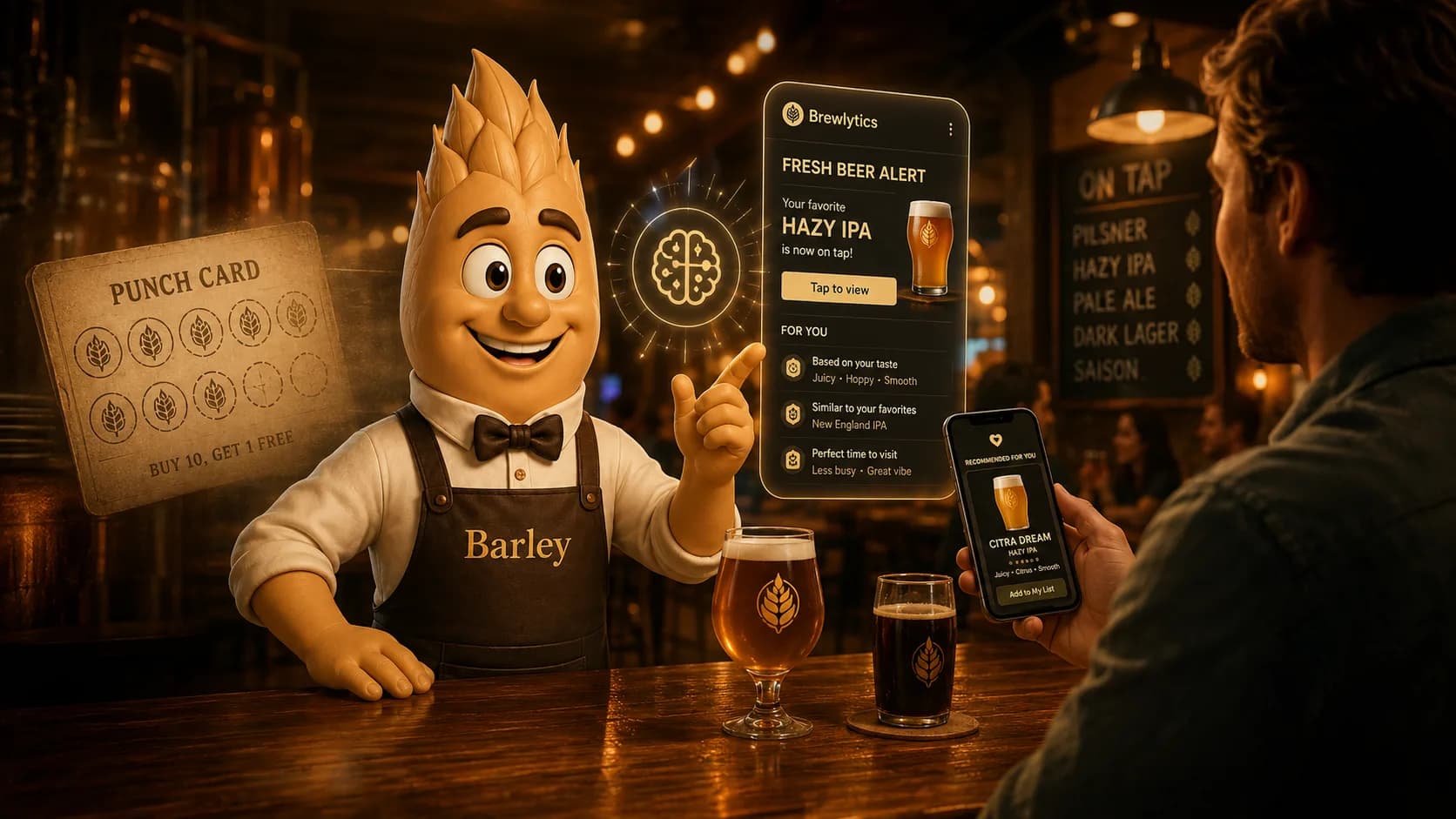
Why Traditional Brewery Loyalty Programs Don't Create True Regulars
Punch cards, points, and mug clubs reward visits that would have happened anyway. Real brewery loyalty comes from memory, pull, and identity. Here's how.
Want to see this working in your brewery?
Go Pro to see your customers and act on the data — taste profiles, segmented iMessage, SMS + email campaigns, the AI bartender, and the full dashboard. Or book a walkthrough with the brewer who built it. Not ready? Start free, no card.
Just here for the beer? Get the free Barley app