
How Regional Breweries Can Use AI to Grow Taproom Visits
By Brian Winckel · Founder, Brewlytics.ai
Short Answer
Regional breweries grow taproom visits with AI by running three plays on one shared customer record. First, carry each customer's taste profile across every taproom so a regular is known in any room. Second, segment release alerts by the taproom each customer can actually reach, not by the whole list. Third, route guests to the nearest place the beer exists, a taproom tap or a store shelf. None of it works until each person is one record keyed to a phone number.
Barley's Take
Your customers don't think in locations. They think in 'is the good stuff near me tonight?' Answer that and they'll do the driving.
Why This Matters for Breweries
A regional brewery has a problem a single taproom never meets. Your Hazy IPA is pouring in three rooms, sitting in four-packs in a couple hundred store fridges, and on draft at bars you have never visited. The customer who loves it lives 12 minutes from one of your taprooms and 50 from the other two. Your newsletter treats her as if she lives next door to all three.
The usual answer is one big list and one big send. Every release goes to everyone, every event goes to everyone, and the unsubscribe rate creeps up while visits stay flat. The list grew with the footprint, but every message still went to everyone.
At regional scale, AI is useful because it can remember, for each customer, three facts no person can keep in their head across 20,000 guests: what they drink, which room they actually go to, and whether the beer they want is near them right now.
One definition before the plays. A taste profile is the running record of what one customer orders and how they rate it, built from POS purchases and their own ratings. At regional scale it has to belong to the person, not to the taproom where it was first recorded.
How It Works
Three plays, in the order you should run them. Each depends on the one before it.
Play 1: Carry taste across every taproom
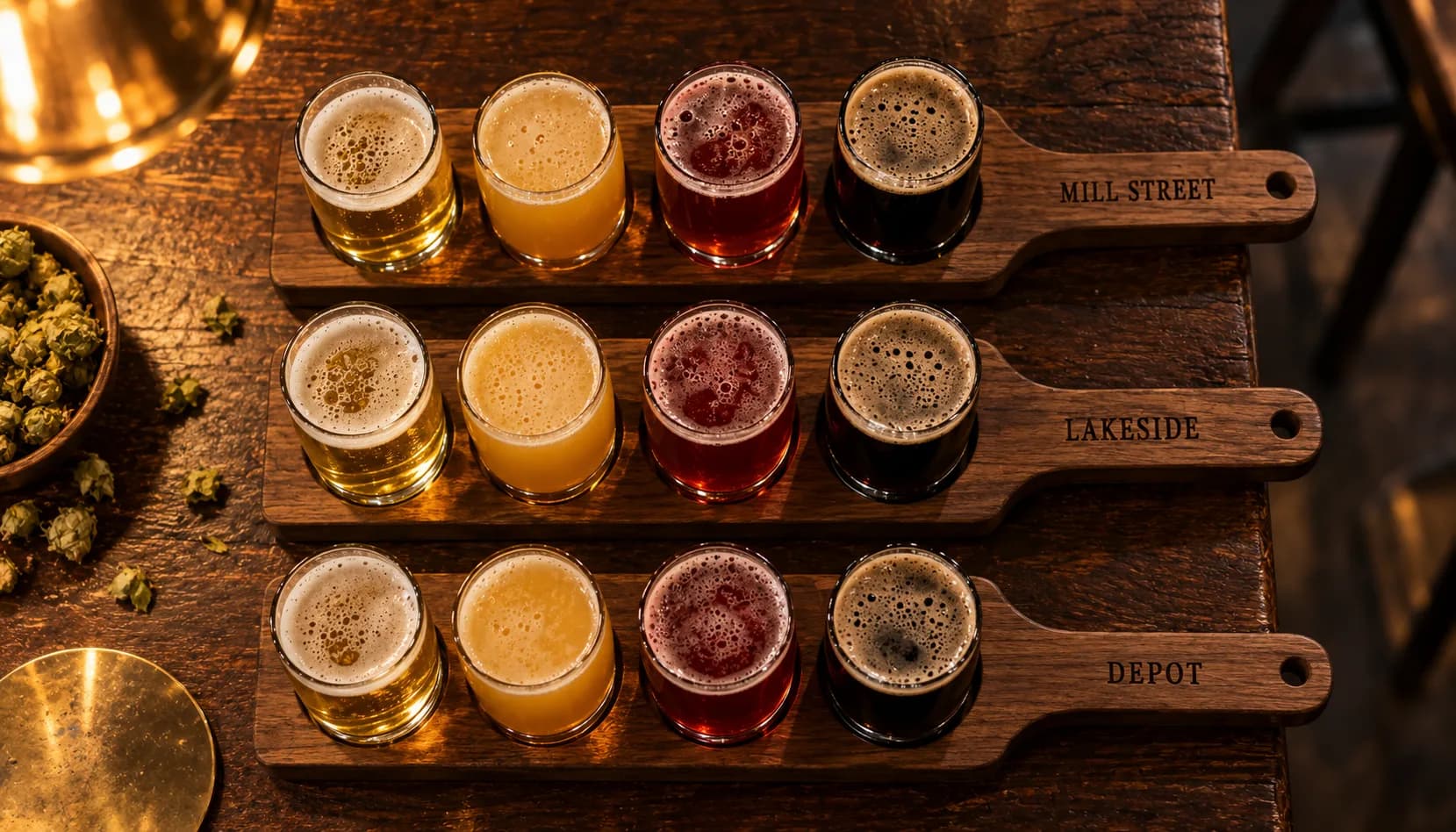
The foundation is identity resolution: deciding that the guest buying a Pilsner at your Depot room is the same person who has rated six beers at Mill Street. Use the phone number as the key. It is the one value guests give at any counter, and it stays the same across SMS, POS sign-ups and online orders.
Once the record is one person, the taste profile travels. The bartender at a room she has never visited can see a Pilsner drinker who rates sours well and skips dark beer. The AI recommending her next beer works from her whole history, not from the two visits that happen to live in that room's till.
The multi-location loyalty guide covers the merge itself. The short version: normalize phone numbers, group duplicates, keep the oldest record, sum reward balances.
Play 2: Segment releases by the room a customer can reach
Most regional lists are segmented by sign-up date, or not at all. The better question for any release is which customers will realistically drive to the room where it is pouring.
Group customers into home rooms: the taproom where most of their visits happen. That one assignment, computed from purchase history, does more than any zip code map, because it reflects what people actually do rather than where they sleep. Keep zip codes as the fallback for people who signed up but have never bought.
Then layer taste on top:
| Release | Who gets the alert | Who does not |
|---|---|---|
| Hazy IPA on draft at Lakeside only | Hazy drinkers whose home room is Lakeside | Hazy drinkers 50 minutes away |
| Canned Hazy IPA in every taproom fridge | Hazy drinkers at all three rooms | Stout-only drinkers |
| Barrel-aged stout, 40 bottles, Mill Street | Stout drinkers who have visited Mill Street in the last 90 days | Everyone who has never rated a stout |
| Anniversary week, all rooms | Everyone, once | Nobody |
The AI part is the matching: profile against tap list against home room, for every customer, every time a keg goes on. The judgment part stays yours: which releases are local and which are brand-wide.
Play 3: Route guests to the nearest place the beer exists
Regional breweries sell the same beer in two worlds. On-premise means poured where it is bought: your taprooms and the bars that carry your draft. Off-premise means bought to take home: grocery, bottle shops, your own taproom fridges.
A guest who loves your Hazy IPA does not care which world it comes from. She wants to know where to get it this week. If it is pouring at her home room, the message is an invitation to visit. If her home room is out but the cans are in her neighborhood store, a short note saying so keeps her drinking your beer instead of someone else's.
The data has a limit here. Taproom stock is live in your POS. Retail placement lives in your distributor's account list and depletion reports, which your taproom software usually can't see. Run the off-premise half from a list your sales team keeps current, and send the guest to a taproom first whenever one is close, because a visit is worth more than a can.
Example Brewery Scenario
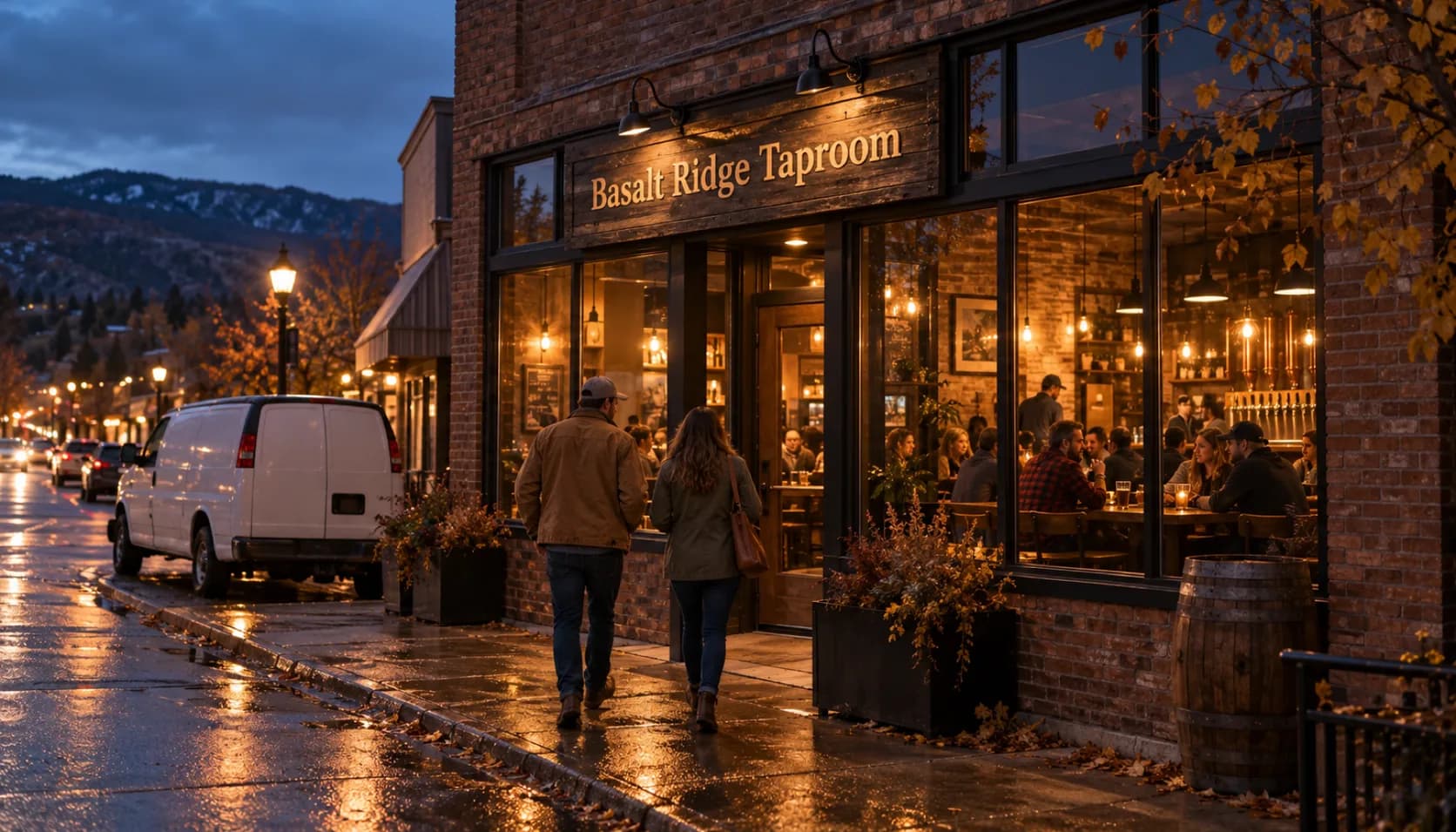
Basalt Ridge Brewing runs three taprooms on Square: Mill Street, the original production brewery, pours about 40,000 pints a year; Lakeside and Depot are smaller rooms 35 and 50 minutes away. Cans of their flagship hazy, Cinder Cone IPA, go to about 180 retail accounts through a distributor.
Their list had 6,200 sign-ups. After normalizing phone numbers and merging duplicates, it was about 5,000 people, and roughly 600 had bought at more than one room.
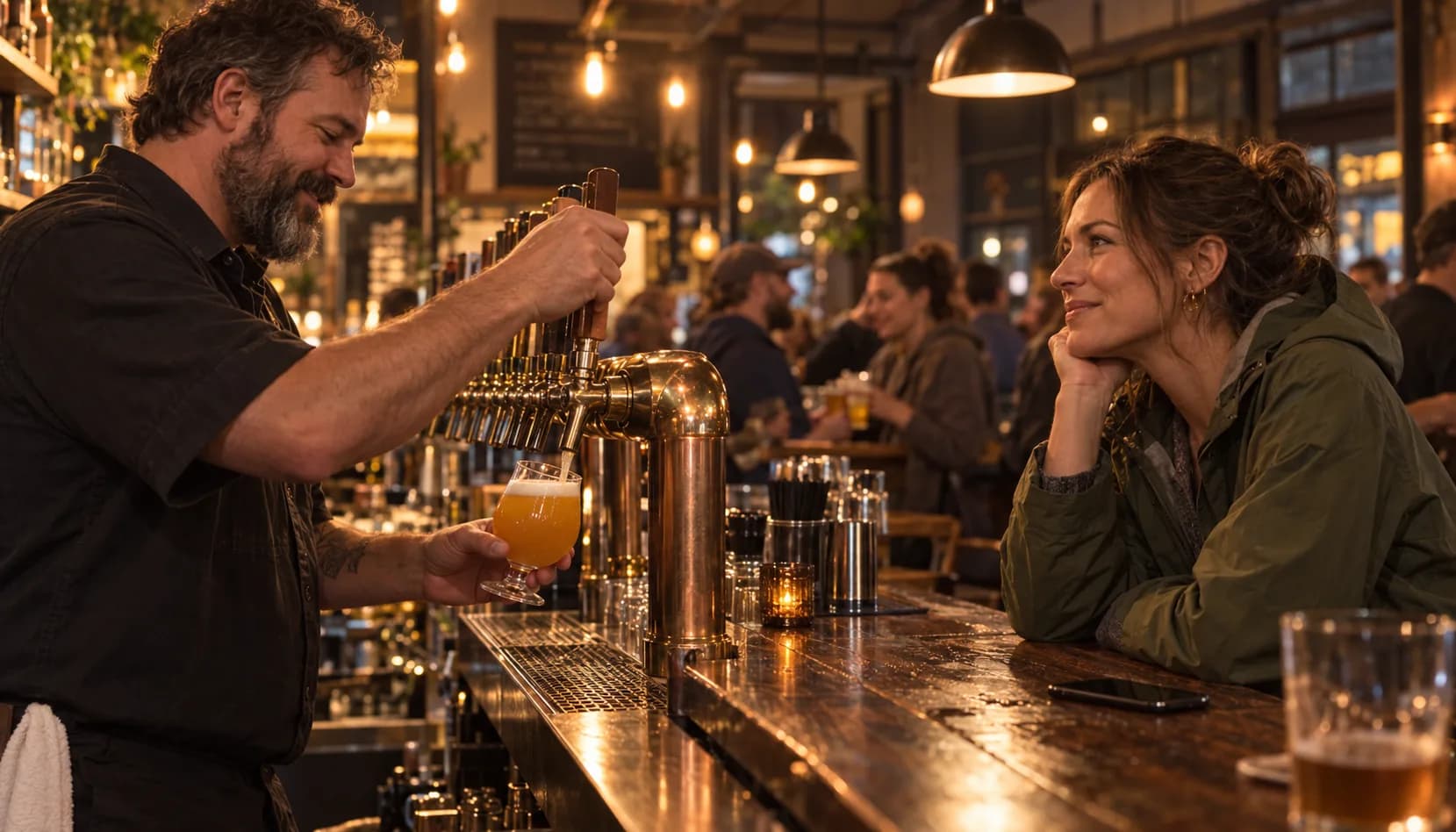
Priya was one of them. Home room: Lakeside, most Thursdays. Rated Cinder Cone five stars and a Mill Street gose four. She had been getting every brand-wide email, including the Depot trivia nights she was never going to drive to, and had stopped opening them.
Here is how the next month looked under the three plays.
- Taste carried. When Priya stopped at Depot on a weekend trip, the bartender saw a hazy drinker who likes tart beers and poured her a taste of the Depot-only sour. She bought a flight.
- Release scoped. A fresh batch of Cinder Cone went on at Lakeside on a Wednesday. Hazy drinkers with Lakeside as their home room, about 700 people, got one text. Priya came in Thursday. The other 4,300 people on the list heard nothing.
- Routed. The following week Lakeside's hazy keg kicked. Priya's alert for a new Lakeside sour mentioned that Cinder Cone cans were still in the Lakeside fridge to go.
There was no discount that month. Priya got three messages she wanted, where the old list would have sent her every brand-wide email.
Practical Checklist
Work through these in order. The first two take an afternoon.

- Count real people, not sign-ups. Export every location, normalize phone numbers to one format, and count unique numbers. Use that figure in every report from now on.
- Assign a home room to every buyer. The taproom with the most visits in the last 12 months. Ties go to the most recent visit.
- Write your scope rule down. Beers pouring in one room get location-scoped alerts. Brand-wide sends are for things true in every room.
- Tag each release before it ships. Draft-only at one room, draft at all rooms, cans in taproom fridges, or cans in retail. The tag decides the audience.
- Get the retail list from your distributor monthly. Even a spreadsheet of accounts by town is enough to answer "is it near me?"
- Baseline three numbers per room. Second-visit rate, cross-location visit rate, and visits within seven days of an alert. Record last month before changing anything.
- Cap the sends. Decide how many alerts one person can get per month, and let the matching pick the best ones under the cap.
For how these plays fit with the rest of your campaigns and events, the brewery marketing complete guide is the hub.
How Brewlytics Helps
Brewlytics reads your POS and builds the shared customer layer these plays run on. Square today, with Toast next and Arryved after that.
- Square multi-location support tracks each location separately, and a customer who buys at more than one gets a single unified taste profile instead of one record per room. That is Play 1 without the spreadsheet.
- Customer Insights lets you compose segments from style preference, ABV range, visit frequency, spend, recency and location, then save and reuse them. "Hazy drinkers at Lakeside, visited in the last 90 days" is one saved segment.
- Campaign scope is set per send, location by location or brand-wide, so a release at one room reaches that room's people and nobody else.
- Barley, the AI bartender, recommends from the guest's whole taste profile in any of your rooms, which is what makes a first visit to a second taproom feel like a regular's visit.
What Brewlytics does not do yet: read distributor or retail depletion data. Off-premise routing runs from your own account list for now. Multi-location pricing is quoted on a call, because volume across rooms is worth sizing properly.
FAQ
See the schema-ready FAQ block at the end of the page for the full set, covering what counts as regional, drive-time segments, retail data, alert scope, measurement, and staffing.
Ready to see your real customer count across every room?
Most regional breweries have fewer customers than their sign-up count says and more cross-room regulars than they think. Connect Square and we can show you both numbers, room by room.
→ Book a demo and bring every location. → See how Brewlytics works before you talk to us.
Frequently asked questions
Related Brewlytics Feature
Multi-Location Insights
Loyalty and analytics rolled up across two-plus taprooms.
See how it works →Keep reading
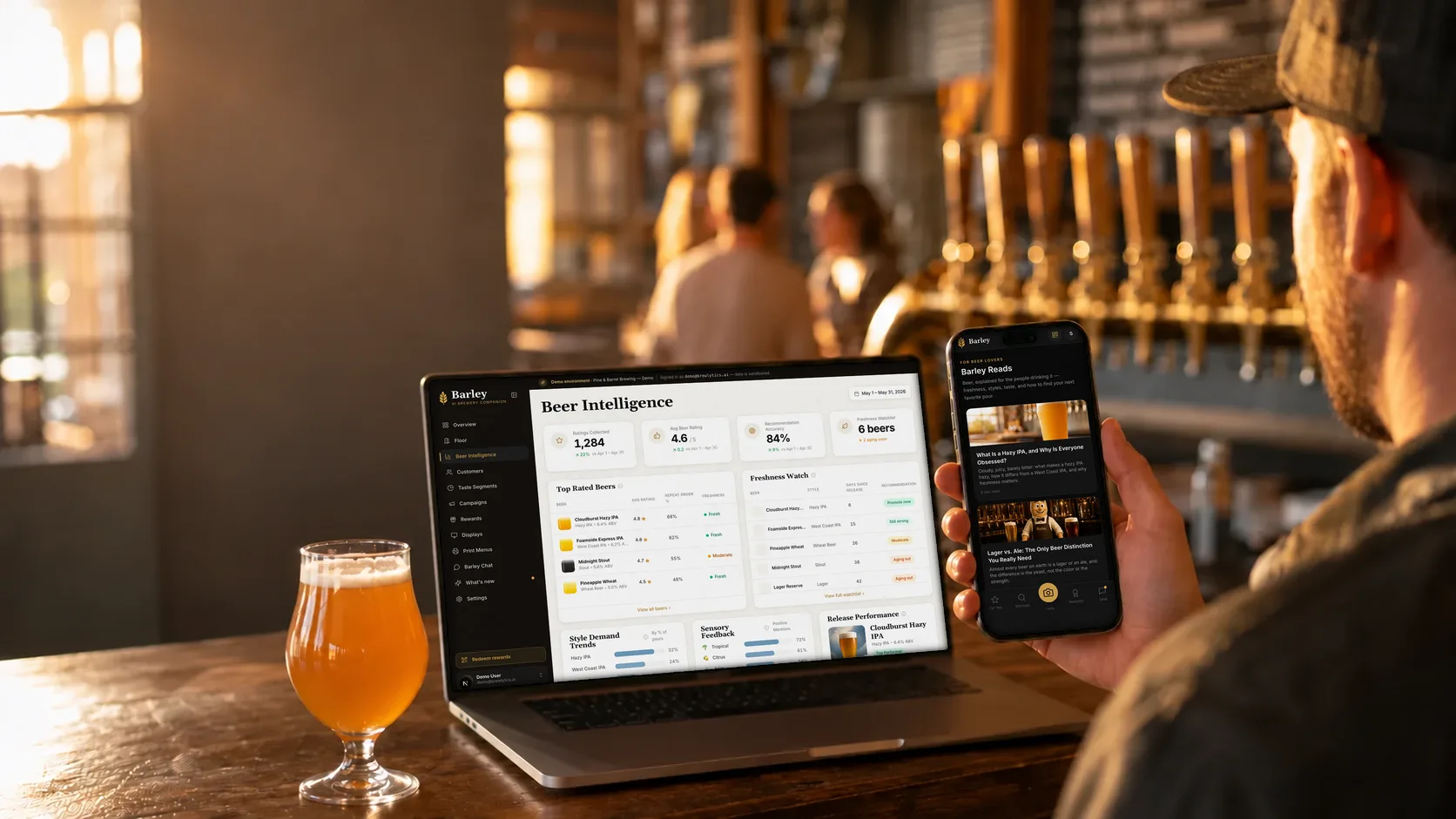
AI Marketing for Breweries: The Complete Marketing Stack
Brewery marketing is moving from mass blasts to AI that knows what each customer drinks. What AI marketing for breweries means — and the stack behind it.
Brewlytics vs Evergreen: Brewery Platform or Multi-Vertical Menu Suite?
Evergreen is a strong multi-vertical menu platform. Brewlytics is built only for breweries. Here's the honest comparison — including where Evergreen wins.
How Breweries Can Build Customer Loyalty Across Multiple Locations
Opening a second taproom breaks most loyalty programs. The fix: identity travels on the phone number, rewards travel with the customer, preferences stay local.
Want to see this working in your brewery?
Go Pro to see your customers and act on the data — taste profiles, segmented iMessage, SMS + email campaigns, the AI bartender, and the full dashboard. Or book a walkthrough with the brewer who built it. Not ready? Start free, no card.
Just here for the beer? Get the free Barley app