
Brewery Marketing: The Complete 2026 Guide
By Brian Winckel · Founder, Brewlytics.ai
Short Answer
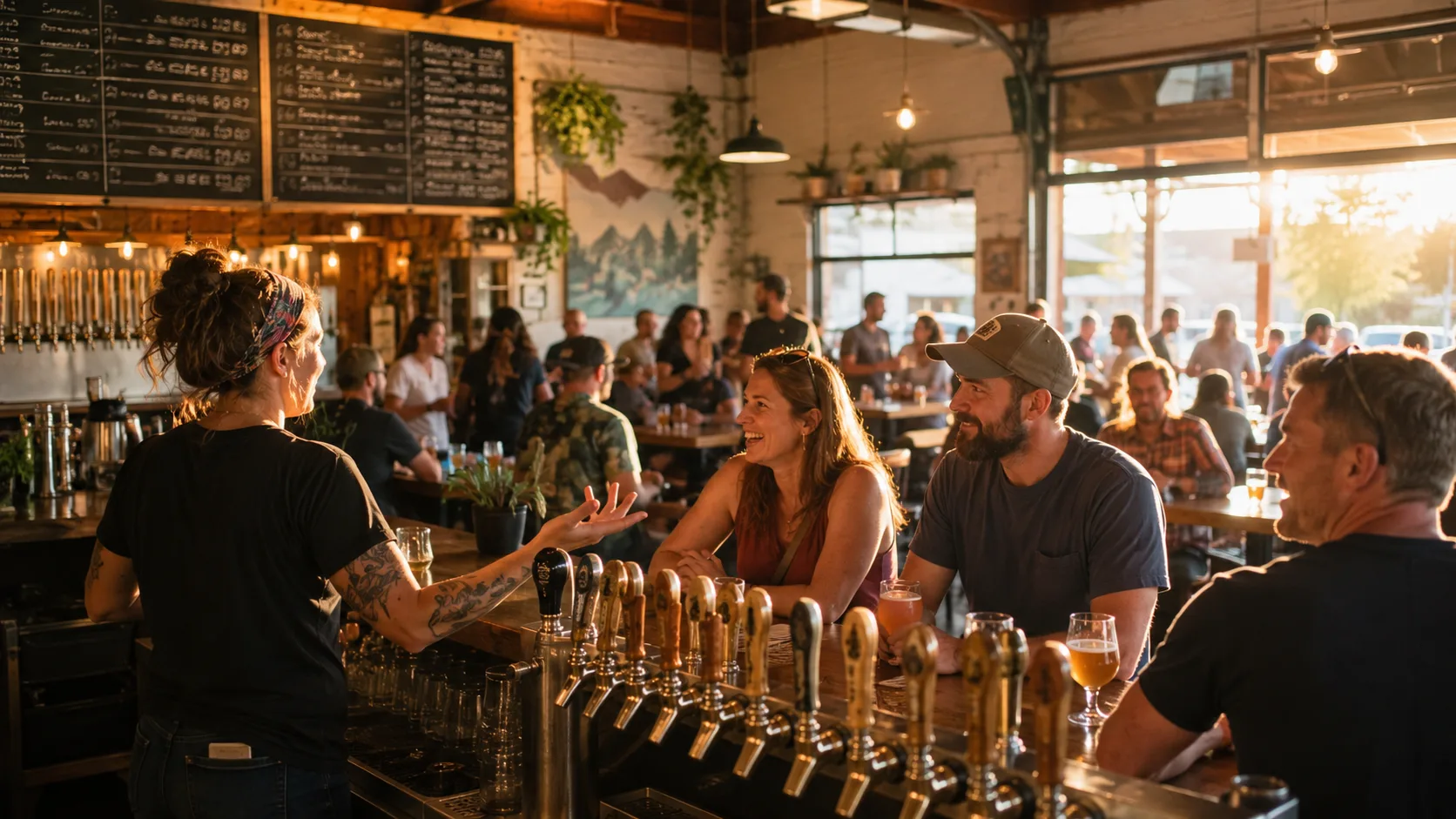
Brewery marketing works differently from generic small-business marketing because you're selling three things at once: an experience (the taproom), a perishable product (fresh beer), and a local place (community). The channels with the most leverage are the taproom and first-time-guest experience, local SEO and your Google Business Profile, email for broad news, SMS for time-sensitive taste-matched alerts, social for reach, events for community, and a loyalty program for regulars. A workable plan just answers four questions — who, what, which channel, how often — and runs on consistency, not budget. The biggest 2026 shift is from mass blasts to taste-targeted messaging.
Barley's Take
Brewery marketing isn't one thing you buy — it's a stack of small, consistent habits. Nail the taproom, get found locally, own your list, and reward your regulars. Do those four reliably and you're ahead of most breweries, who mistake 'posted on Instagram' for a marketing plan.
Why This Matters for Breweries
There are more breweries than ever and roughly the same number of drinkers to go around. The ones that thrive aren't always the ones making the best beer — they're the ones people know about, come back to, and tell their friends about. That's marketing, and for a brewery it's less about advertising than about running a handful of channels consistently.
This guide is the plain-English map: what makes brewery marketing different, the channels that actually work in 2026, how to build a simple plan around them, and where the game is shifting. No jargon, no agency retainer required.
What Makes Brewery Marketing Different
Generic small-business marketing advice mostly misses breweries, because you're not selling one thing — you're selling three at once:
- An experience. The taproom is the product as much as the beer. People come for the room, the staff, the vibe — and that experience is your best marketing.
- A perishable product. Fresh beer has a clock on it. Freshness isn't just an inventory concern; it's a marketing signal — "this is at its peak right now" is one of the most persuasive things you can tell a customer.
- A local place. Most of your customers live within a few miles. That makes local discovery — how people find you on a map or a search — disproportionately important compared to a typical ecommerce brand.
Get those three straight and the channel choices below make a lot more sense.
The Brewery Marketing Channels That Actually Work
Roughly in order of leverage — where your first hours should go before your last.
1. The taproom and first-time-guest experience
Your highest-return marketing channel is the 30 seconds after someone walks in for the first time. A warm greeting, a confident flight suggestion, a reason to come back — that's what turns a one-time visitor into a regular and a word-of-mouth engine. No ad buys back a bad first visit.
2. Local SEO and your Google Business Profile
This is how most new local customers find you. A complete, active Google Business Profile — accurate hours, current photos, tap list, reviews you actually respond to — will out-earn almost any paid channel for a local brewery. Claim it, fill it, and keep it fresh.
3. Email — for broad announcements
Email isn't dead; it's just no longer a megaphone. Open rates have fallen, so email earns its keep for the messages that genuinely go to everyone — a big event, a taproom closure, a seasonal lineup. (For why the old weekly blast stopped working, see why brewery email blasts don't work like they used to.)
4. SMS — for time-sensitive, taste-matched alerts
Text is the highest-open channel a brewery has, which makes it perfect for the messages that are urgent and personal: a new release, a last-call on a favorite, a members-only tapping. Used surgically — not as another blast — SMS is one of the most under-rated brewery channels in 2026.
5. Social and short-form video — for reach and personality
Social is where new customers discover the feel of your place. Show the room, the people, the pours, the process. Just remember it's rented land: the algorithm decides who sees you, so use social to catch attention, then move people onto channels you own (email, SMS, loyalty).
6. Events and collaborations — for community
Releases, tap takeovers, trivia, brewery collabs, food-truck nights. Events give people a reason to come this week and generate the social content and word-of-mouth that feed the other channels.
7. Loyalty — for turning visitors into regulars
A loyalty program is the channel that compounds. Done right, it doesn't just reward visits — it remembers what each customer likes and gives them a reason to return. (Most programs fail at exactly this; see why traditional loyalty programs don't create true regulars.)
Building a Simple Brewery Marketing Plan
You don't need a 30-page strategy. A workable brewery marketing plan answers four questions, repeatedly:
- Who is this for? The whole list, or a segment (hazy fans, lapsed customers, mug-club members)?
- What's the message? One clear idea — a release, an event, a reason to visit.
- Which channel? Match the message to the channel: urgent + personal → SMS; broad → email; discovery → social.
- How often? A light, reliable cadence beats sporadic bursts. Pick a rhythm you can actually keep.
Run that loop on a simple calendar — a weekly email, event announcements as they come, release alerts when beers are tapped — and you have a real marketing operation. Budget matters far less than consistency; the highest-leverage channels here are low-cost or free.
The Shift: From Blasts to Taste-Targeted
Here's the change reshaping brewery marketing in 2026. The old model was broadcast: one message to the whole list, hoping the right person opened it. The new model is matching: the right beer to the specific customers who'll love it, at the moment it's fresh.
That shift is only possible when your tools know what each customer actually drinks — their taste, not just their email address. That's the domain of AI marketing for breweries, and it's worth its own read: AI marketing for breweries: the complete marketing stack. And once you know the plays, the next question is which ones to put on autopilot — that's automated marketing for breweries: what to automate (and what not to).
Practical Checklist
If you're starting close to zero, do these in order:
- Claim and fill your Google Business Profile. Hours, photos, tap list, reviews.
- Nail the first-time-guest moment. Greeting, flight suggestion, a reason to return.
- Start an email list and a text list. Own your audience.
- Pick one weekly rhythm you can keep (an email or a social post).
- Stand up a loyalty program that remembers taste, not just visits.
- Automate the repetitive parts once the basics are running.
How Brewlytics Helps
Brewlytics covers the channels a brewery can't easily run by hand — the ones that need to know each customer's taste:
- Customer Taste Profiles build a per-customer picture of what each drinker likes, so your messaging can be relevant instead of generic. (See how →)
- Barley, the AI bartender, answers "what should I drink?" from each customer's taste and your live tap list — over chat or SMS. (What is an AI bartender? →)
- Segmented alerts and loyalty reach the right customers when a beer they'll love is fresh, and reward the regulars who keep coming back. (See loyalty →)
It sits on top of your existing POS — Square today, with Toast and Arryved on the roadmap — so it fits the marketing you're already doing rather than replacing it.
FAQ
(See the schema-ready FAQ block at the end of the page — it covers the most effective channel, how much to spend, whether social works, marketing vs. automation, driving repeat customers, and whether you need a dedicated marketer.)
Ready to modernize your brewery's marketing?
The brewery that markets consistently — a good taproom, a strong local listing, an owned audience, and a loyalty program that remembers taste — beats the one chasing the algorithm every time. Start with the fundamentals, then let personalization do the heavy lifting.
See what taste-targeted marketing would look like on your own tap list: book a demo, or go deeper on the complete AI marketing stack for breweries.
Frequently asked questions
Keep reading
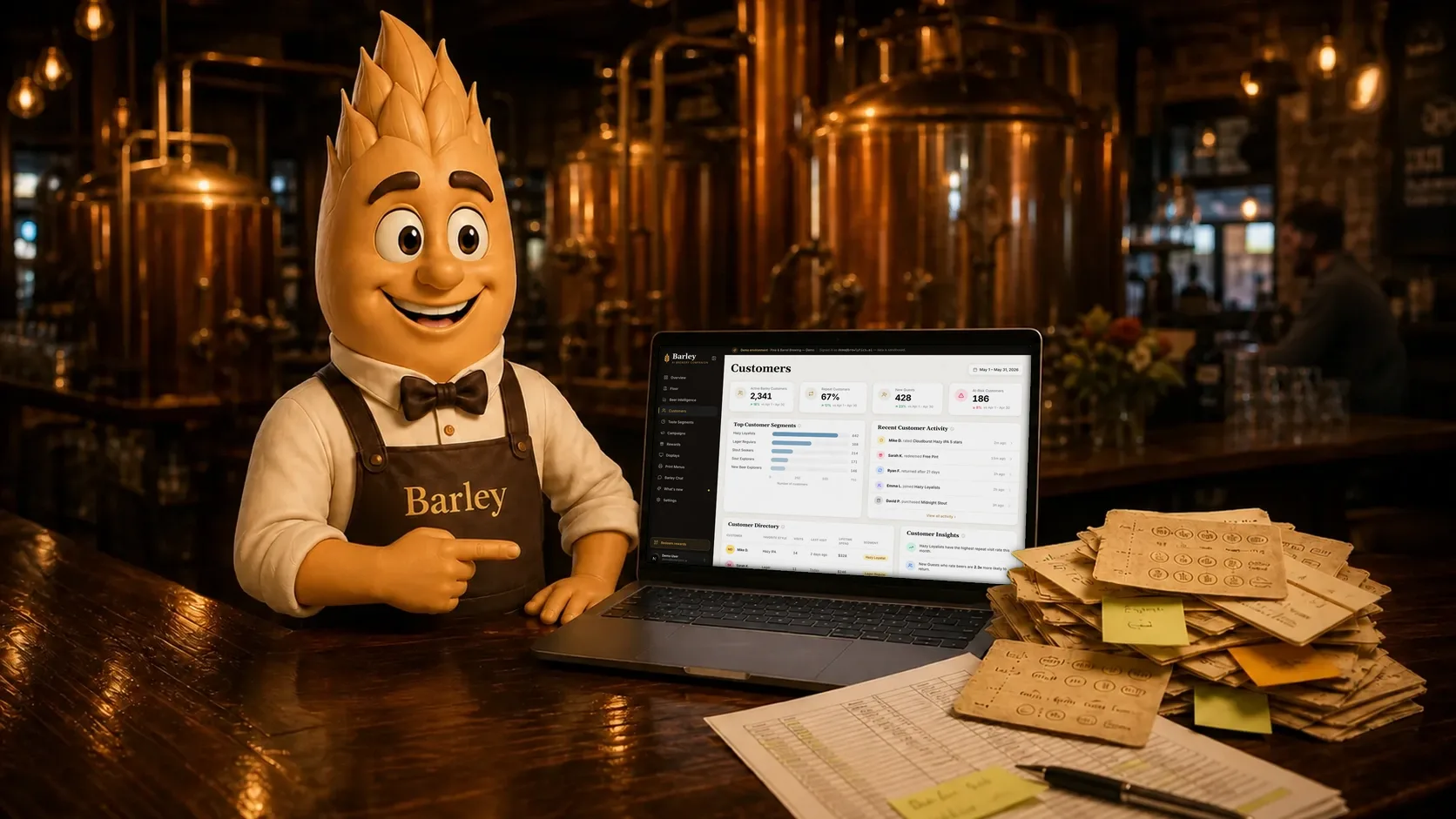
Best Brewery CRM Software (2026)
Nine brewery CRM tools compared for 2026 — Untappd, Bloom, AnyRoad, CraftPeak, Arryved, HubSpot, Sequenzy and Brewlytics — with verified pricing and the gaps.
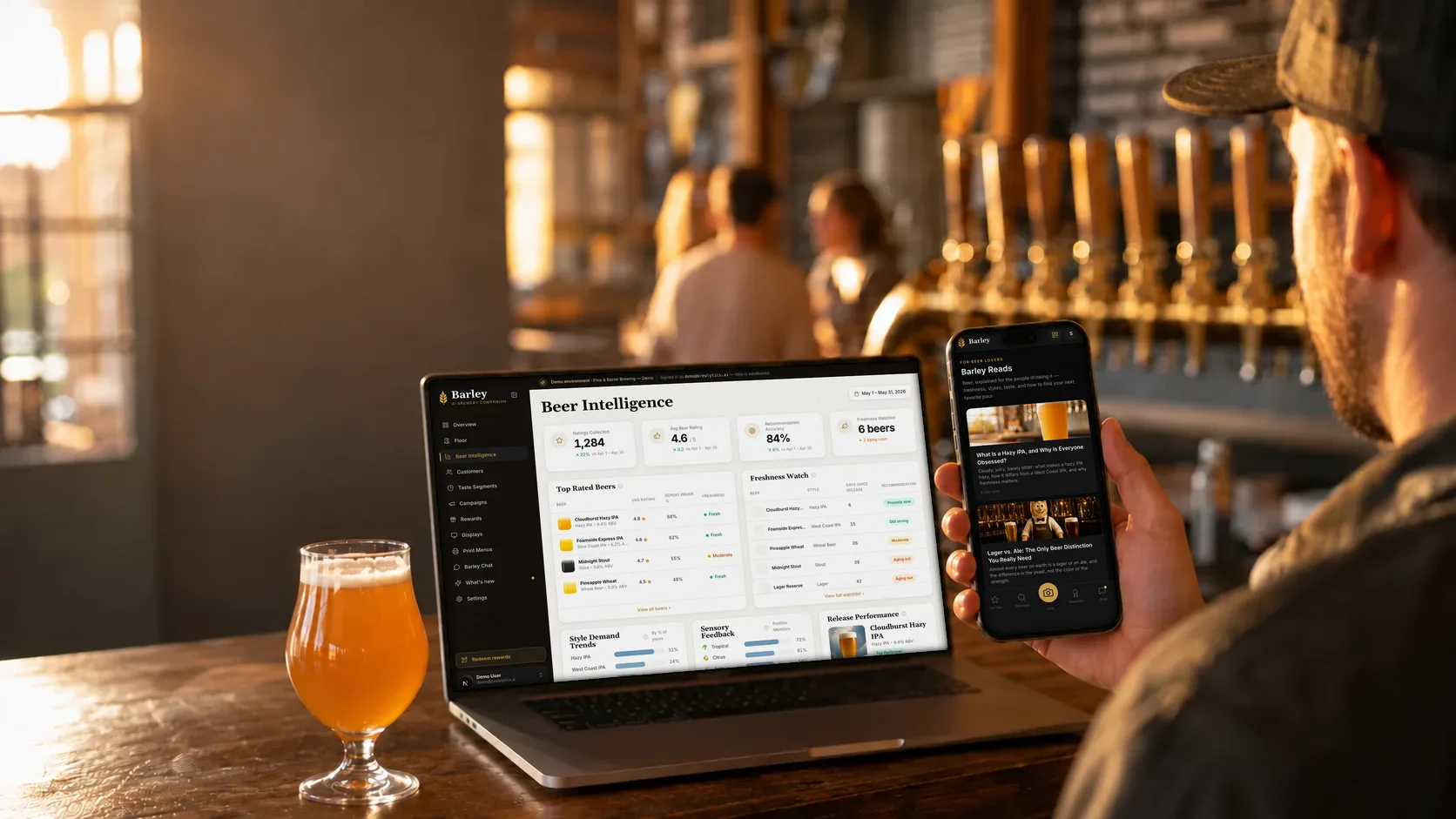
AI Marketing for Breweries: The Complete Marketing Stack
Brewery marketing is moving from mass blasts to AI that knows what each customer drinks. What AI marketing for breweries means — and the stack behind it.
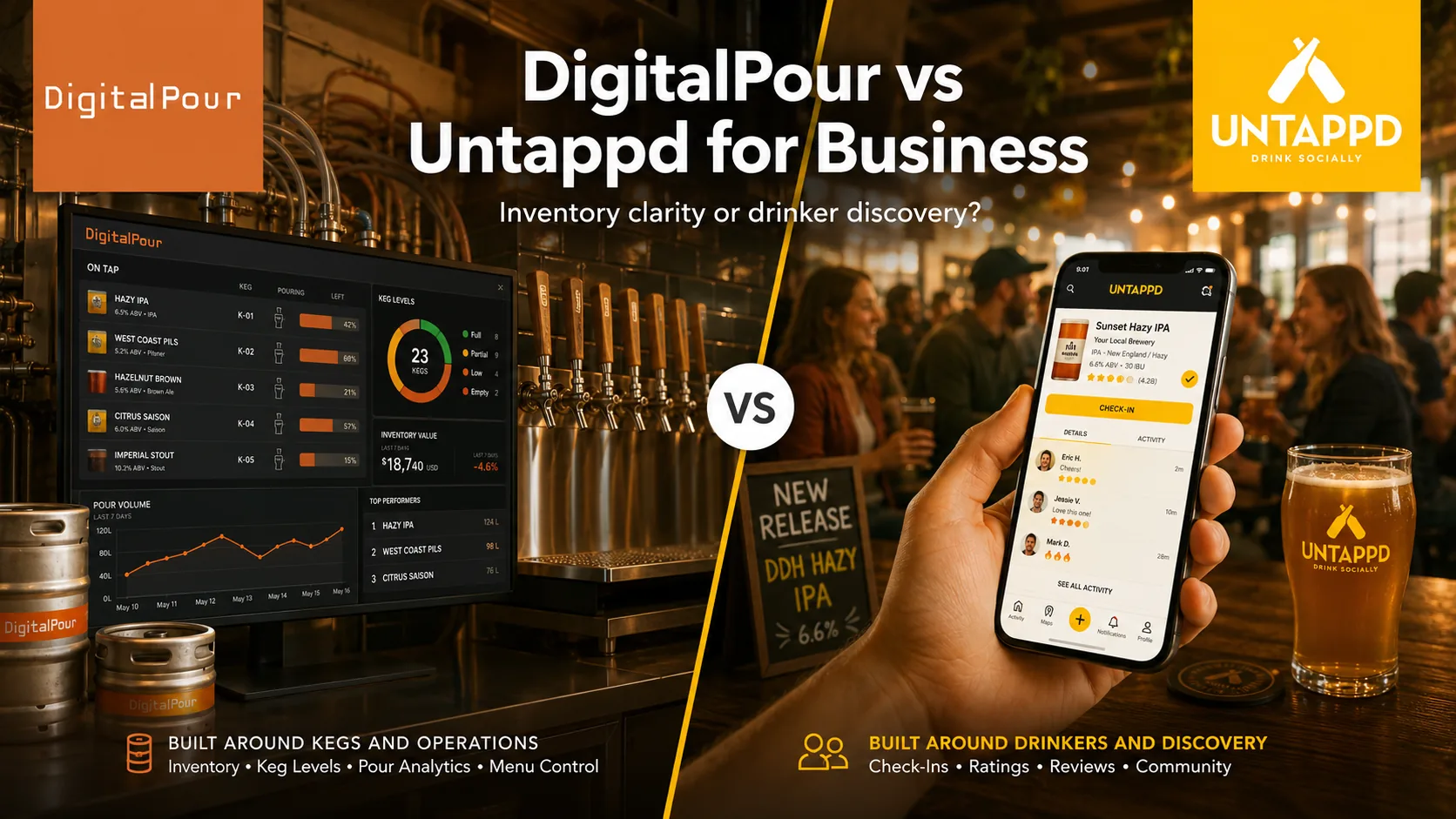
DigitalPour vs Untappd for Business (2026): Which Fits Your Taproom?
Side-by-side 2026 comparison: DigitalPour is built around your kegs, Untappd around drinkers. Features, pricing, and which to pick for your taproom.
Want to see this working in your brewery?
Go Pro to see your customers and act on the data — taste profiles, segmented iMessage, SMS + email campaigns, the AI bartender, and the full dashboard. Or book a walkthrough with the brewer who built it. Not ready? Start free, no card.
Just here for the beer? Get the free Barley app