
Best Brewery CRM Software (2026)
By Brian Winckel · Founder, Brewlytics.ai
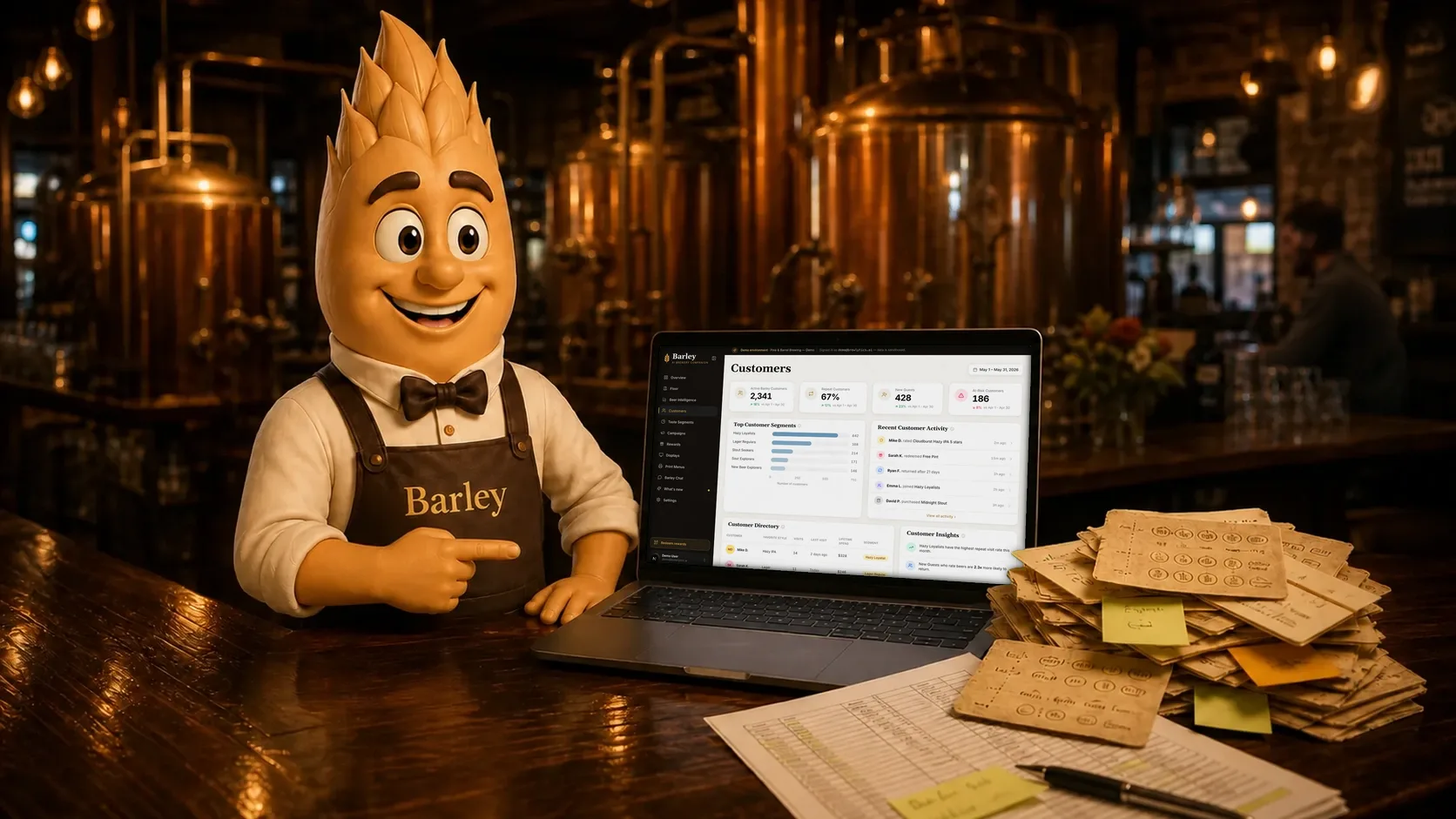
Short Answer
There is no single best brewery CRM — there are four categories, and the right one depends on where your guest data comes from. General CRMs like HubSpot are flexible but know nothing about beer. Venue-marketing tools like Untappd for Business ($899-$1,199/yr, verified 2026-08-18) market to a network rather than your own list. Restaurant CDPs like Bloom Intelligence have deep integrations but no style or freshness dimension. If your guest data is created at the bar — POS transactions, ratings, tap-list orders — a taste-aware brewery CRM like Brewlytics is the category that matches, because it segments by what people actually drink.
Barley's Take
Every CRM will store a phone number. The question is whether it knows that the number belongs to somebody who orders the hazy every single Friday and has never once touched the pilsner.
Why This Matters for Breweries
Most taprooms do not have a customer data problem. They have a customer data location problem. The phone numbers are in Square. The email list is in Mailchimp. The mug club roster is a spreadsheet on the taproom manager's laptop. Who rated the Foothill Hazy IPA five stars lives in somebody's memory, and that somebody quit in June.
A brewery CRM — customer relationship management software built for a brewery — is supposed to be the one place all of that lands. The definition matters, because "CRM" in the craft-beverage market gets stretched over at least four different products that do genuinely different jobs.
The distinction that decides everything: does the tool understand beer, or just contacts? A CRM that stores 2,300 phone numbers and a purchase total per person can tell you who spends. It cannot tell you that 340 of those people are West Coast IPA drinkers who have not been in since the Citra Pale blew, which is the segment that actually earns a text message this Thursday.
That is the buying question. Everything below sorts the market against it.
How It Works: The Four Categories of Brewery CRM
1. General-purpose CRMs
HubSpot, Salesforce, Zoho. Built for sales pipelines — leads, deals, stages. They store brewery contacts fine, and if you run a wholesale book or a private-events calendar, a real pipeline tool earns its seat.
What they do not have is a concept of a tap list. No "style family" field, no package date, no way to ask "who drinks sours?" without someone hand-building custom properties and re-maintaining them every time you tap something new. Flexible, and expensive in labor.
2. Venue marketing platforms
Untappd for Business is the incumbent here: digital menus, venue profile, and marketing to drinkers on the Untappd network. Published pricing is $899/yr Essentials and $1,199/yr Premium (verified 2026-08-18).
The wedge to understand is whose list you are marketing to. Untappd's reach is network data — the Untappd userbase — not the guest records your taproom created. BeerMenus has the same shape at the cheap end: its email marketing reaches BeerMenus followers, not your own list. Useful reach. Not a database you own or export.
Next Glass also sells Untappd Insights, brewery/distributor/retailer business intelligence, pricing not public. It is category and market-level intelligence — a different product from a per-guest CRM. Read it as market research, not as your customer list.
3. Restaurant customer-data platforms
Bloom Intelligence is the serious one: a restaurant CDP with WiFi marketing, behavioral segmentation including dwell time, 108M+ verified guest records, and integrations spanning Toast, OpenTable, Olo, Yelp, Google and 18 more. Pricing is not public.
Bloom's data layer is genuinely strong. Its limitation for a brewery is that it is restaurant-wide, not beer-native — no style dimension, no freshness window, no release alert. If you are a brewpub whose revenue is mostly food, that trade is fine. If your product is a rotating tap list, the thing you most want to segment on is the thing it does not model.
4. Taste-aware brewery CRMs
The newest category, and where Brewlytics sits. The CRM reads your POS catalog to describe every beer — style family, hops, bitterness, haze, sweetness — then builds a per-guest taste profile (a structured record of what one drinker actually likes, accrued from ratings, claimed orders, and purchases) on top of transactions you already own.
Adjacent tools in this tier: CraftPeak — brewery websites, DTC ecommerce, membership clubs; Arryved-owned; custom quote. Note that CRM/email/SMS are absent from its own homepage despite third-party roundups calling it a CRM, so treat that label as unverified. AnyRoad captures tour, tasting, and event data — real guest capture, but tours rather than taste. Sequenzy is a general ESP with a brewery landing page (free to 2,500 emails/mo, $19/mo, $49 for 60k); contacts are imported by spreadsheet, no POS integration, SMS a paid add-on. Arryved is POS-first with loyalty and memberships attached, quoted privately.
The comparison, in one table
| Tool | Category | Beer-aware? | POS-grounded? | Pricing (as verified) |
|---|---|---|---|---|
| Brewlytics | Taste-aware brewery CRM | Yes — style, hops, freshness | Square today; Toast and Arryved on the roadmap | Free tier; Pro $99/mo + per-active-customer |
| Untappd for Business | Venue marketing | Yes, network-level | No | $899/yr · $1,199/yr (2026-08-18) |
| Untappd Insights | Market/category BI | Yes, category-level | No | Not public |
| Bloom Intelligence | Restaurant CDP | No style dimension | Via restaurant integrations | Not public |
| AnyRoad | Experience/tour CRM | No | No | Not public |
| CraftPeak | Websites + DTC + clubs | Partly (catalog/commerce) | Arryved-owned | Custom quote |
| Arryved | POS + loyalty | Partly | Native (it is the POS) | Not public |
| Sequenzy | Email marketing | No | No — spreadsheet import | Free · $19/mo · $49/60k |
| HubSpot | General CRM | No | No | See vendor |
Example Brewery Scenario
Ridgeline Brewing Co. runs a 7-barrel taproom on Square and pours about 42,000 pints a year. Three beers do most of the volume: Foothill Hazy IPA, Coldframe Pilsner, and a rotating fruited sour. They have 2,300 customer records — phone numbers captured at the Square terminal — and a Mailchimp list of 1,100 that overlaps with it in ways nobody has ever reconciled.

In March they put everything into a general CRM. Six weeks later the records were tidy and the segments were: All Contacts, Mug Club, and Opened The Last Email. Not one segment described a beer, because nothing in the system knew what a beer was.
Here is the campaign they could not run. Ridgeline tapped a double dry-hopped Foothill on a Thursday. The right audience: guests who ordered a hazy IPA at least twice, rated any hazy 4+, and have not visited in 30 days. In a contact CRM that means exporting Square transactions, mapping SKUs to styles by hand, and cross-referencing a ratings spreadsheet — about four hours, for one send.
With a taste-aware CRM it is a filter. The catalog is already mapped to style families, the ratings are already attached to the guest, and last-visit comes from the POS. Ridgeline sent 214 texts that morning instead of 2,300 emails, and built the segment in about ninety seconds.
Same data. The difference was whether the CRM understood the word "hazy."
Practical Checklist
Run any brewery CRM you are evaluating through these, in this order:
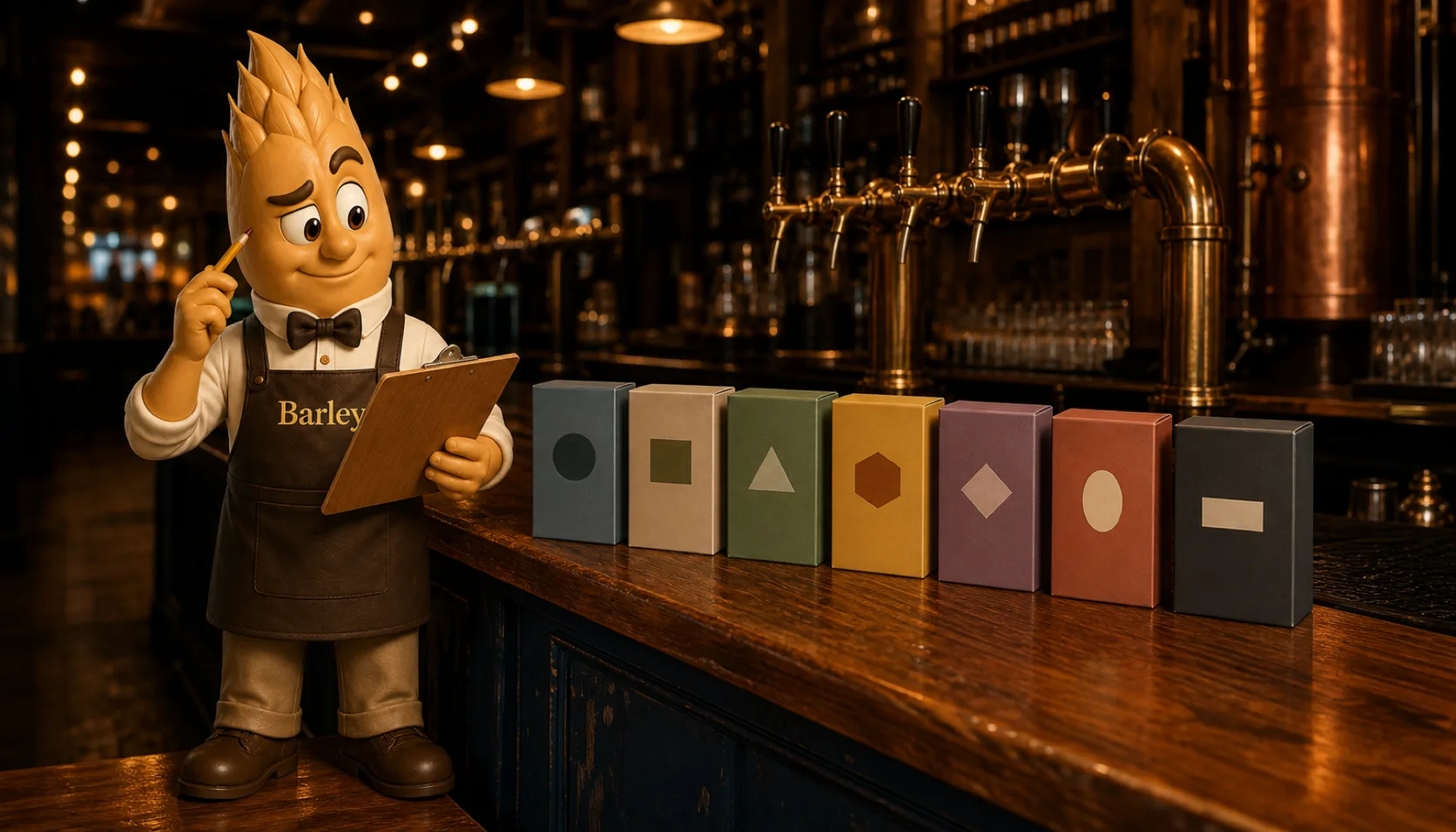
- Ask it to list every guest who drinks stouts. If that takes a CSV export, it is a contact database.
- Ask whose list you are marketing to — your records, or the vendor's network. Then ask whether you can export it.
- Check the POS integration by name. "Integrates with your POS" and "integrates with Square, Toast, Arryved, Lightspeed" are different promises.
- Ask what happens when you tap a new beer. If nothing in the CRM changes automatically, your segments will go stale every week.
- Get pricing in writing with a date on it. Several tools in this market quote privately and several have raised prices recently.
- Confirm SMS is included, not an add-on. For taprooms, text beats email, and add-on pricing changes the math.
- Ask what the CRM knows on day one versus what accrues over time. Honest vendors will tell you profiles build as guests engage.
How Brewlytics Helps
Brewlytics is the taste-aware option in that table — a brewery CRM that sits on top of the POS you already run rather than replacing it.
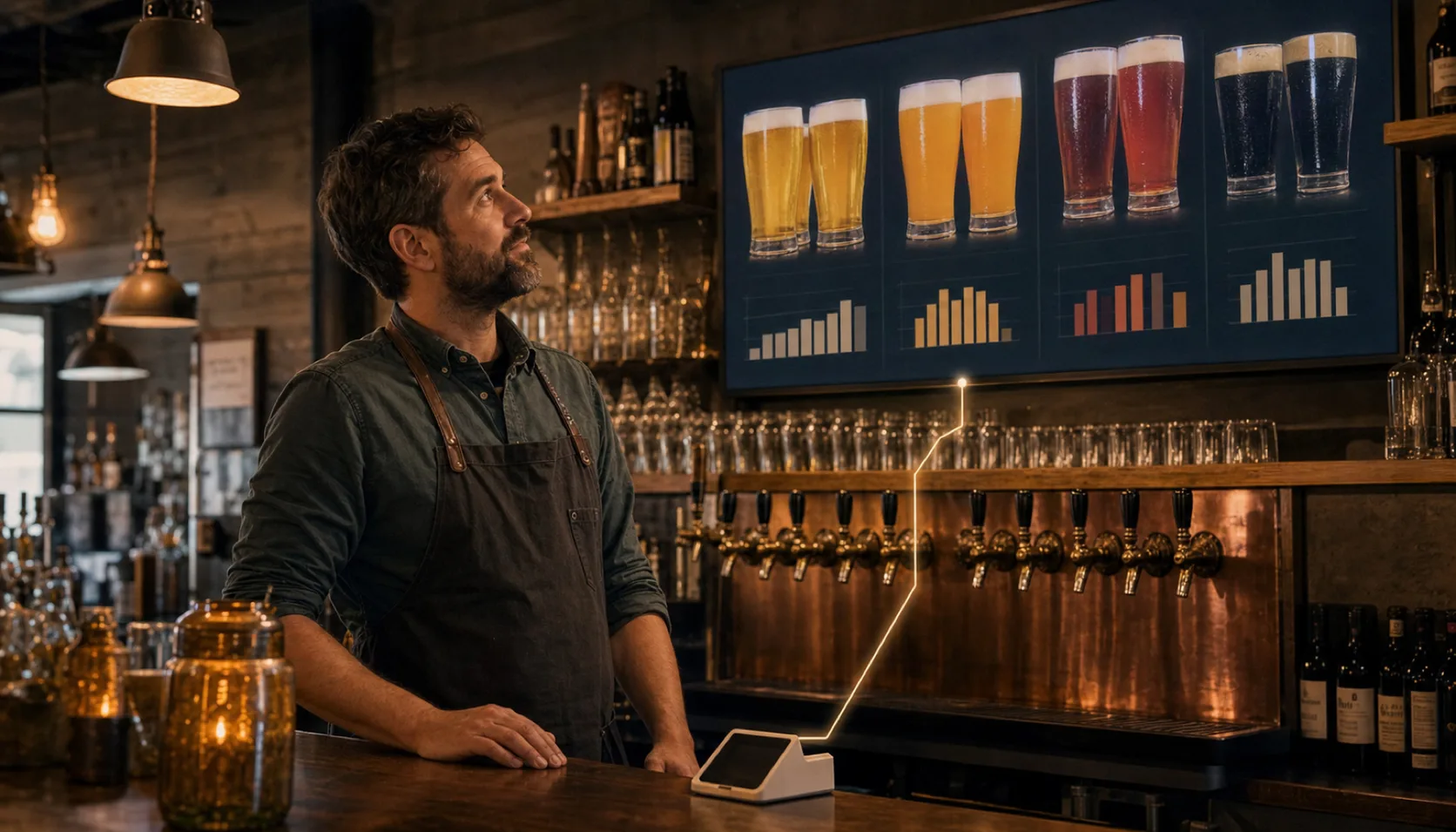
- POS Sync connects Square and reads both transactions and the catalog, so guest records and beer records fill in together. The Square integration is self-serve; Toast is next on the roadmap, then Arryved. Other systems aren't supported yet.
- Customer Taste Profiles accrue per guest from ratings, claimed orders, chats, and purchases — this is the field that makes "who drinks hazies" a filter instead of a spreadsheet project. See customer insights.
- Taste Segments turn those profiles into audiences you can send to: style family, freshness preference, at-risk regulars, first-timers who never came back.
- Campaign Automation sends the segmented iMessage and SMS release alerts, with messaging costs bundled into Pro rather than metered as an add-on.
Pricing is public on purpose: free to start, Pro at $99/mo plus a per-active-customer fee. The full argument for the category lives on the customer insights page.
For where CRM fits alongside email, events, and release marketing, start with the complete brewery marketing guide. If the real question is the POS underneath, read Square vs Toast vs Arryved. Comparing against the incumbent directly? Brewlytics vs Untappd for Business.
FAQ
See the schema-ready FAQ block at the end of the page for the full set — covers what a brewery CRM is, POS-native loyalty, 2026 pricing, HubSpot fit, Untappd Insights, and the minimum data to start.
Ready to see what your POS already knows?
You do not need a new POS, a survey, or a clean year of history. You need your catalog read properly and your guests described by what they drink.
→ Book a demo and bring your Square account. → See how Brewlytics works for breweries before you talk to anyone.
Frequently asked questions
Related Brewlytics Feature
Customer Taste Profiles
Taste profiles that build as customers engage — quiz, ratings, and chat.
See how it works →Keep reading
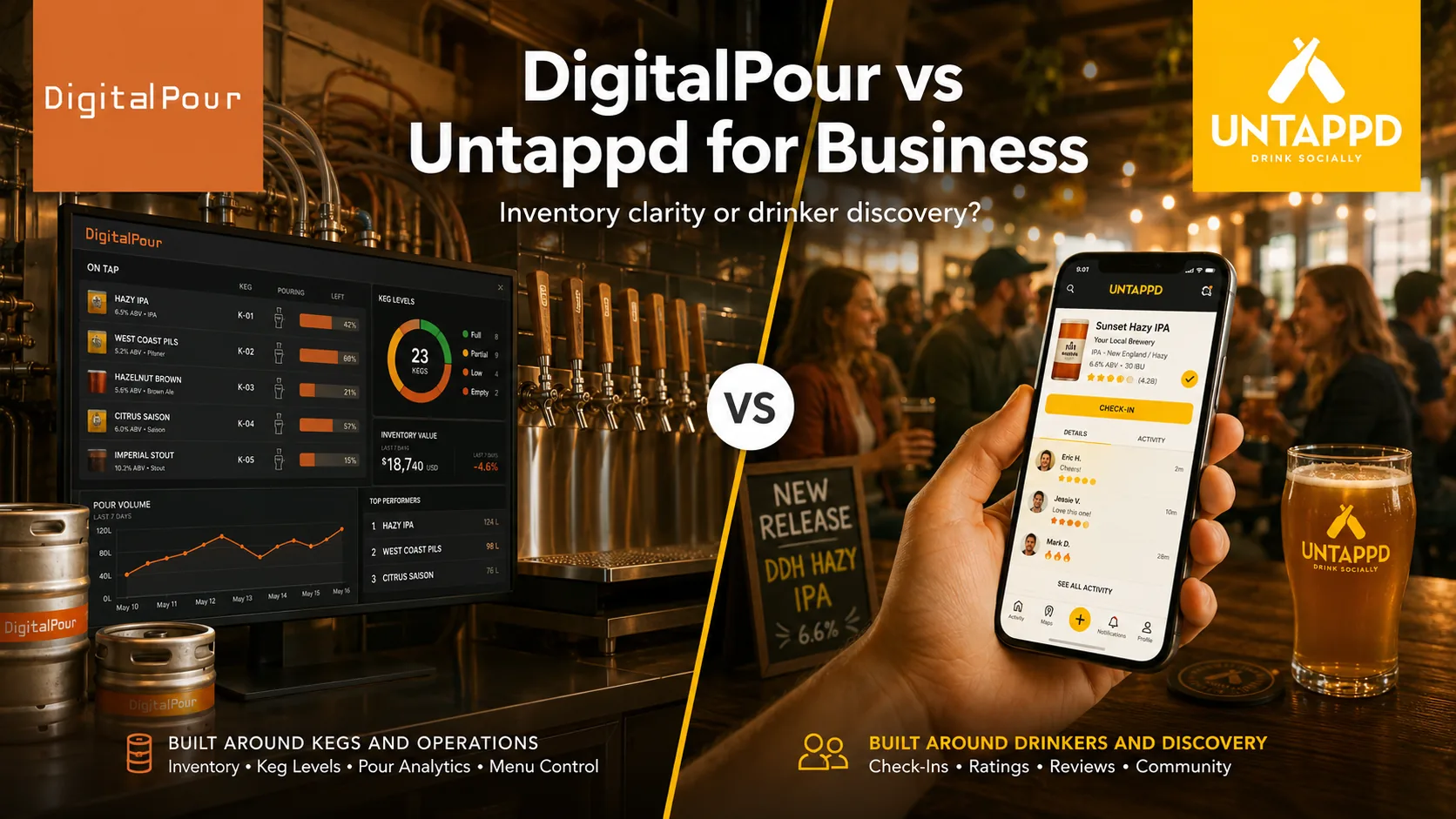
DigitalPour vs Untappd for Business (2026): Which Fits Your Taproom?
Side-by-side 2026 comparison: DigitalPour is built around your kegs, Untappd around drinkers. Features, pricing, and which to pick for your taproom.
Brewery Marketing: The Complete 2026 Guide
A plain-English guide to marketing a brewery in 2026 — the channels that actually work, a simple plan you can run, and taste-targeted messaging.
How to Turn Brewery POS Sales Data into Marketing Campaigns
Your POS already knows who lapsed, who bought the last hazy, and who only buys cans to go. Five brewery marketing campaigns you can run from sales data alone.
Want to see this working in your brewery?
Go Pro to see your customers and act on the data — taste profiles, segmented iMessage, SMS + email campaigns, the AI bartender, and the full dashboard. Or book a walkthrough with the brewer who built it. Not ready? Start free, no card.
Just here for the beer? Get the free Barley app