
AI Marketing for Breweries: The Complete Marketing Stack
By Brian Winckel · Founder, Brewlytics.ai
Short Answer
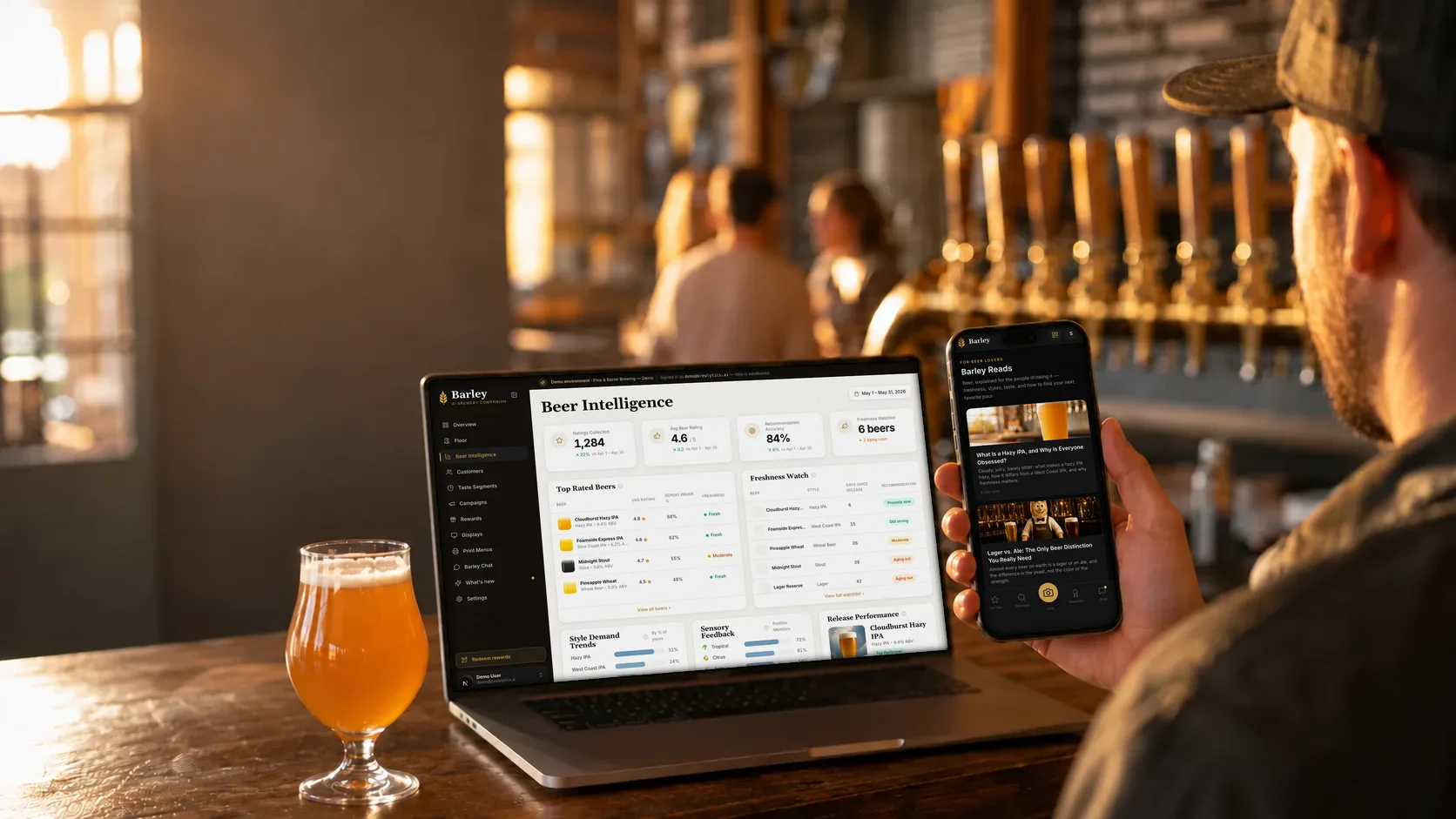
AI marketing for breweries is marketing software that uses each customer's beer-taste data — not just their email — to decide what to send, to whom, and when. A complete brewery marketing stack has five layers: data (a per-customer taste profile), segmentation (by taste, not just spend), channels (AI chat, SMS, email, release alerts), triggers (new release, package date, lapsed customer, milestone), and analytics (what actually drove a visit). Generic tools like Mailchimp and HubSpot — and even craft CRMs — manage contacts but don't understand beer, so they can't tell a hazy-IPA fan from a lager loyalist. The taste-aware stack can, which is what turns brewery marketing from automated into actually relevant.
Barley's Take
Most 'brewery marketing' is just email with a beer logo on it — the same blast to everyone, hoping the right person opens it. The interesting shift is a stack that knows what each person actually drinks. That's the difference between shouting 'we have beer' at a crowd and quietly telling one regular the exact thing they'll love is fresh right now.
Why This Matters for Breweries
For most breweries, "marketing" still means a Tuesday email to the whole list and a couple of Instagram posts. It worked well enough a decade ago. Today the open rates have collapsed, the feed is pay-to-play, and the customer who'd love your new Galaxy single-hop is buried in the same blast as the one who only ever drinks your Vienna lager.
The problem isn't effort — it's relevance. A brewery's marketing is only as good as its ability to send the right person the right beer at the right time. And that's impossible when your tools know your customer's email address but nothing about their palate.
That's the gap AI marketing for breweries fills. It's not a single feature or a cleverer newsletter. It's a shift from broadcasting to matching — using each customer's actual taste data to decide what to send, to whom, and when. This guide defines the category and lays out the complete stack underneath it, so you can see what you already have, what you're missing, and where to start.
What "AI Marketing for Breweries" Actually Means
Strip away the hype and the definition is simple: AI marketing for breweries is marketing software that uses each customer's beer-taste data, plus a recommendation engine, to make every message relevant to the person receiving it.
Two things make it brewery marketing rather than generic marketing automation with a hop logo:
- It runs on taste, not just transactions. The unit of personalization isn't "spent over $100" — it's "prefers juicy, low-bitterness beers under 7% and never orders dark." That's a beer-taste profile, and it's the raw material generic tools don't have.
- It's built around the taproom moment. The best time to reach a customer is when a beer they'll love is fresh and on tap. Freshness is a marketing signal, not just an inventory one — and a brewery stack treats it that way.
The "AI" isn't magic. It's two workable pieces: a recommendation engine that matches customers to beers along dozens of flavor dimensions, and an assistant that delivers those matches in plain language over chat or text. Neither is exotic. What's new is pointing them at beer.
The Complete Marketing Stack
A brewery marketing stack has five layers. Most breweries have one or two and feel the gaps in the others. Here's the whole thing.
1. Data — the taste profile
Everything rests on knowing what each customer likes. A taste profile is a structured picture of a drinker's preferences, and it's built from two sources, layered:
- POS purchase history — the starting layer. What sold, to whom, when. It tells you someone bought three IPAs.
- In-app engagement — the sharpening layer. The beers a customer rates, checks in to, and asks about. This is what tells you they loved the juicy IPA and shrugged at the bitter one.
The honest version: the sharpest profiles come from engagement, not a one-time POS import. The stack gets more useful the more a customer uses it — which is exactly the flywheel you want.
2. Segmentation — by taste, not just spend
Once you can describe a customer's taste, you can group them by it. Not "top spenders" and "everyone else," but "the 60 tropical-hazy fans," "the malt-forward crowd," "the sour-curious." Segmentation by taste is what lets a single new release reach the 60 people who'll love it instead of the 600 who'll mostly ignore it.
3. Channels — where the message lands
A match no one hears about does nothing. The stack reaches customers across the channels that actually get read:
- An AI bartender — a chat assistant customers ask "what should I drink?", answered from their own taste profile against your live tap list.
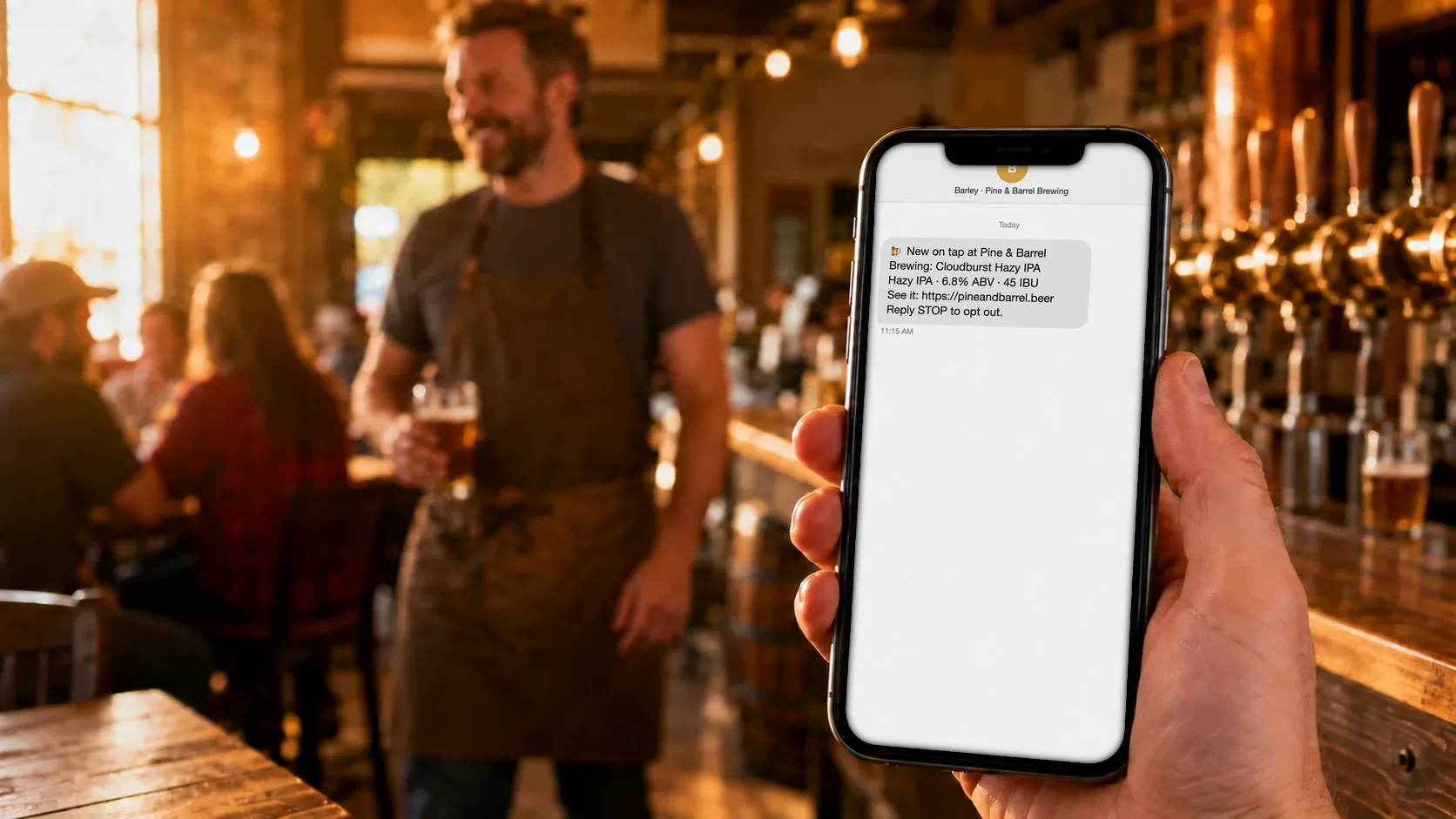
- SMS — the highest-open channel breweries have, ideal for time-sensitive, taste-matched release alerts.
- Email — still earns its keep for broad announcements and storytelling; the brewery email playbook covers how to run it well.
- Fresh-beer alerts — the freshness-triggered nudge that ties it all together.
4. Triggers — automation fired by real events
This is the "automated" in automated marketing. Instead of you remembering to send things, the stack fires on events:
- A new release hits the tap list → the matching segment hears about it.
- A package date approaches → move the beer while it's fresh.
- A customer lapses → a taste-matched winback instead of a generic "we miss you."
- A milestone (10th visit, a birthday) → recognition that feels personal.
5. Analytics — what actually drove a visit
The last layer closes the loop: which messages brought someone in? Not opens and clicks for their own sake, but recommended-customer-came-in. Relevance you can measure is relevance you can improve — and it's what tells you which of the four layers above to double down on.
Where Generic Tools Fall Short
You can assemble pieces of this stack from tools you already know. It's worth being honest about where each one stops:
- Generic marketing automation (Mailchimp, HubSpot, Deelo). Genuinely great at email, workflows, and contact management. But they model a contact, not a palate. They can segment by "opened last email," not by "loves dank Citra IPAs." You can automate a brewery on Mailchimp — you just can't make it taste-aware.
- Craft-focused CRMs (CraftPeak, SevenRooms). Closer to the industry, strong on DTC ecommerce and guest data. But they're still organized around the transaction and the reservation, not the beer's flavor DNA. They know a customer came in; they don't know a hazy from a stout.
- POS-native tools (Square, Toast, Arryved). They own the transaction and, increasingly, basic loyalty. But POS loyalty is bookkeeping for visits — it doesn't see taste, freshness windows, or the catalog beyond a SKU. (We compare these directly in Square vs. Toast vs. Arryved for brewery loyalty and customer data.)
None of these are bad tools. The point is that a complete brewery marketing stack needs the taste layer none of them provide — and that layer is what makes everything above it relevant instead of merely automated.
Example Brewery Scenario
Cedar & Pine Brewing is a 10-barrel taproom on Square. Their marketing was a Tuesday email to 1,400 subscribers — a 19% open rate and steadily falling. Every release got the same blast; the hazy fans and the lager crowd read (or ignored) the same words.
They start building the stack. First the data layer: they connect Square, and taste profiles begin filling in as customers rate beers and chat with Barley. Within a few weeks the top third of their customers — the ones who drive most of the revenue — have rich enough profiles to act on.
Then a new small-batch Galaxy single-hop pale hits the tap list. Instead of the Tuesday blast, the stack segments to the ~70 customers whose profiles lean tropical and juicy, and triggers an SMS the day it's tapped: "New Galaxy single-hop just went on — bright and tropical, exactly your lane, and it's peak-fresh right now." The lager crowd never gets pinged, so nobody learns to tune the brewery out.
Twenty-two of those 70 come in that week. The analytics layer shows the release drove more midweek visits than the last three Tuesday emails combined — from one message, to the right people, at the right time. Cedar & Pine didn't work harder. They stopped broadcasting and started matching.
Practical Checklist
You don't need all five layers on day one. Build in this order:
- Connect your POS. It's the seed — the catalog and purchase history the taste profiles read.
- Give customers a way to rate what they drink. A QR on the table tent, a one-tap prompt in an app. Purchases tell you what sold; ratings tell you what landed.
- Tag your beers by flavor, not just style. "Hazy IPA" is a start; "juicy, tropical, soft, low-bitterness" is what actually matches a person.
- Run one triggered play first. A taste-matched release alert is the highest-return place to begin.
- Add SMS before you add complexity. It's the channel breweries under-use and customers actually read.
- Measure visits, not opens. Track whether recommended customers came in. That's the number that matters.
How Brewlytics Helps
Brewlytics is built as this taste-aware marketing stack, so you don't have to wire five tools together yourself:
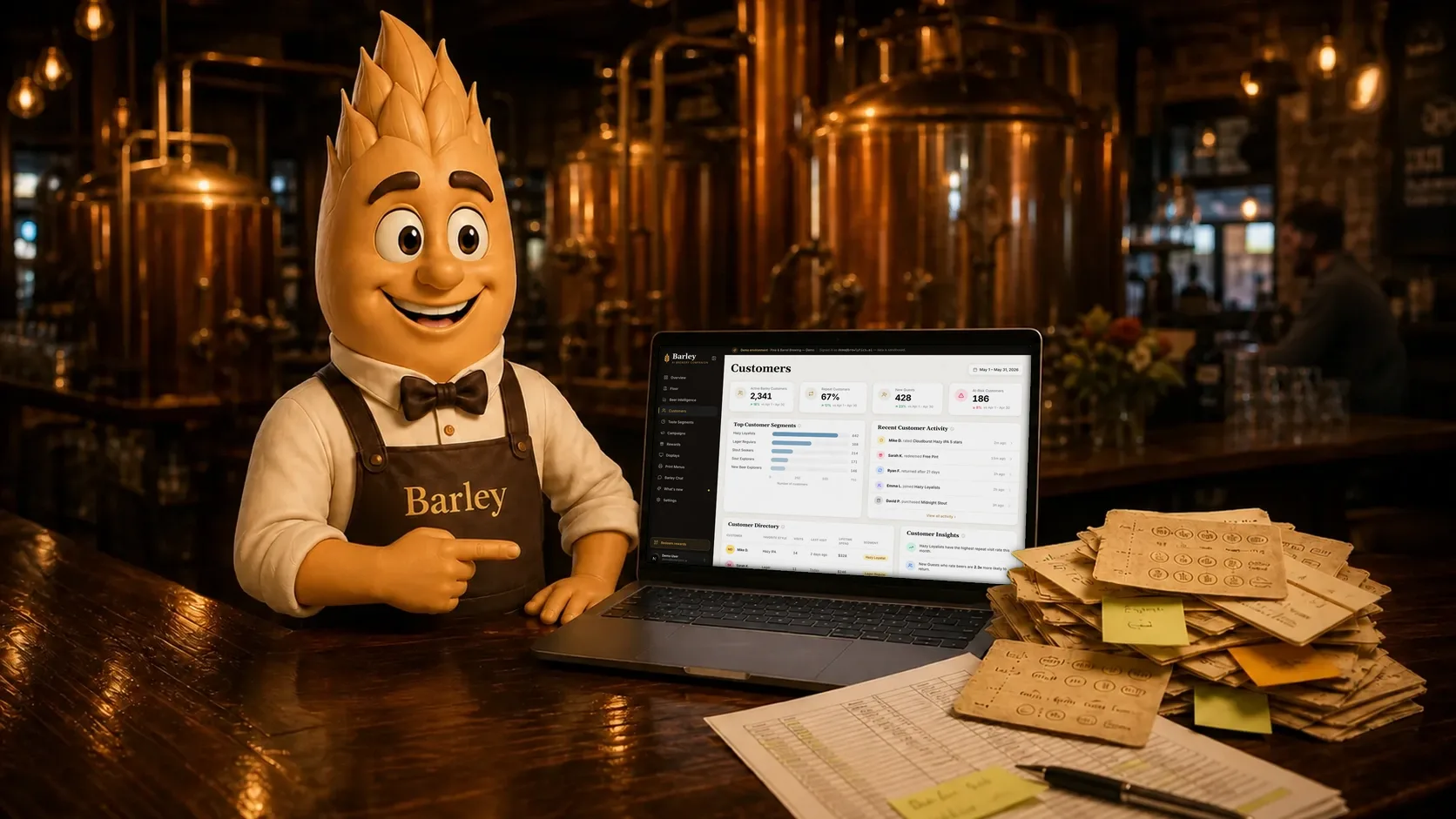
- Customer Taste Profiles turn POS history plus ratings and check-ins into a per-customer picture of what each drinker likes — the data layer everything else runs on. (See how →)
- Barley, the AI bartender, is the channel and the recommendation engine in one — customers ask what to drink and get an answer matched to their taste and your live tap list, over chat or SMS. (What is an AI bartender? →)
- Segmented campaigns and fresh-beer alerts fire on real triggers — a new release, an approaching package date — to the exact customers who'll care, not your whole list.
- Loyalty & Rewards ties recognition to the same profiles, so the customers you're marketing to are the ones earning status for coming back. (See loyalty →)
It sits on top of your existing POS — Square today, with Toast next on the roadmap and Arryved third — so you keep your POS and the stack reads it. For the deeper argument on why generic email stopped working for breweries, see why brewery email blasts don't work like they used to; for the loyalty side, why traditional loyalty programs don't create true regulars.
FAQ
(See the schema-ready FAQ block at the end of the page — it covers what AI marketing for breweries is, how it differs from Mailchimp/HubSpot, whether you replace your POS, whether it works for a small taproom, what data it runs on, and where to start.)
Ready to build your brewery's marketing stack?
The breweries that win the next decade won't be the ones sending the most emails. They'll be the ones whose marketing knows what each customer drinks — and reaches them the moment the right beer is fresh. That's a stack, not a subject line.
New to brewery marketing in general? Start with the complete brewery marketing guide. Ready to put the plays on autopilot? See automated marketing for breweries: what to automate (and what not to).
See what a taste-aware marketing stack would look like on your own tap list: book a demo, or explore how an AI bartender helps breweries sell more beer.
Frequently asked questions
Keep reading
Automated Marketing for Breweries: What to Automate (and What Not To)
Automation is leverage — until it makes your brewery sound like a robot. The automations worth running, which to keep human, and how to sequence them.
Best Brewery CRM Software (2026)
Nine brewery CRM tools compared for 2026 — Untappd, Bloom, AnyRoad, CraftPeak, Arryved, HubSpot, Sequenzy and Brewlytics — with verified pricing and the gaps.
Brewery Marketing: The Complete 2026 Guide
A plain-English guide to marketing a brewery in 2026 — the channels that actually work, a simple plan you can run, and taste-targeted messaging.
Want to see this working in your brewery?
Go Pro to see your customers and act on the data — taste profiles, segmented iMessage, SMS + email campaigns, the AI bartender, and the full dashboard. Or book a walkthrough with the brewer who built it. Not ready? Start free, no card.
Just here for the beer? Get the free Barley app