
25 Brewery Event Ideas That Actually Drive Revenue (Not Just Foot Traffic)
By Brian Winckel · Founder, Brewlytics.ai
Short Answer
Most brewery events drive foot traffic without driving revenue or retention. The fix is ensuring every event does at least one of three things: captures customer data, increases average check, or gives attendees a reason to return next week. The 25 ideas here span five categories — weekly recurring, release and seasonal, community partnerships, education and experience, and data-driven digital — and each is designed to drive revenue, not just attendance. Promotion runs a simple cadence: Instagram 3 days out, email 2 days out, SMS day-of. The metric that matters most isn't how many showed up but how many came back within 30 days.
Barley's Take
A brewery that runs trivia every Tuesday, a release party once a month, and a food truck rally once a quarter has a calendar. A brewery that does none of those things has a building with beer in it. The event doesn't need to be elaborate — it needs to be regular, promoted, and measured. The rest is execution.
Why This Matters for Breweries
Every brewery runs events. Not every brewery makes money from them.
The typical pattern looks like this: you book a band, promote it on Instagram, pack the taproom on a Saturday, and feel great about the turnout. Then you look at the numbers and realize most of those people were already coming anyway, the band cost $500, and you didn't capture a single email address. The event created a crowd, not a customer.
That's the event trap, and it catches most taprooms at some point. The problem isn't the event — it's the lack of structure around it. A brewery event should do at least one of three things:
- Capture customer data — an email, a phone number, a taste profile check-in, something that lets you reach them again.
- Increase the average check — food pairings, flights, merchandise, anything that raises per-head spend beyond a single pint.
- Create a reason to come back — prizes redeemable next visit, loyalty points, a recurring schedule that becomes a habit.
If your event does none of those three things, you threw a party. Parties are fun. They're not a business strategy.
The 25 ideas below are organized by type, and each one is designed to hit at least one of those three goals. Pick the ones that fit your space, your staff, and your regulars — and start measuring what actually works.
Weekly Recurring Events
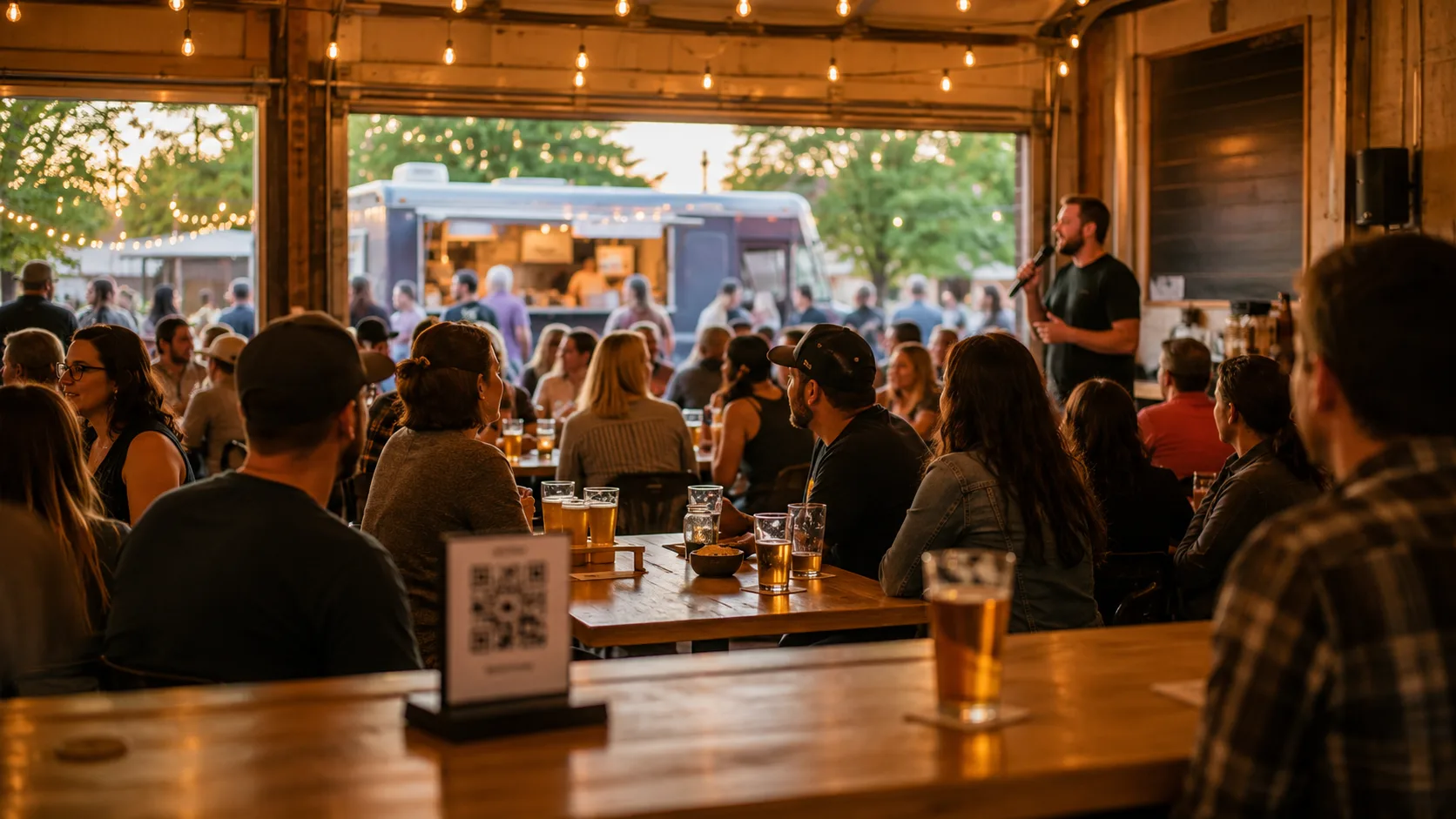
These fill your slow days. The power of a recurring event is habit: customers don't have to check your Instagram to know what's happening — they just know Tuesday is trivia night. That predictability is worth more than any one-off blowout. (A standing event is the long-term fix in our playbook for slow taproom days — a reliable reason people show up on your deadest night.)
1. Trivia night with return-visit prizes
The most reliable taproom filler in existence. Run it weekly on your slowest night. The critical detail most breweries miss: make the prizes bring people back. A gift card redeemable next visit is worth more than a branded t-shirt. The t-shirt goes in a drawer. The gift card brings a table of four back next week. Partner with a trivia host service (plenty run for $100-150/night) or have a staff member run it with a free app like Water Cooler Trivia.
2. Industry night
Pick the day service workers have off (usually Monday or Tuesday) and offer discounted pints. Industry workers are the best word-of-mouth engine in any city — they work in restaurants, bars, and hotels, and they tell every customer where to drink on their night off. A 20% discount to anyone with a pay stub or industry ID pays for itself in referrals.
3. Live music — keep it conversational
Acoustic solo acts or duos work better than full bands for most taprooms. The reason: people can still talk. A packed taproom where nobody can hear each other over the drum kit sells fewer beers than a comfortably full room with background music. Budget $150-300 per act, book local musicians on a rotating schedule, and promote the artist by name — their followers become your traffic.
4. Run club, yoga, or fitness + beer
A weekly group run or yoga session that starts (or ends) at the brewery captures a demographic that might not otherwise walk in: the health-conscious, the social exerciser, the person who doesn't think of themselves as a "brewery person." November Project, local running groups, and yoga instructors are usually eager to partner for free — they get a venue, you get 30 sweaty people who are about to order a round. These events build fierce loyalty because they blend identity (runner, yogi) with place (your taproom).
5. Board game and puzzle night
The lowest-cost event on this list. Buy a shelf of board games, designate a night, and let people settle in. Board game nights generate the longest average dwell time of any taproom event — and dwell time correlates directly with tabs. The customer who sits for two hours playing Settlers of Catan buys three rounds instead of one. No entertainment cost, no coordination, no noise complaints. Just games and beer.
Release and Seasonal Events
These turn your brewing calendar into a marketing calendar. Every new beer is a reason for an event — and every event is a chance to capture data and reward your best customers.
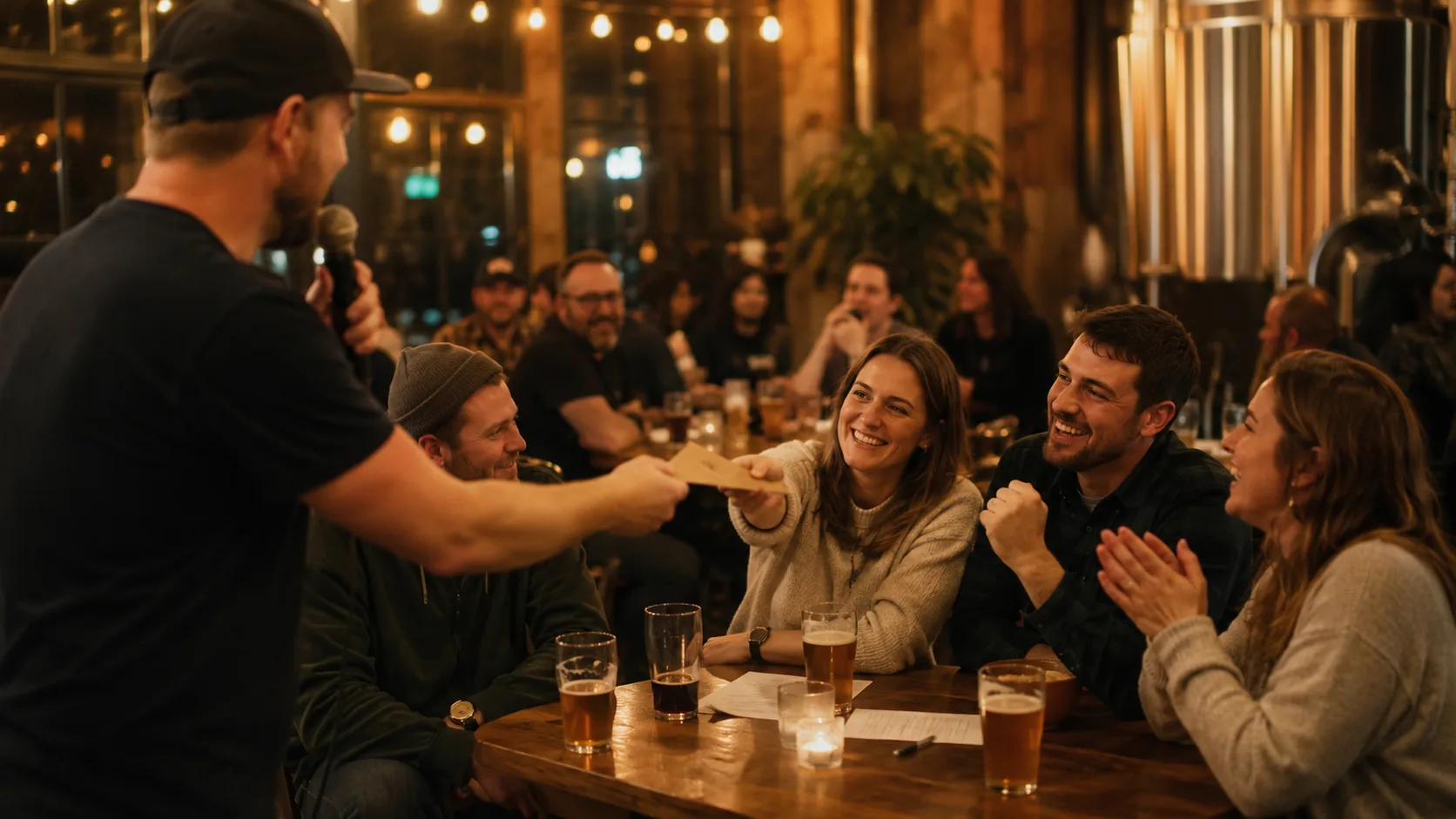
6. New release parties with first-pour perks
Don't just tap a new beer — make it an event. Offer the first 50 people a free taster, a commemorative glass, or loyalty points for trying it. The real value isn't the giveaway: it's the data. Every person who shows up for a release and checks in, rates the beer, or scans a QR code is building a taste profile you can use to market the next release to exactly the right people.
7. Seasonal kickoff events
Oktoberfest launch, dark beer season premiere, summer session ale release, anniversary week. These are anchor events that give your marketing a narrative arc. Decorate the taproom, put together a seasonal flight, create a limited-time food pairing. Seasonal events work because they're expected (customers look forward to them) and shareable (Instagram loves Oktoberfest decor).
8. Brewer's table — small-batch tasting with the brewer
A high-ticket, limited-seat event where customers taste 4-6 small-batch or experimental beers alongside the brewer who made them. Charge $30-60 per seat, limit it to 20-30 people, and include light food pairings. This is your premium event: it drives the highest per-head spend, builds a personal connection between the customer and the brand, and makes attendees feel like insiders. Sell it to your loyalty members first.
9. Vertical tasting
Same beer, different batches or vintages. If you have a barrel-aged stout or a beer you brew annually, a vertical tasting lets customers taste how it evolves over time. It's educational, it's exclusive (you need the back stock), and it positions your brewery as one that takes craft seriously. Charge a modest ticket price and pair it with a discussion led by your head brewer.
10. Collaboration brew launch
Partner with another local brewery for a collaboration beer and host the launch together — at your place one weekend, at theirs the next. The magic is audience cross-pollination: their regulars discover your taproom, yours discover theirs. Both breweries promote the event to their full lists, doubling the reach at zero advertising cost. Collab launches also generate social content organically — two breweries, one beer, twice the posts.
Community and Partnership Events
These bring people into your taproom who wouldn't otherwise come — and they position your brewery as a community hub, not just a place to drink.
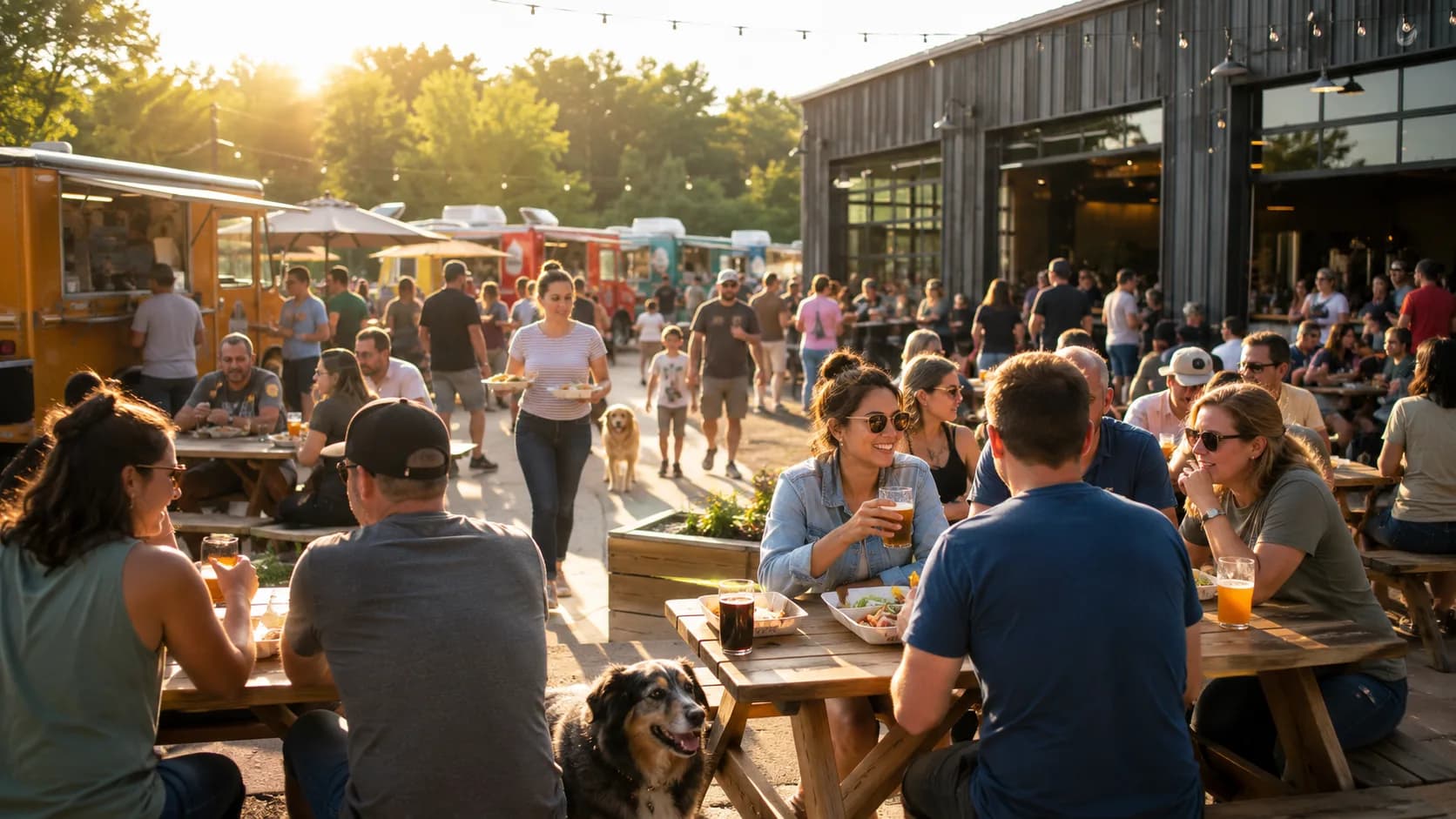
11. Food truck rally
Bring in 3-5 food trucks on a Saturday afternoon and you've created a destination event. The data on this is striking: taprooms with food options see average checks increase by as much as 86% compared to beer-only visits, because eating extends the stay and the stay extends the tab. Multiple trucks give customers choice and create a festival atmosphere. Charge trucks a flat fee or a percentage of sales, promote the lineup by name, and make it monthly.
12. Local artist and maker market
Invite local artists, crafters, and makers to set up tables in your taproom or patio. Art walk + beer attracts a creative crowd that skews toward the experience-seeking demographic — exactly the people who become taproom regulars. Charge vendors a small table fee or take a percentage, and offer a "sip and shop" flight special. These events are particularly strong on weekend afternoons when your taproom might otherwise be slow.
13. Charity pour night
Donate a portion of the night's sales to a local nonprofit. This drives purpose-motivated visits — people who want to support the cause and enjoy a beer while doing it. Promote the charity by name, have them set up a table, and let them bring their network. You'll see new faces who came for the charity and stayed for the beer. The key: pick a different local org each month and build a calendar of giving that becomes part of your brand identity.
14. Dog-friendly "yappy hour"
If your space allows dogs (patio, beer garden, outdoor area), a dedicated dog event fills seats during off-peak hours. Dog owners are intensely loyal to dog-friendly spaces — find one, and they'll bring their friends, their partners, and their visiting relatives. Provide water bowls, maybe a dog treat at the door, and let the social dynamics do the rest. These events are also wildly shareable on social media. Everyone photographs their dog at a brewery.
15. Kids' craft hour
Saturday afternoon. Set up a craft table for kids (coloring, simple projects, seasonal crafts) while parents drink beer on the patio. This captures the young-family demographic that loves breweries but struggles with the logistics of going out. Staff it with one person, keep the crafts simple and cheap, and watch the parents settle in for a two-hour stay. The average check on a family with kids who are happily entertained is significantly higher than a rushed 30-minute stop.
Education and Experience Events
These position your brewery as a place to learn, not just drink. They attract curious, engaged customers who become your most vocal advocates — and they command premium pricing.
16. Homebrew workshop
Teach the basics of homebrewing in a 2-3 hour hands-on session. Charge $40-75 per person and include a flight of your beers as reference points. Here's the long game: homebrewers are among the most dedicated craft beer customers in existence. They understand the process, they appreciate the craft, and they become evangelical regulars. Every homebrewer you create is a customer who will talk about your brewery to everyone they know.
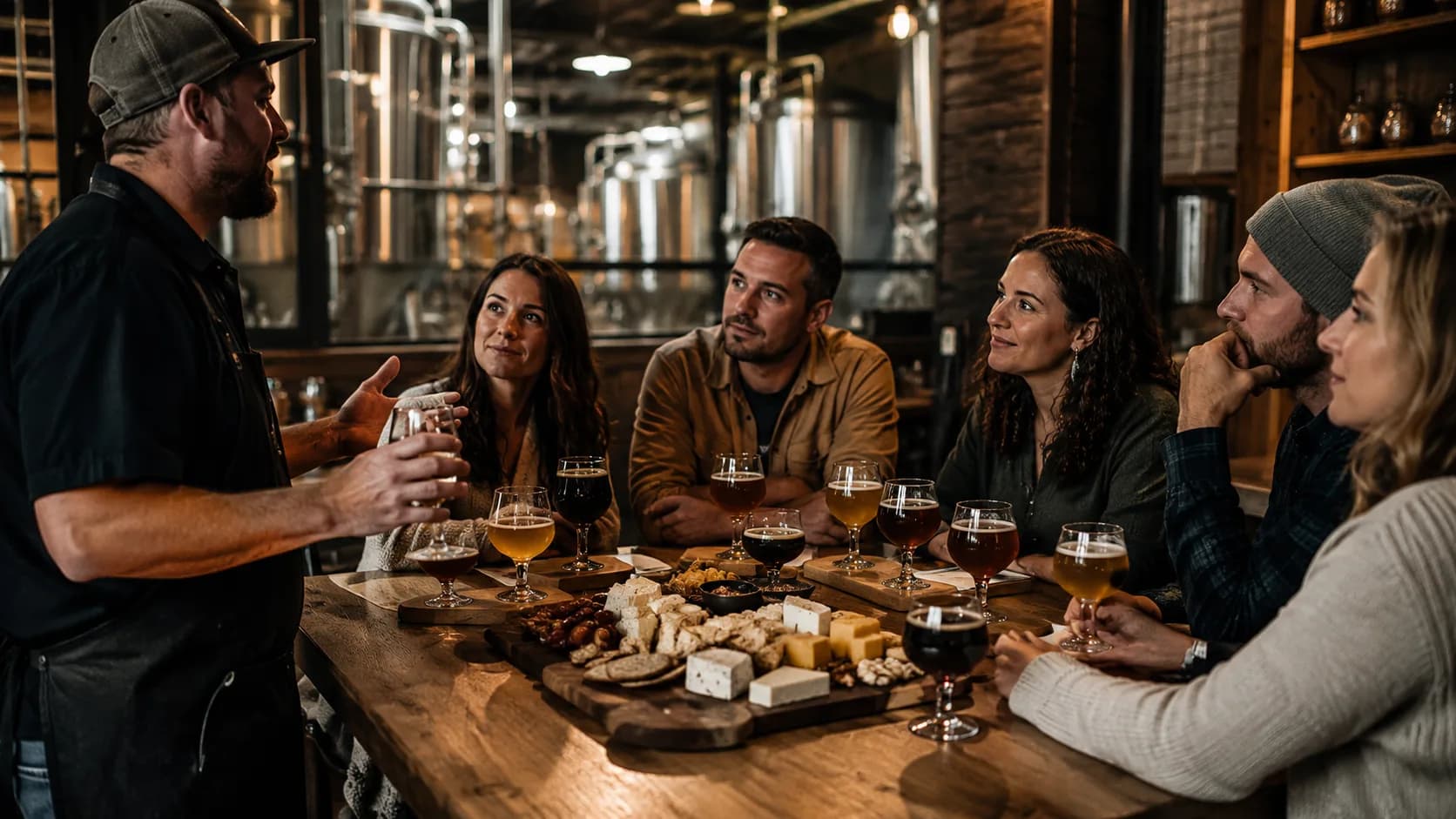
17. Beer and cheese (or chocolate) pairing
A guided tasting that pairs 4-6 of your beers with artisanal cheeses or chocolates. Charge $25-45 per person, keep groups to 20-30, and have the brewer or a knowledgeable staff member guide the experience. Pairings drive the highest average check of any education event because the ticket price is premium, the perceived value is high, and attendees almost always order a full pour of their favorite pairing afterward.
18. Brewery tour and tasting flight
Behind-the-scenes access to the brewhouse, a walk through the process from grain to glass, and a flight at the end. Tourists and locals both love this — it makes beer feel personal and the brewery feel transparent. Charge $10-20 per person, run tours on weekend afternoons, and end with a flight in the taproom (where they'll likely order another round). Post the tour on your Google Business Profile and on TripAdvisor — it's a tourist-discovery magnet.
19. Cicerone-led style education night
Partner with a local Certified Cicerone or beer educator for a guided tasting focused on a specific beer style — IPAs one month, Belgian ales the next, lagers the next. Attendees taste 4-6 examples (ideally including some of yours) and learn the history, ingredients, and flavor markers that define the style. These events attract the "beer curious" crowd that wants to learn without pretension. Keep it accessible, not academic.
20. Meet the brewer Q&A
Simple and free: your head brewer sits at the bar during a scheduled hour and answers questions. No slides, no formal structure — just a conversation over pints. This builds the personal connection between the customer and the person making the beer, which is one of the most powerful retention tools a brewery has. When a regular knows the brewer by name, they're not just loyal to the brand — they're loyal to the person.
Data-Driven and Digital Events
These are the events that most breweries don't think about — and the ones with the highest long-term return. Each one captures customer data, builds taste profiles, or uses existing data to create experiences that feel personal.
21. Check-in rewards
Not quite an "event" in the traditional sense, but it's the layer that makes every other event more valuable. Set up a QR code at the bar: scan it, rate the beer you're drinking, earn loyalty points. Each check-in builds a taste profile for that customer — and the taste profile is what lets you market the next release, the next event, and the next exclusive to exactly the right people. Run a kickoff week where points are doubled to build the habit.
22. Mystery pint night
Customers order a "mystery pint" and get a beer selected based on their taste profile — something they haven't tried but are predicted to love. It's fun, it's slightly theatrical, and it drives trial on beers that might otherwise sit on the tap list. If you don't have taste profile data yet, run it as a staff pick (the bartender chooses based on a quick "what do you usually drink?" conversation) and use the interaction to start building profiles.
23. Automated anniversary and birthday celebrations
When a customer hits a milestone — one-year anniversary of their first visit, their birthday, their 50th check-in — an automated invitation brings them back for a free pint or a small reward. The power of this event is that it's personal, it's timely, and it runs without you doing anything. Set up the automation once and it fires every time a milestone hits, turning ordinary dates into reasons to visit.
24. VIP early access
Give your loyalty members a 24-hour head start on new releases or event tickets before the general announcement goes out. This rewards your best customers for being loyal and creates a two-tier promotion system: VIPs hear about it Tuesday, everyone else hears about it Wednesday. The exclusivity isn't expensive — it's just a timing advantage — but it makes loyalty membership feel genuinely valuable.
25. Social media contest
"Post your pour, tag us, and be entered to win a mug club membership." This turns your customers into your marketing team. The cost is one mug club membership (or a gift card, or a merch pack). The return is dozens of organic social posts from real customers showing real moments at your brewery — content more authentic and persuasive than anything you could create yourself. Run these monthly to keep the content flowing.
How to Promote a Brewery Event
Promotion doesn't need to be complicated. A simple three-touch cadence works for most events:
Three days before: Instagram story. Show a behind-the-scenes preview, the event flyer, or a quick video of the setup. Stories are ephemeral and feel casual — they're the "heads up" touch. Tag the event, the collaborator, the food trucks, or the musicians to extend reach.
Two days before: email to your list. A short, clear email with the date, time, what to expect, and a reason to come. If you can segment (send the beer dinner invite to foodies, the IPA release to hop heads), do it. If not, send it to the full list — events are one of the email types that genuinely apply to everyone.
Day-of: SMS to opted-in customers. A short text that morning or early afternoon. "Trivia tonight at 7. Winning team gets a $25 gift card. See you there?" SMS is the highest-open channel you have, and day-of is when it matters most — you're catching people while they're deciding what to do tonight.
That's it. Three touches, three channels, three days. If the event is big (a festival, a major anniversary), add a post to your Instagram feed a week out. But for your regular calendar, the three-touch cadence is enough.
The Real Metric: Did They Come Back?
Attendance is a vanity metric. The question that matters is: how many people who came to your event showed up again within 30 days?
An event that brings in 80 people — 75 of whom never return — is entertainment. An event that brings in 40 people — 25 of whom become weekly regulars — is a growth engine. The difference isn't the event itself. It's what you did during the event to capture data, build a connection, and give them a reason to come back.
Three numbers to track for every event:
- Attendance — how many showed up? (Your baseline.)
- Average check — did they spend more than a typical night? (Your revenue signal.)
- 30-day return rate — how many attendees visited again within a month? (Your retention signal.)
If you're tracking all three, you'll quickly learn which event types are worth repeating and which ones are just parties. Trivia night might have modest attendance but a 60% return rate. The big concert might pack the house but produce almost no repeat visitors. The data tells you where to invest your time.
How Brewlytics Helps
Brewlytics ties your events to the data that makes them a growth strategy instead of a line item:
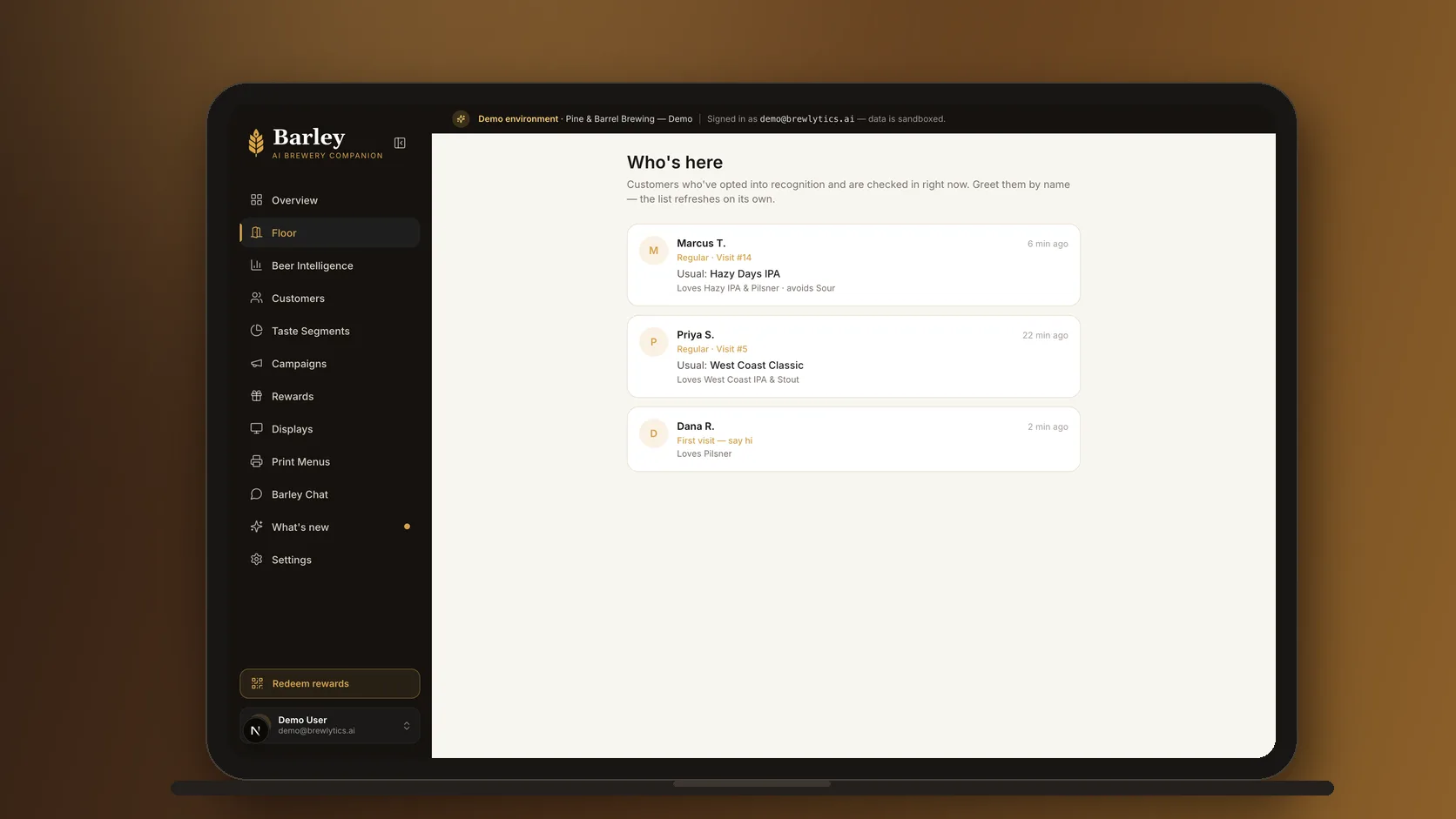
- Campaign Automation handles the three-touch promotion cadence — Instagram, email, SMS — and can segment release party invites to taste-matched customers so the right people hear about the right events.
- Check-in rewards and taste profiles turn every event into a data-collection opportunity. A QR scan at the bar during trivia night builds the taste profile that lets you invite that customer to the IPA release next month. (See customer insights)
- Automated milestones fire birthday, anniversary, and visit-count celebrations without you lifting a finger — each one a mini-event that drives a visit.
- Return tracking measures who came back after an event, so you're not guessing which events work — you're measuring it against actual POS data.
It all connects through your existing POS. The event drives the check-in, the check-in builds the profile, the profile powers the next promotion, and the promotion drives the next visit. That's the loop.
FAQ
(See the schema-ready FAQ block at the end of the page — it covers which event types drive the most revenue, planning timelines, measuring event ROI, and running events on a tight budget.)
Start With One Event This Week
You don't need 25 events running at once. Pick one recurring event for your slowest night (trivia is the safest bet), promote it with the three-touch cadence, and measure attendance, average check, and 30-day return rate. Once that's working, layer in a monthly release party and a quarterly food truck rally. By the end of the quarter, you'll have a calendar that fills seats, drives revenue, and builds the customer data that makes every future event smarter.
For the bigger picture on brewery marketing, start with the complete brewery marketing guide or AI marketing for breweries: the complete stack. For the email side of event promotion, see email marketing for breweries: the complete playbook. Ready to see how events, promotions, and customer data connect? Book a demo.
Frequently asked questions
Related Brewlytics Feature
Campaign Automation
Taste-segmented iMessage, SMS + email that runs itself once it's wired up.
See how it works →Keep reading
Your Taproom Is Slow — 7 Things You Can Do This Week
Slow days happen to every brewery. Don't panic — and don't just wait it out. Seven tactical moves you can make this week to get people through the door.
How Breweries Can Improve the First-Time Guest Experience
A first-timer decides how they feel about your taproom in five minutes. A moment-by-moment checklist for the door, the order, the first pour, and the exit.
Brewery Marketing Automation Ideas for Taprooms
Ten taproom marketing automations you can set up once: five fired by events like a fresh tapping or a package date, five aimed at lapsed, new, and top guests.
Want to see this working in your brewery?
Go Pro to see your customers and act on the data — taste profiles, segmented iMessage, SMS + email campaigns, the AI bartender, and the full dashboard. Or book a walkthrough with the brewer who built it. Not ready? Start free, no card.
Just here for the beer? Get the free Barley app