
Your Taproom Is Slow — 7 Things You Can Do This Week
By Brian Winckel · Founder, Brewlytics.ai
Short Answer
Slow taproom days happen to every brewery. The seven immediate moves: text your regulars about what's fresh, post a same-day special, invite a food truck for tomorrow, run a bring-a-friend promo, email your lapsed 30-day customers, set up a recurring event for your slowest day, and put a QR code on every table to capture data. The pattern behind all seven is the same — they all require knowing who your customers are. The breweries that never have slow days aren't luckier; they have a customer list they can activate. Every slow day is a data-capture day for the next slow day.
Barley's Take
A slow Tuesday isn't a problem to survive. It's a signal to build the list that makes next Tuesday better.
Why This Matters for Breweries
It's 2pm on a Tuesday and your taproom has three people in it. Two of them are together and nursing their second round. The third is on a laptop. Your bartender is wiping down a bar that doesn't need wiping. You're in the back doing mental math on whether this month's rent is going to be tight.
Every brewery has these days. Every single one. The 50-barrel production facility with a gorgeous taproom and 15,000 Instagram followers has slow Tuesdays. The neighborhood nanobrewery with a cult following has slow Tuesdays. Seasonal fluctuations, weather, competing events, and simple randomness mean that even the best-run taproom will have days where the room feels empty.
The difference between breweries that struggle with slow days and breweries that handle them is not luck, location, or beer quality. It's whether they have a customer list they can activate on demand. A brewery with 200 reachable past customers can fill a slow Tuesday with one text message. A brewery with zero reachable customers is at the mercy of whoever happens to walk by.
This playbook gives you seven things you can do this week — some of them today — to fill a slow day. Then it shows you the pattern behind all seven, so you stop treating slow days as emergencies and start treating them as a solvable, recurring problem.
1. Text Your Regulars
Time to execute: 10 minutes. Works today.
Pull up your phone. Open your text messages. Find the 10–20 customers whose numbers you have — regulars, friends, people who signed up for your text list. Send them a personal message:
"Hey — fresh keg of [their favorite style] just went on. Pouring perfect right now. Taproom's mellow if you want a seat at the bar."
That's it. No coupon. No gimmick. Just a genuine heads-up that something they'd enjoy is available and the timing is good.
This works for three reasons. First, SMS open rates among opted-in contacts run above 90% within minutes — your message will actually be seen, unlike an email or Instagram post. Second, a personal text from a brewery feels different than a marketing blast — it feels like an invitation from a friend. Third, you're leading with something specific they care about (a style they like), not a generic "come visit us."
If you don't have phone numbers yet, skip to section 7. But if you have even 10, start here. Today.
The math: If you text 20 people and 3 of them come in, spending $30 each, that's $90 in revenue from 10 minutes of effort. On a day where you might have done $200 total, that's a 45% increase.
2. Post a Same-Day Special
Time to execute: 15 minutes. Works today.
Post to Instagram and update your Google Business profile with a same-day offer:
- "Tuesday flight special: any 4 pours for $12 (normally $16)"
- "First 20 pints of [new release] are $5"
- "Bring this post to the bar for a free taster of our new [style]"
Instagram organic reach is low — you'll hit maybe 3–5% of your followers — but on a slow day, you need every channel working. Google Business is underrated: people searching "breweries near me" right now see your hours, your photos, and your latest post. A same-day special in that post converts searchers into visitors.
Two rules. First, make it same-day or next-day — urgency is the point. "This week's special" doesn't create urgency. "Today only" does. Second, add value rather than just cutting price. A free taster, a flight upgrade, a first-pour exclusive — these feel like hospitality, not desperation.
3. Invite a Food Truck for Tomorrow
Time to execute: 20 minutes of texting/calling. Works tomorrow or later this week.
Data from multiple taproom operators consistently shows the same thing: food availability on-site increases average check size by 40–80%. Customers who were going to have two pints stay for four because there's food. Customers who wouldn't have come at all show up because the food truck is the draw.
Text three food truck operators in your area right now. Offer them your slow day — Tuesday, Wednesday, whatever it is. Most food trucks have gaps in their schedule mid-week and will jump at a guaranteed location with beer-drinking customers.
Once confirmed, promote it today. Post on Instagram, update Google Business, send a text to your list: "[Truck name] is here tomorrow, 4–8pm. Cold beer + [their specialty]. See you there."
The food truck does the marketing too — they'll post to their own followers, which means a new audience discovers your taproom. This is one of the highest-leverage moves for a slow day, and it costs you nothing beyond the parking spot.
4. Run a "Bring a Friend" Promo
Time to execute: 5 minutes to brief your bartender. Works today.
The mechanic is simple: any customer who brings someone new gets a benefit. Options:
- Buy one flight, your friend's first taster is free
- Buy a pint, your friend's first pint is half off
- Both of you get entered into a monthly drawing for a growler fill
The genius of this is the conversion math. One customer becomes two. The friend is a first-time visitor who might become a regular. The original customer feels rewarded for being an ambassador. Your cost is one free taster — maybe $1.50 in product.
Brief your bartender to mention it proactively: "Hey, if you ever want to bring a friend, we've got a deal where they get a free taster on the house. Just mention it at the bar." Put a small table tent up. That's the whole implementation.
The compounding effect: A customer who brings one friend this month, and that friend brings another friend next month, creates a chain that no amount of Instagram posting can replicate. Word of mouth still outperforms every digital channel for local businesses, but you have to give people a reason and a nudge to activate it.
5. Email Your "Haven't Visited in 30 Days" List
Time to execute: 30 minutes. Works this week.
If you have an email list — even a basic Mailchimp or Square Marketing list — segment it. Pull everyone who hasn't been in for 30 days (your POS can usually tell you this) and send them a short, personal reactivation email:
Subject line: "It's been a minute — here's what's new on tap"
Body: Two or three sentences about what's changed since they were last in. New beers, new food options, a new event series. End with a specific invitation: "Swing by this week — tell the bartender you got the email and the first taster is on us."
This works because lapsed customers are the lowest-hanging fruit in your entire marketing universe. They already know where you are. They already liked your beer enough to visit once. They just drifted — and a simple, genuine "we noticed you haven't been around" is often all it takes to bring them back.
What not to do: Don't send this to your whole list. Don't make it a newsletter. Don't include eight paragraphs and four images. The goal is a quick, personal-feeling nudge, not a marketing campaign. The best reactivation emails read like a text message that happens to be in an email.
For the full playbook on brewery email — building the list, segmenting it, and the eight emails that actually drive visits — see email marketing for breweries.
6. Set Up a Recurring Event for Your Slowest Day
Time to execute: A few hours to set up. Works next week and every week after.
The single best long-term fix for a slow day is to give people a standing reason to come on that day. The specific event matters less than the consistency:
- Trivia night — the classic. Low cost, high engagement. Regulars come every week because they have a team.
- Live music — acoustic sets work in small spaces. Book a local musician for $100–200 and promote it as "Tuesday Tunes."
- Yoga + beer — surprisingly effective. A local yoga instructor leads a session on the patio, participants get a pour afterward. Appeals to a demographic that might not otherwise visit a brewery.
- Industry night — invite service-industry workers (restaurant staff, retail, etc.) and offer them a modest discount. They work weekends and are available on Tuesdays. They also tip well and bring friends.
- Brewer's table — the brewer sits at a table with a flight and talks to whoever wants to pull up a chair. No presentation, no structure, just conversation. This is free, builds community, and gives your brewer a reason to connect with customers.
The key is consistency. Don't run trivia once and stop. Run it every Tuesday for three months. It takes four to six weeks for a recurring event to build its own audience. The first two weeks feel empty. Week six is where it starts to feel like a thing.
Stuck on what to run? 25 brewery event ideas that actually drive revenue breaks them down by type — and flags which ones bring people back versus just filling seats once.
7. Put a QR Code on Every Table
Time to execute: 30 minutes to set up. Works starting today.
This is the most important item on this list, because it's the one that makes all the other items work next time.
Print a simple QR code and put it on every table, at the bar, on the check presenter, on the bathroom mirror. The QR code links to one of these:
- Your digital tap list (so customers can browse what's on without flagging down a bartender)
- A loyalty sign-up page (name, phone number, "what styles do you like?")
- A "what should I try?" recommendation tool
Every person who scans that QR code becomes a known customer. They go from "anonymous tab #47" to "Jamie, likes IPAs, visited July 13th." And now you can reach them.
This reframes slow days entirely. A slow Tuesday with 15 customers who all scan the QR code and join your list is more valuable than a packed Saturday where 100 people come and go anonymously. Those 15 people are reachable next Tuesday. The 100 anonymous Saturday visitors are gone.
Every slow day is a data-capture day for the next slow day.
Tactical details:
- Use a free QR code generator (most POS systems have one built in)
- Make the landing page mobile-friendly and fast — one screen, no scrolling to sign up
- Offer a small incentive: "Sign up and get a free taster today" converts significantly better than no incentive
- Track sign-ups per week as a KPI. If you're getting fewer than 10 per week, the QR code placement or incentive needs work
The Pattern Behind All Seven
Step back and look at what all seven moves have in common.
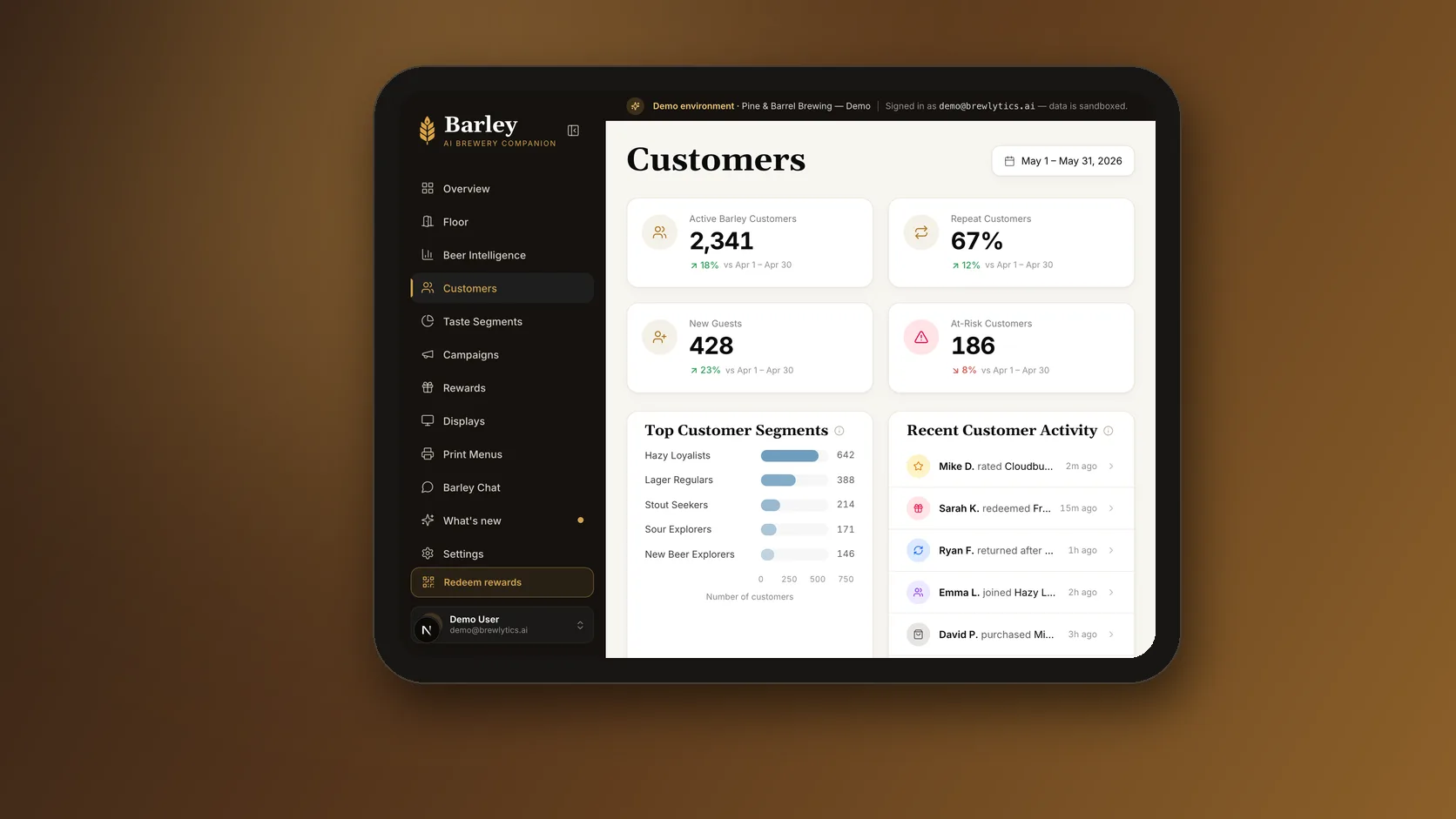
Texting regulars requires having their phone numbers. Emailing lapsed customers requires having their email and visit history. Running a "bring a friend" promo works better when you can follow up with the friend afterward. The food truck, the event, and the Instagram post all work better when you can notify people who'd actually care.
Every tactic on this list works better — or only works at all — when you know who your customers are and can reach them.
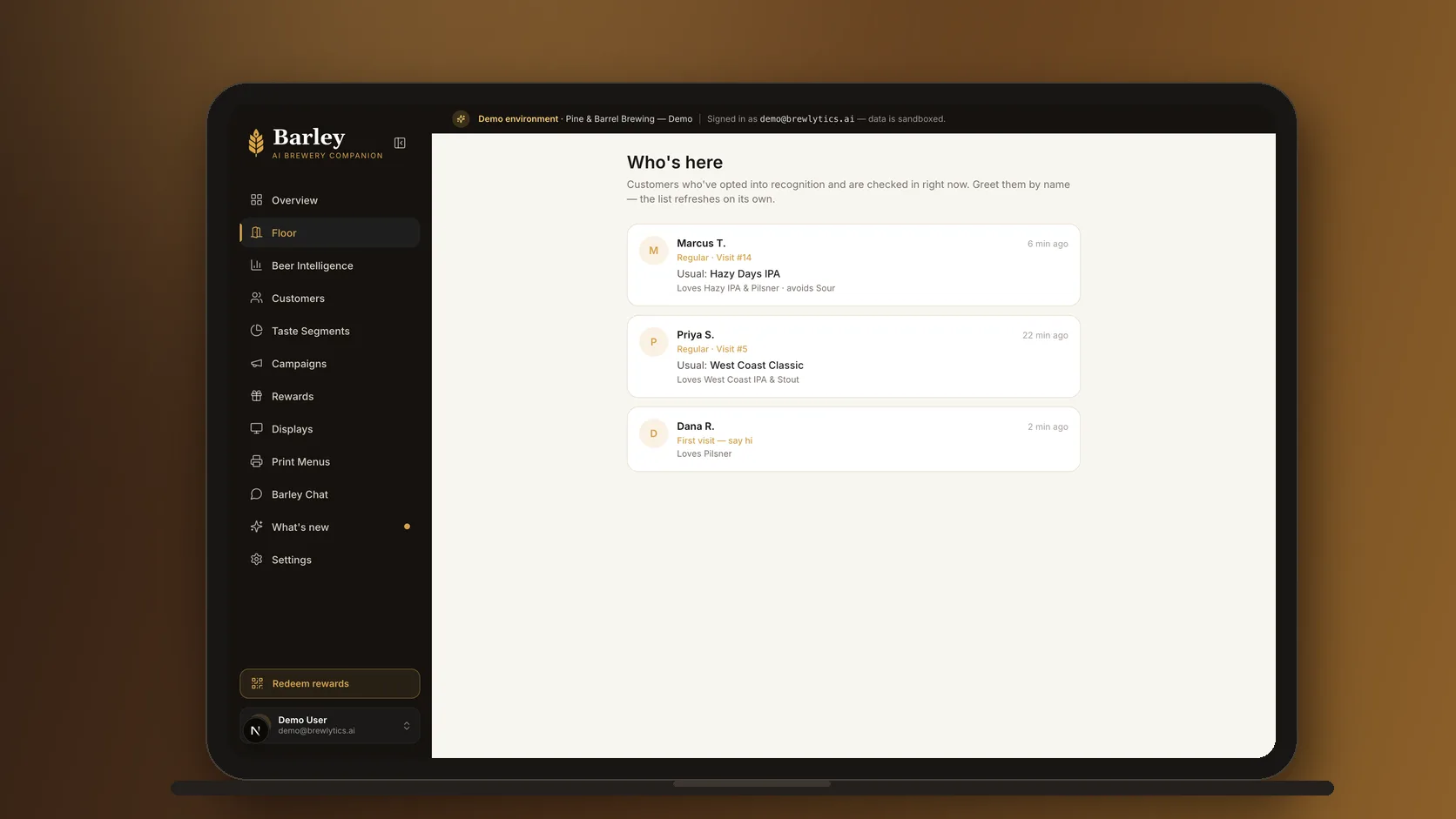
The breweries that "never have slow days" aren't brewing better beer or spending more on marketing. They've built an activatable customer list — a group of real people with names, preferences, and contact info who have opted in to hear from them. When Tuesday is slow, they activate the list. When a new beer drops, they activate the list. When a food truck shows up, they activate the list.
Building that list isn't a project. It's a habit. Every customer interaction is a chance to add one more person. Ten per week is 500 per year. In two years, you have 1,000 people you can reach with one message. That's the infrastructure that makes slow days optional instead of inevitable.
It's the same infrastructure gap behind a related problem — why nobody comes back to your brewery. The fix is identical: know who your customers are, and be able to reach them.
How Brewlytics Helps
Four of the seven moves in this playbook — texting regulars, emailing lapsed customers, posting relevant specials, and QR-code data capture — are exactly the jobs Brewlytics automates:
- Campaign Automation handles the trigger logic. When a customer hasn't visited in 30 days, the winback message goes out automatically. When a new release hits the tap, the taste-matched alert fires to the right segment. You set it up once; it runs on every slow Tuesday without you touching it.
- Customer Taste Profiles make every outreach more relevant. Instead of "come visit us," the message becomes "the Hazy IPA you loved is back" — because the system knows what each customer actually likes.
- Fresh Beer Alerts combine taste profiles with freshness windows. The SMS that goes out isn't just "new beer" — it's "a beer you'd love, at peak freshness, right now." That specificity is what converts a text into a visit.
- Barley Chat powers the QR code on every table. A customer scans, gets a personalized recommendation based on what's currently pouring and what they tend to enjoy, and joins your list in the process. Every interaction builds the data layer that makes next Tuesday easier.
The other three moves — food trucks, bring-a-friend promos, and recurring events — are human decisions that no software should make for you. But even those work better when you can text your list about them.
FAQ
(See the schema-ready FAQ block in the frontmatter for the full set — covers slowest taproom days, list size requirements, discounting strategy, and starting from zero.)
Ready to Stop Dreading Slow Days?
You don't need a bigger marketing budget. You need a reachable list of people who already like your beer and a system that activates them at the right moment. That's what AI marketing for breweries is really about — and Brewlytics builds the pieces: taste profiles that start with your POS data and sharpen as customers rate and engage, automated outreach when it matters, and a QR-powered experience that turns every visitor into a future regular.
Book a demo and we'll show you how many of your existing POS customers are reachable — and what one targeted Tuesday text could do for your slowest day.
Frequently asked questions
Related Brewlytics Feature
Campaign Automation
Taste-segmented iMessage, SMS + email that runs itself once it's wired up.
See how it works →Keep reading
25 Brewery Event Ideas That Actually Drive Revenue (Not Just Foot Traffic)
25 brewery event ideas by type — weekly recurring, release, community, education, and data-driven — plus how to promote them and measure what worked.
Brewery Marketing Automation Ideas for Taprooms
Ten taproom marketing automations you can set up once: five fired by events like a fresh tapping or a package date, five aimed at lapsed, new, and top guests.
How to Turn Brewery POS Sales Data into Marketing Campaigns
Your POS already knows who lapsed, who bought the last hazy, and who only buys cans to go. Five brewery marketing campaigns you can run from sales data alone.
Want to see this working in your brewery?
Go Pro to see your customers and act on the data — taste profiles, segmented iMessage, SMS + email campaigns, the AI bartender, and the full dashboard. Or book a walkthrough with the brewer who built it. Not ready? Start free, no card.
Just here for the beer? Get the free Barley app