
SEO for Breweries: How to Show Up on Google and in AI Answers
By Brian Winckel · Founder, Brewlytics.ai

Short Answer
Brewery SEO is mostly local and mostly about being accurate. Verify and complete your Google Business Profile, keep your name, address and phone identical everywhere, publish the tap list as text on your own site, give every event and your private bookings their own page, and add Brewery and Event schema that matches the page. Google says AI Overviews need nothing extra, so the same clear facts get you into AI answers too.
Barley's Take
Google can't read a chalkboard photo, and neither can the robots. Type the tap list out like you mean it.
Someone at a hotel bar asks their phone where to get a good hazy IPA nearby. Another types "breweries open late" into Google Maps from a parking lot. A third asks ChatGPT for a dog-friendly brewery for Saturday. All three get an answer in seconds, and none of them visits your Instagram first.
SEO for breweries is the work that puts your taproom in those answers. Keywords matter less than you'd think. For a brewery, most of it comes down to accurate facts in the places Google and AI tools read: your Google profile, your listings and your own website.
Why This Matters for Breweries
Most brewery searches are local and urgent. People want to know if you're open, what's on tap, whether they can bring the dog, and how to find a taproom that's often in an industrial park behind a tire shop. If those answers are missing or wrong, the searcher picks the place down the road.
Google says local results depend on three things: relevance (how well a listing matches the search), distance and prominence (how well known the business is, which reviews and links from other sites help). You can't move the building, so the work is relevance and prominence.
AI answers raise the stakes. Google's own guidance says there are no extra requirements and no special optimizations to appear in AI Overviews or AI Mode: a page needs to be indexed and eligible for a snippet, and the usual SEO basics apply. So the brewery with clean, consistent facts in text is the one an AI answer can quote. GEO (generative engine optimization) is the name for that part: making your facts easy for AI tools to find and repeat.
How It Works
There are five pieces. Do them in order, since each one leans on the one before.
1. Google Business Profile

This is the listing behind the map box, and for most breweries it drives more discovery than the website. Verify it, pick one primary category (Brewery, or Brewpub if you're a restaurant that brews), keep regular and holiday hours exact, point the menu link at your tap list page, and reply to reviews. Our Google Business Profile setup guide walks through every setting.
2. Listings and citations
A citation is any listing of your name, address and phone (NAP) on another site: Yelp, Apple Maps, Bing Places, Untappd, your state guild's brewery map, the local tourism board. Search engines compare them. When one says "Quarry Hill Brewing Co." on Main St and another says "Quarry Hill Taproom" on the old address, it muddies who you are.
Pick one exact version of the name, address, phone and website, then fix every listing to match. A guild or tourism listing that links to your site also helps prominence.
3. A tap list Google can read
This is where breweries lose the most ground. A photo of the chalkboard or a PDF of last month's menu looks fine to a person and says very little to a search engine. Google recommends keeping important content in text form.
Put the tap list on its own page on your site, as text: beer name, style, ABV, and a line of description. Update it when kegs change. Link that page from your Google profile's menu field. If you've been meaning to redo the board itself, our post on tap list design that sells covers the layout.
4. Pages for events and private bookings
People search for "trivia night near me," "brewery for a birthday party" and "brewery wedding venue." A single "Events" page with a calendar widget can't match all of those. Give each recurring event and each one-off release party its own page with the date, time, address and what it costs to get in. Google's Event documentation expects one event per page for event results.
Private bookings deserve their own page too, with capacity, rooms, food options and how to inquire. Our guide to private event pricing and booking has what to put on it.
5. Schema markup
Schema markup is a small block of code (usually JSON-LD) that tells search engines what a page is about in a fixed vocabulary. Schema.org has a Brewery type, which sits under FoodEstablishment and LocalBusiness, so it can carry:
| What it says | Schema property | Where it comes from |
|---|---|---|
| Name, address, phone | name, address, telephone | Your one exact NAP |
| Hours | openingHoursSpecification | Same hours as Google |
| Tap list | hasMenu | The tap list page URL |
| Reservations | acceptsReservations | Yes, no, or the booking page URL |
| Events | Event (on each event page) | name, startDate, location, address |
Google asks that structured data match what the page visibly says. If the schema says you close at 10 and the footer says 11, fix both.
GEO: being the answer AI tools give
Google says outright that you don't need AI text files or special markup for its AI features. What helps is what helps people: the questions guests ask, answered in plain sentences on your site. Are dogs allowed? Kids? Is there food? Parking? Do you have gluten-free options? Put a short FAQ on the visit page.
Some sites also publish llms.txt, a 2024 proposal for a Markdown file at the site root that lists a site's key pages for AI tools. Brewlytics publishes one at brewlytics.ai/llms.txt. It's cheap to add, so do it once the five pieces above are in place.
Example Brewery Scenario
Quarry Hill Brewing (fictional) runs a 10-barrel brewhouse and a 16-tap taproom in a converted machine shop, with Square at the bar. Their website was built in 2019. The tap list was a phone photo of the chalkboard, the events page was an embedded Facebook feed, and the Google profile still had summer hours.
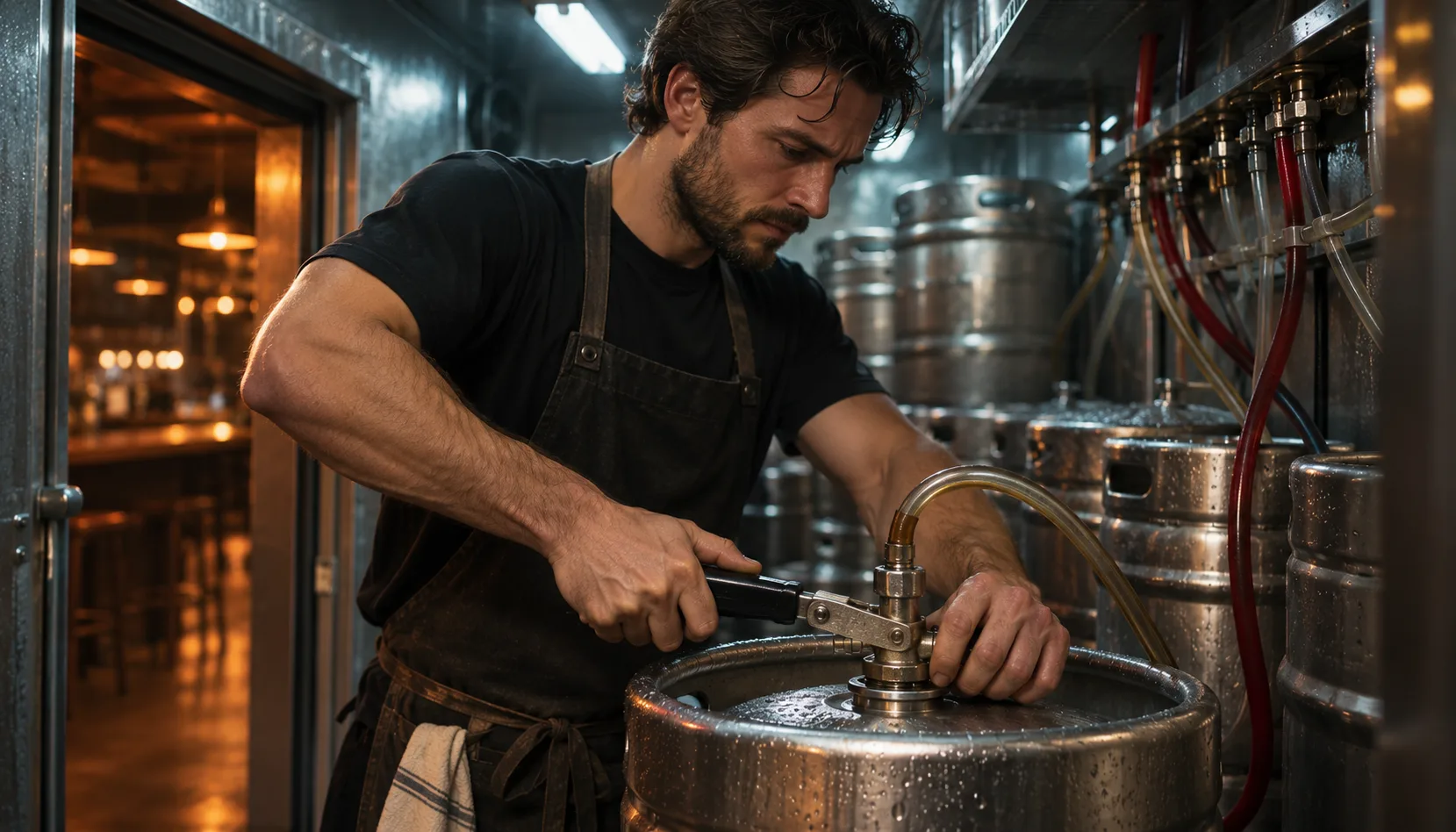
Over two weekends, the owner worked down the list. They fixed the hours and holiday hours on Google and switched the menu link to a new tap list page. On that page the Pilsner, the Hazy IPA, the Oatmeal Stout and the rest were typed out with style and ABV. They found four listings with the old suite number and corrected them. They split events into a Thursday trivia page, a monthly release-party page and a private-bookings page, each with its own address and times. Their web developer added Brewery schema to the home page and Event schema to each event page, using the same hours as the footer.
Then they set a habit. When a keg kicks, the bartender who swaps it updates the tap list page from a phone. Every Monday, someone checks Google Search Console for which searches showed the site, and adds an answer to the visit FAQ when a new question keeps coming up.
Practical Checklist
- Write down one exact version of your name, address, phone and website.
- Search your brewery name on Google, Apple Maps, Yelp, Bing and Untappd and fix every listing that differs.
- Verify your Google profile and set holiday hours through New Year's.
- Publish the tap list as text on its own page and link it from Google.
- Give trivia, release parties and private bookings their own pages.
- Add Brewery schema to the home page and Event schema to each event page.
- Add a visit FAQ: dogs, kids, food, parking, accessibility.
- Set up Google Search Console and check it once a week.
How Brewlytics Helps
SEO gets a first-timer through the door. Brewlytics is about what happens after that first visit.
Brewlytics Pro reads your Square sales and builds customer taste profiles, so you know who drinks the stouts and who only shows up for IPA releases. Campaign automation then sends the release text or the trivia reminder to the people who'd care, which no search result can do.
If keeping the website, listings and Google profile current is what keeps slipping, Growth is the done-for-you version: Brewlytics Pro plus website SEO and GEO, Google Business upkeep, a daily post with engagement on up to three social accounts, and text and email campaigns run for you. It's $299 a month at our introductory price (list $1,299, locked in while you stay) plus a $500 setup, with a 3-month minimum, plus $0.20 per active customer. The brewery marketing guide shows how search fits with everything else.
FAQ
See the schema-ready FAQ block at the end of the page for the full set.
Ready to Get Found?
Start with the tap list page this week; it fixes your website, your Google menu link and your AI answers in one go. If you want help, book a 20-minute call and we'll go through your site and listings with you, or see how Brewlytics works for breweries.
Frequently asked questions
Related Brewlytics Feature
Campaign Automation
Taste-segmented iMessage, SMS + email that runs itself once it's wired up.
See how it works →Keep reading
What a Brewery Social Media Manager Costs: Bartender, Hire, Freelancer or Done-for-You
What brewery social media really costs: a bartender's hours, a part-time or full-time hire, a freelancer, an agency or done-for-you, with wage sources.
Who Runs Marketing at a Brewery Your Size? Roles, Hours and Pay
How breweries staff marketing and events at four stages, who owns each weekly job, and what BLS says event planners and marketing specialists earn.
How to Get Travelers to Find and Visit Your Brewery
How travelers find breweries, what to fix on Google Business first, how to get on beer trails and tourism lists, and how to turn visitors into regulars.
Want to see this working in your brewery?
Go Pro to see your customers and act on the data — taste profiles, segmented iMessage, SMS + email campaigns, the AI bartender, and the full dashboard. Or book a walkthrough with the brewer who built it. Not ready? Start free, no card.
Just here for the beer? Get the free Barley app